
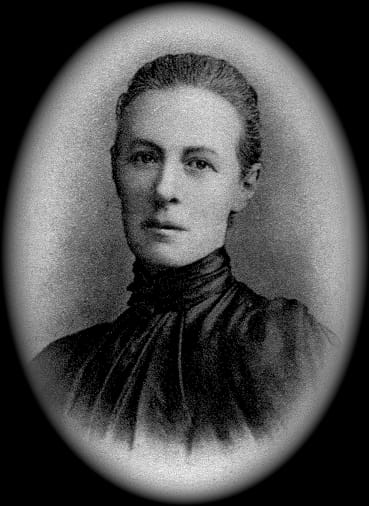
The life of Isabella Lilias Trotter is a remarkable story of devotion, sacrifice, and quiet influence. Born on July 14, 1853, in London, Trotter was raised in a wealthy and cultured family. From an early age, she displayed an exceptional talent for art, a gift that would later become both a means of expression and a tool for ministry.
As a young woman, Trotter came under the spiritual influence of the renowned preacher Dwight L. Moody. His teaching and example deeply shaped her faith, leading her to a life of committed Christian service. At the same time, her artistic abilities attracted the attention of the influential art critic John Ruskin. Ruskin recognized her extraordinary skill and believed she had the potential to become one of the great artists of her generation. He encouraged her to pursue art professionally, offering guidance and support.
Yet Trotter faced a difficult decision. She believed that a full commitment to an artistic career might conflict with what she understood to be her calling to serve God more directly. In a choice that would define her life, she set aside the prospect of artistic fame in order to devote herself to missionary work. Though she never abandoned art entirely, she chose instead to use her talents in a quieter, more purposeful way.
In 1888, Trotter traveled to Algeria, where she would spend the remainder of her life. At that time, Algeria was a French colony with a predominantly Muslim population. Missionary work there presented many challenges, including cultural barriers, language differences, and a harsh climate. Despite these difficulties, Trotter demonstrated remarkable perseverance. She founded the Algiers Mission Band, a small but dedicated group focused on sharing the Christian message through personal relationships, education, and acts of service.
Trotter’s approach to missionary work was marked by humility and patience. Rather than seeking rapid or dramatic results, she emphasized steady, faithful engagement with the people around her. She learned local languages and sought to understand the culture, building trust over time. Her writings reflect a deep spiritual insight, often drawing upon imagery from nature—an influence of her artistic background—to express theological truths.
Though she had turned away from a professional art career, Trotter continued to paint and sketch throughout her life. Her watercolors, particularly those inspired by the landscapes of North Africa, reveal both technical skill and spiritual depth. These works were often used in her writings, illustrating her reflections on faith and creation. In this way, her artistic gift was not lost but redirected toward her greater purpose.
Isabella Lilias Trotter died in 1928 in Algiers, having spent four decades in faithful service. Her legacy is one of quiet influence rather than public acclaim. She is remembered not only as a missionary but also as a writer and artist whose life demonstrated a deep commitment to her beliefs.
In the years since her death, interest in Trotter has grown, particularly among those who value the integration of faith and creativity. Her story continues to inspire individuals who seek to balance personal gifts with a sense of calling. In both her sacrifice and her service, Lilias Trotter left a lasting example of a life lived with purpose, devotion, and enduring faith.
♦ _____ ♦
Isabella Lilias Trotter (14 July 1853 – 27 August 1928) was a British artist and a Protestant missionary to Algeria….
Ruskin told Trotter that if she would devote herself to her art “she would be the greatest living painter and do things that would be Immortal.”[7]
Although Trotter was drawn to the prospect of a life in art, in May 1879, she decided that she could not give herself “to painting and continue still to ‘seek first the Kingdom of God and His Righteousness.'”
Turn your soul’s vision to Jesus and look and look at him, and a strange dimness will come over all that is apart from him, and the Divine “attrait” by which God’s saints are made even in this twentieth century will lay hold of you. For he is worthy to have all there is to be had in the hearts that he has died to win.
Lilias Trotter, ed. Constance E. Padwick, Master of the Impossible: Sayings, for the Most Part in Parable, from the Letters and Journals of Lilias Trotter of Algiers. (New York: Macmillan, 1938), 65–66.
These lines inspired Helen Lemmel to write, “Turn Your Eyes Upon Jesus”
_____
Image Source/Credit:
• Public domain, via Wikimedia Commons
Related
Sorry, no records were found. Please adjust your search criteria and try again.
Sorry, unable to load the Maps API.