

Hymn History: So Send I You
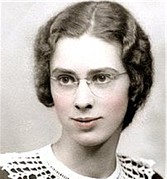
Author: Edith Margaret Clarkson
“Billy Graham has called [it] ‘the finest hymn of our generation.'”
(Mennonite Weekly Review)
“Later in life, she rejected it as ‘spiritually immature,’ and begged churches to replace it with some newly-written lines.”
(Ottawa Citizen)
The Origin of the Hymn “So Send I You”
The life and legacy of Edith Margaret Clarkson are closely bound to her most famous hymn, “So Send I You.” Though she wrote many devotional texts, this particular hymn secured her place in modern hymnody as a voice of missionary commitment, sacrificial service, and steadfast obedience to Christ. Her life experience, marked by physical limitation and deep faith, gave her writing an authenticity that continues to resonate with believers.
Edith Margaret Clarkson was born in 1915 in Canada, the daughter of a minister. Her upbringing in a Christian home and her father’s pastoral work exposed her early to the life of the church and the importance of service. However, her path was not an easy one. Clarkson suffered from chronic illness for much of her life, a condition that often confined her physically and limited her ability to participate in active ministry. Rather than discouraging her, these trials deepened her spiritual insight and sharpened her understanding of sacrifice.
It was within this context that Clarkson began writing hymns and devotional poetry. Her work reflects a serious and thoughtful approach to the Christian life. Unlike some lighter gospel songs, her texts often carry a weight of experience and a sober recognition of the cost of discipleship. This is especially evident in “So Send I You,” written in 1936 when she was only about twenty-one years old.
The hymn was originally composed as a poem in response to a college assignment, in which Clarkson was asked to write on the theme of missions. At the time, she wrestled with the tension between her desire to serve God actively and the physical limitations that prevented her from going to the mission field herself. Out of that struggle came the striking opening line:
So send I you—to labor unrewarded,
To serve unpaid, unloved, unsought, unknown.
These words set the tone for the entire hymn. Unlike many missionary hymns that emphasize triumph or adventure, Clarkson’s text highlights hardship, obscurity, and sacrifice. She draws a direct parallel between the believer’s calling and the suffering of Christ. The hymn repeatedly echoes the phrase “So send I you,” presenting it as Christ’s commission to His followers.
The original version of the hymn contains multiple stanzas, each describing a different aspect of Christian service: labor without recognition, perseverance through difficulty, and faithfulness in the face of rejection. The tone is solemn and demanding. It reflects a theology of discipleship that does not shy away from suffering but instead embraces it as part of following Christ.
Later in life, Clarkson revisited the hymn and added an alternate final stanza that balances the earlier emphasis on hardship with a note of triumph:
So send I you—by grace made strong to triumph
O’er hosts of hell, o’er darkness, death, and sin.
This addition does not diminish the seriousness of the earlier stanzas but completes the picture. Christian service involves both suffering and victory, both sacrifice and divine empowerment. The revised ending helped broaden the hymn’s appeal while preserving its original depth.
Musically, “So Send I You” has been set to several tunes, most notably one by John W. Peterson, whose melody complements the hymn’s reflective and resolute character. The tune’s steady progression reinforces the sense of purposeful mission and commitment.
Clarkson’s hymn quickly gained recognition, particularly among missionary organizations and evangelical churches. It became widely used in commissioning services, missionary conferences, and special gatherings focused on Christian service. Its frank portrayal of the cost of discipleship set it apart from other hymns of its time and gave it a lasting place in modern hymnals.
Beyond this single hymn, Clarkson continued to write throughout her life, producing hundreds of poems and hymns. Her work consistently reflects a deep engagement with Scripture and a mature understanding of the Christian life. Though she never achieved widespread fame, her writings have quietly influenced generations of believers.
Her legacy is especially significant in demonstrating how personal limitation can become a source of spiritual strength. Clarkson’s inability to serve in traditional missionary roles led her to a ministry of writing that reached far beyond what she might have accomplished otherwise. In this way, her life embodies the very message of “So Send I You”—that faithful service is not measured by outward recognition but by obedience to God’s calling.
Edith Margaret Clarkson passed away in 2008, leaving behind a body of work that continues to inspire and challenge. “So Send I You” remains her most enduring contribution, a hymn that calls believers to consider seriously the demands of discipleship. It reminds the church that following Christ may lead into hardship, but it also leads into purpose and eternal reward.
In an age often drawn to comfort, Clarkson’s hymn stands as a steady and sobering voice. It calls Christians to a life of faithful service, grounded in the example of Christ Himself. Through both her life and her writing, Edith Margaret Clarkson left a legacy of quiet strength, enduring faith, and unwavering commitment to the call of God.
♦ _____ ♦
Clarkson suffered from pain throughout her life. “Though I have besought God earnestly for healing, He has not seen fit to touch my body with a miracle. His working in me has been more intimate – He has touched my spirit and is working His miracle there” (Calgary Herald).
From the Wheaton Archives:
Margaret Clarkson, whose rarely-used first name is Edith, was born in 1915 into, as Margaret herself described, “a loveless and unhappy marriage” which broke up when she was twelve. The memories of her childhood were of tension, fear, insecurity, and isolation. Margaret was born in Melville, Saskatchewan where she lived until her parents, Frederick and Ethel, and the family moved to Toronto when she was around age four. Throughout her life, she was plagued by pain; initially from migraines, accompanied by convulsive vomiting, and then arthritis—two ailments that accompanied her continually. In Destined for Glory, she related sadly that her mother told her that her first words were “my head hurts.” At age three Margaret, or Margie as her friends knew her, contracted juvenile arthritis and became bed bound. She recalled the pain as well as the bald spot worn on the back of her head from lying in bed so long.
_____
Image Source/Credit (in order):
• Edith Margaret Clarkson (www.hymntime.com/tch/bio/c/l/a/r/k/s/clarkson_em.htm)
• Newspapers.com, The Ottawa Citizen, May 21, 2000 (www.newspapers.com/article/the-ottawa-citizen/191753446/)
Related

Sorry, no records were found. Please adjust your search criteria and try again.
Sorry, unable to load the Maps API.