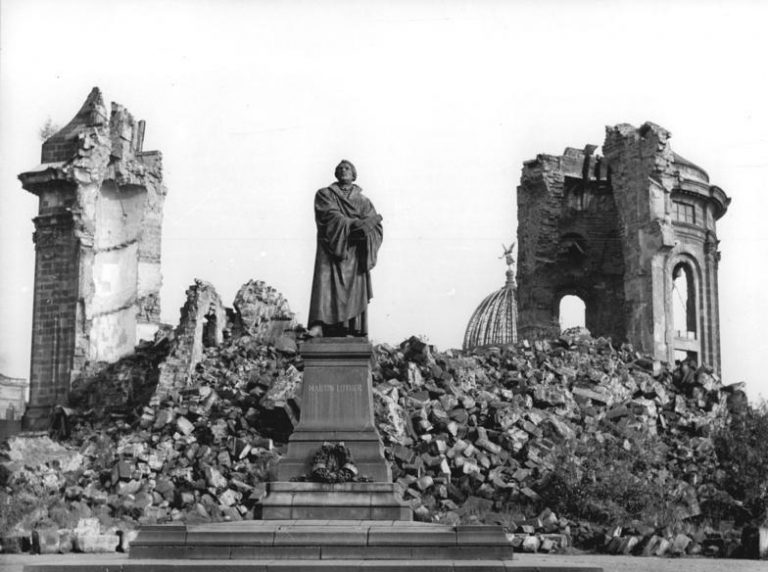
The Luther Statue is a prominent monument honoring Martin Luther, the central figure of the Protestant Reformation. Located in the historic city of Dresden, the statue reflects both the religious heritage of Saxony and the enduring influence of Luther’s life and work.
The statue was erected in the nineteenth century, a time when many German cities sought to commemorate important national and religious figures. Luther, whose actions in 1517 set in motion profound changes in European Christianity, was widely regarded as a foundational figure in German history as well as in Protestant faith. The creation of monuments in his honor was part of a broader cultural movement that emphasized historical identity, national unity, and religious tradition.
The Dresden statue portrays Luther standing in a dignified and resolute posture, often shown holding a Bible, symbolizing his commitment to the authority of Scripture. This imagery reflects one of the central themes of Luther’s teaching—that the Bible should be accessible and central to the life of the church. The statue’s design also emphasizes strength and conviction, qualities associated with Luther’s stand at critical moments such as the Diet of Worms.
Dresden, as the capital of Saxony, has deep connections to the history of the Reformation. The region played an important role in supporting Luther and the spread of his ideas. Although the city itself experienced significant destruction during later conflicts, including World War II, many of its historic monuments, including the Luther statue, have been preserved or restored, maintaining a visible link to its past.
The statue also serves as a reminder of the broader religious and cultural changes that reshaped Europe in the sixteenth century. Luther’s emphasis on faith, Scripture, and reform influenced not only theology but also education, language, and civic life. His translation of the Bible into German helped standardize the language and made religious texts accessible to ordinary people.
Today, the Luther Statue in Dresden remains an important landmark for both residents and visitors. It stands as a symbol of the city’s historical identity and its connection to one of the most significant movements in Christian history. More than a work of art, the monument represents the enduring legacy of Martin Luther and the continuing impact of the Reformation on the modern world.
_____
Image Source/Credit:
• Photograph Bundesarchiv, Bild 183-60015-0002 / Giso Löwe / CC-BY-SA 3.0
Related
Sorry, no records were found. Please adjust your search criteria and try again.
Sorry, unable to load the Maps API.