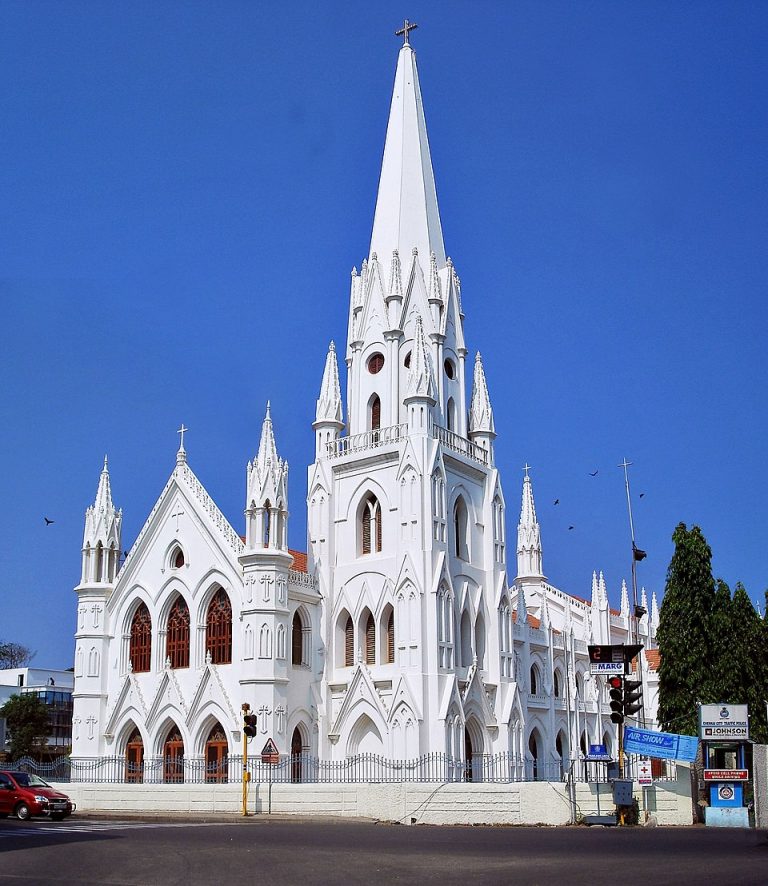
From Wikipedia:
San Thome Church, officially known as the National Shrine of St. Thomas Cathedral Basilica, is a church of the Catholic Church in India, at the Santhome neighbourhood of Chennai, in Tamil Nadu. It is the cathedral of the Archdiocese of Madras-Mylapore, and a minor basilica dedicated to Saint Thomas the Apostle. The present structure dates back to 1523 AD, when it was built by the Portuguese over the tomb of Thomas.[3] In 1896, it was renovated in the Madras province according to neo-Gothic designs, as was favoured by British architects in the late 19th century.
_____
The National Shrine of St. Thomas Cathedral Basilica is one of the most important Christian pilgrimage sites in Asia and a place deeply connected to the early history of Christianity in India. Located in Chennai along the southeastern coast of the country, the cathedral basilica is traditionally believed to stand over the tomb of Thomas the Apostle.
According to longstanding Christian tradition, the Apostle Thomas traveled to India in the first century to preach the gospel. He is believed to have established Christian communities in the region before being martyred near present-day Chennai around A.D. 72. His burial site eventually became a place of devotion and pilgrimage for Christians from India and around the world.
The present cathedral traces its origins to the early Portuguese presence in India during the sixteenth century. Portuguese missionaries built a church over the traditional burial site of the apostle in 1523. In 1896, during the British colonial period, the structure was rebuilt in a striking Neo-Gothic style, giving the church its current appearance with tall white spires and pointed arches.
Recognizing its importance to the global Catholic community, the church was later elevated to the status of a basilica and designated a national shrine. It is one of only a few churches in the world said to contain the tomb of one of the original apostles of Jesus.
Today, the National Shrine of St. Thomas Cathedral Basilica continues to draw pilgrims, worshipers, and tourists. Its historical, religious, and architectural significance makes it a central landmark of Christianity in India and a lasting reminder of the ancient roots of the Christian faith in the region.
_____
Image Source/Credit:
• Photo By w:user:PlaneMad – Own work, CC BY-SA 2.5
Related
Sorry, no records were found. Please adjust your search criteria and try again.
Sorry, unable to load the Maps API.