

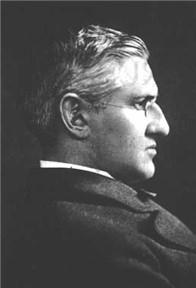
Horatio Spafford (1828–1888) is remembered today chiefly as the author of the beloved hymn “It Is Well with My Soul.” Yet his life was far more than a single hymn. It was a story marked by prosperity and promise, sudden calamity, steadfast faith, and a final chapter of unusual missionary devotion.
Born in 1828 in North Troy, New York, Spafford grew up in a devout Christian home. He later settled in Chicago, Illinois, where he became a successful attorney and real estate investor. By the late 1860s, he had established himself as a respected businessman and an active member of the Presbyterian church. He was also a close friend and supporter of the evangelist Dwight L. Moody, assisting in his evangelistic campaigns and charitable work.
Spafford’s early years in Chicago were marked by blessing. He and his wife, Anna, were raising five children and enjoying financial stability. But in 1871, the Great Chicago Fire swept through the city, devastating much of Spafford’s property holdings and wiping out much of his wealth. Although he suffered heavy losses, he worked diligently to rebuild his business.
Greater sorrow was soon to follow. In 1873, seeking rest for his family and intending to join Moody on an evangelistic campaign in England, Spafford arranged for his wife and four daughters to travel ahead by ship. At the last moment, pressing business concerns delayed him. During the Atlantic crossing, their vessel collided with another ship and sank. All four daughters—Annie, Maggie, Bessie, and Tanetta—were lost. Anna survived and later sent her husband the now-famous telegram bearing only two words: “Saved alone.”
Spafford immediately sailed to join his grieving wife. Tradition holds that as his ship passed near the site where his daughters had perished, he was moved to reflect deeply on the sovereignty and goodness of God, even amid profound suffering. From that experience came the hymn “It Is Well with My Soul,” first published in 1876. Its lines—“When peace, like a river, attendeth my way, / When sorrows like sea billows roll”—have comforted countless believers in times of trial. The music was later composed by Philip Paul Bliss, giving the text its enduring form.
In the years that followed, Spafford’s spiritual journey took an unconventional turn. Convinced that Christ’s return was near and desiring a life wholly devoted to faith, he and Anna relocated to Jerusalem in 1881 with a small group of like-minded believers. This community, later known as the American Colony, emphasized prayer, simplicity, and acts of mercy. Though viewed with suspicion by some, they were widely respected in Jerusalem for their charitable work among the poor, regardless of creed or nationality.
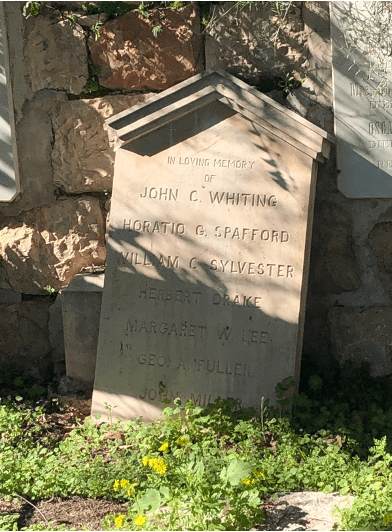
Spafford spent his remaining years in the Holy Land, seeking to live out a practical and earnest Christianity. He died in Jerusalem in 1888 and was buried there, far from the homeland where he had once prospered and suffered.
The legacy of Horatio Spafford endures chiefly through his hymn, which continues to be sung in churches around the world. Its quiet confidence in God’s providence reflects the hard-won faith of a man tested by fire and sea alike. In an age often unsettled by loss and uncertainty, his testimony remains a steady reminder that Christian hope rests not in circumstance, but in the unchanging character of God.
_____
Image Source/Credit:
• Unknown source, Public domain, via Wikimedia Commons
• Buckner, John. “It Is Well in Zion.” Enjoying the Journey, 25 July 2024 (enjoyingthejourney.org/it-is-well-in-zion)
Related
Sorry, no records were found. Please adjust your search criteria and try again.
Sorry, unable to load the Maps API.