
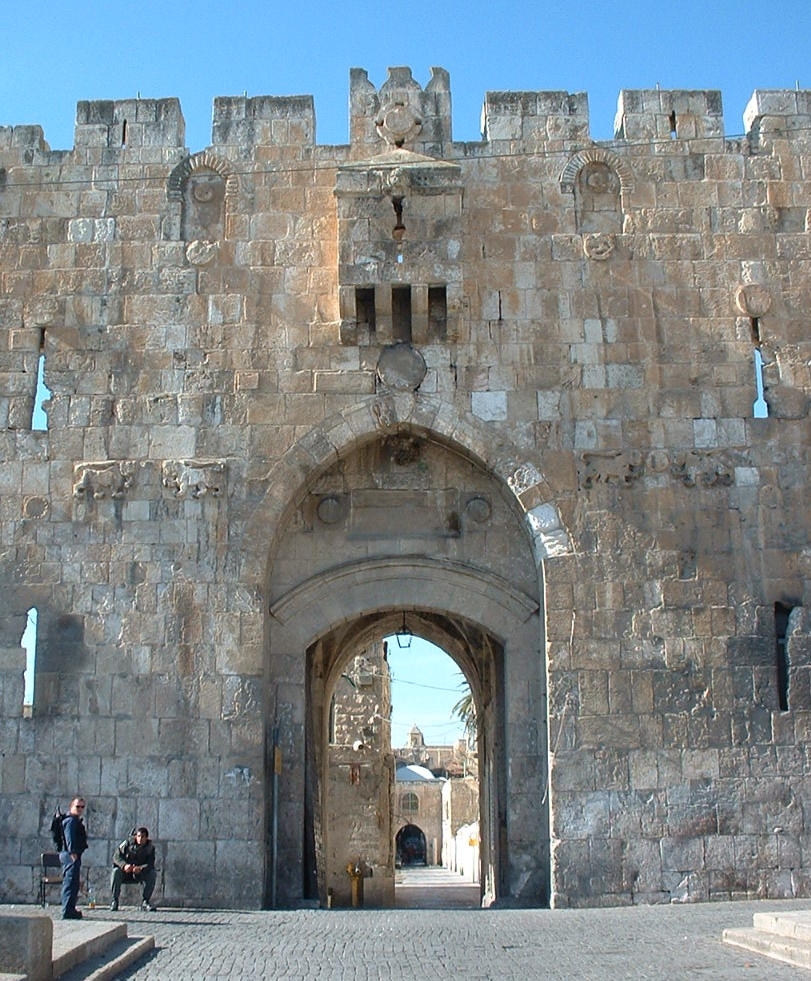
St. Stephen’s Gate, also commonly known as Lions’ Gate, is one of the historic entrances to the Old City of Jerusalem. Located on the eastern wall of the ancient city, the gate opens toward the Mount of Olives and provides access to important religious sites within the city’s walls.
The gate was built in 1538 during the reign of Suleiman the Magnificent, who ordered the reconstruction of Jerusalem’s defensive walls while the city was under the control of the Ottoman Empire. The present structure forms part of the fortified wall system that still surrounds the Old City today. The name “Lions’ Gate” comes from the pair of carved lion figures placed above the entrance, which are believed to have been added during the Ottoman period.
Many Christians refer to the gate as St. Stephen’s Gate because of the tradition that Stephen the Protomartyr was taken outside the city through this area before being stoned to death. According to the account in the New Testament Book of Acts, Stephen was the first person to be martyred for the Christian faith.
The gate also holds historical importance in modern times. During the Six-Day War in 1967, Israeli paratroopers entered the Old City of Jerusalem through Lions’ Gate as part of the battle that resulted in Israeli control of East Jerusalem.
Today, St. Stephen’s Gate remains one of the most frequently used entrances to the Old City. Pilgrims, tourists, and residents pass through it daily as they travel to nearby holy places such as the Via Dolorosa and the historic Christian, Muslim, and Jewish quarters of Jerusalem.
_____
Image Source/Credit:
• Photo Pontificake @ enwiki, CC BY-SA 3.0
Related
Sorry, no records were found. Please adjust your search criteria and try again.
Sorry, unable to load the Maps API.