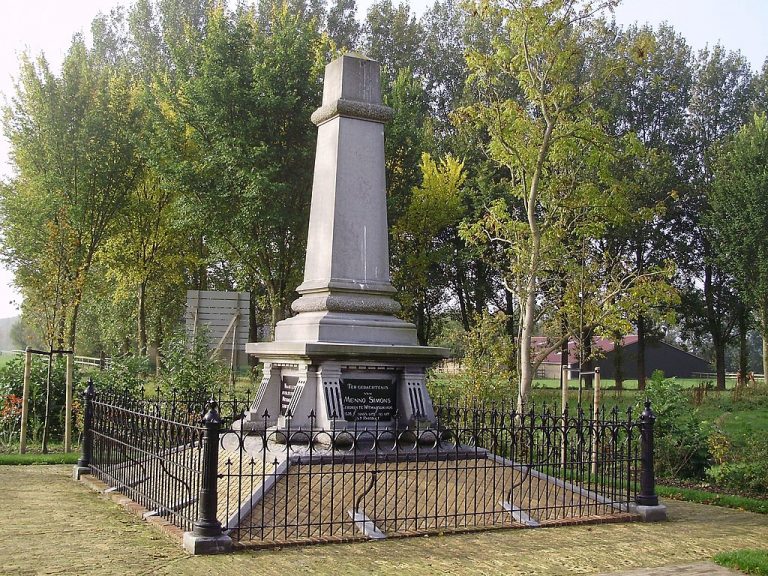
The Menno Monument stands as a significant tribute to Menno Simons, one of the most influential figures in the history of the Anabaptist movement. Located in the village of Witmarsum, where Menno Simons was born, the monument serves as a place of remembrance and reflection on a life devoted to faith, reform, and peaceful discipleship.
Menno Simons was born in 1496 and initially served as a Roman Catholic priest. However, during the turbulent years of the Reformation, he became increasingly troubled by certain doctrines and practices, particularly the use of violence and the lack of clear biblical foundation for some traditions. Influenced by the teachings of earlier Anabaptists, he eventually renounced his priesthood in 1536 and joined the movement. From that point forward, he became one of its most important leaders, helping to organize and stabilize communities that were often scattered and persecuted.
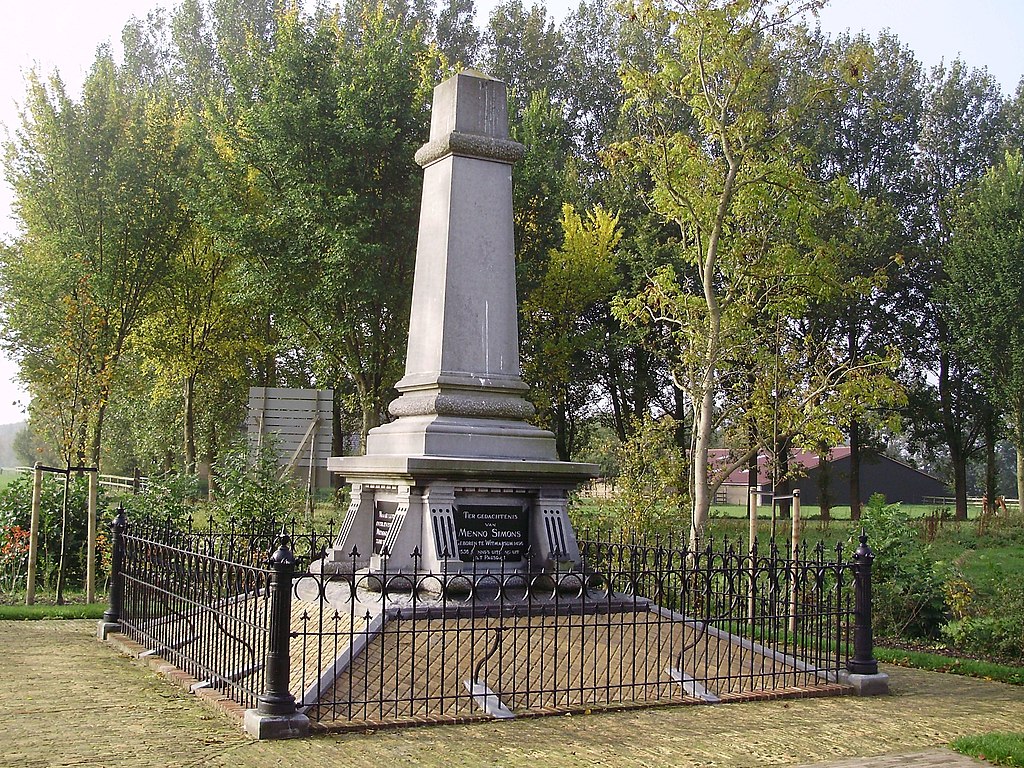
The Menno Monument in Witmarsum commemorates both the man and the movement he helped to shape. Erected in the nineteenth century, the monument reflects a growing recognition of Menno Simons’s role in promoting a form of Christianity marked by simplicity, nonviolence, and a commitment to living according to the teachings of the New Testament. The structure itself is modest in scale, consistent with the values associated with the Mennonite tradition, which generally emphasizes humility over grandeur.
The monument is situated near the site traditionally identified as Menno Simons’s birthplace. This location gives it a particular historical resonance, linking visitors directly to the origins of a movement that would spread far beyond the borders of the Netherlands. From these humble beginnings, Menno’s influence extended across Europe and eventually to North America, where Mennonite communities continue to thrive.
Architecturally, the Menno Monument is simple yet dignified. It typically features a stone marker or column, often accompanied by inscriptions that highlight key aspects of Menno Simons’s life and teaching. The surrounding area is maintained as a peaceful setting, encouraging quiet reflection rather than elaborate ceremony. This simplicity aligns with the broader ethos of the Anabaptist tradition, which places a strong emphasis on inward faith and outward obedience rather than external display.
The legacy of the Menno Monument lies not only in its commemoration of a historical figure but also in the values it represents. Menno Simons is remembered for his insistence on believer’s baptism, his rejection of violence, and his call for a disciplined, community-centered Christian life. At a time when religious conflict often led to bloodshed, his commitment to peace set a distinctive example that continues to influence Mennonite and related traditions.
Today, the monument attracts visitors from around the world, particularly those with ties to Mennonite heritage. It serves as a point of connection between past and present, offering an opportunity to reflect on the origins of a movement that has endured for centuries. Educational tours and historical studies often include the site as a key location in understanding the development of Anabaptism.
In its quiet setting and enduring presence, the Menno Monument stands as a testament to the lasting impact of one man’s convictions. It reminds us that true reform often begins not with force, but with a commitment to faithfulness, humility, and the pursuit of peace.
_____
Image Source/Credit (in order):
• Photo Johan Weenink, CC BY-SA 3.0, via Wikimedia Commons
Related
Sorry, no records were found. Please adjust your search criteria and try again.
Sorry, unable to load the Maps API.