The history and legacy of the Dead Sea Scrolls rank among the most significant archaeological discoveries of the modern era. Unearthed in the mid-20th century near the shores of the Dead Sea, these ancient manuscripts have profoundly shaped our understanding of the Bible, early Judaism, and the world into which Christianity was born.
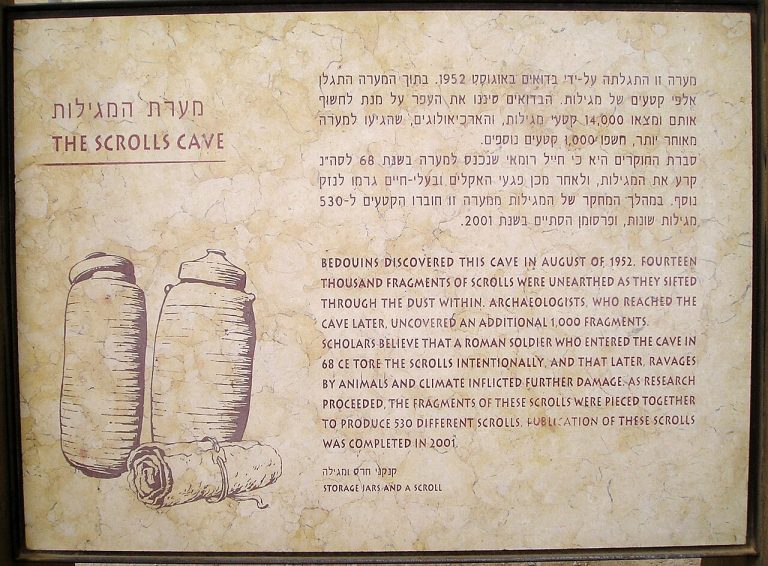
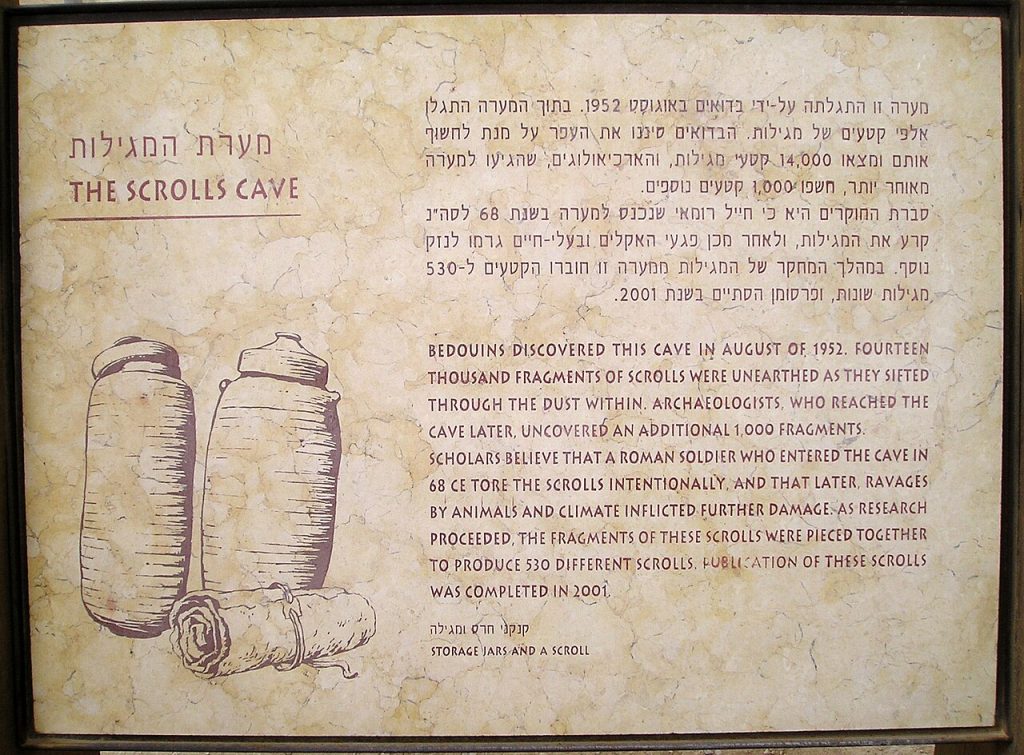
The discovery began in 1947 when a Bedouin shepherd, searching for a lost goat, entered a cave near Qumran and stumbled upon a collection of clay jars containing ancient scrolls. What followed was a series of excavations that uncovered additional caves filled with manuscripts. In total, fragments from more than 900 documents were recovered from eleven caves in the surrounding area. These texts, written primarily in Hebrew, Aramaic, and some Greek, date from approximately the third century BC to the first century AD.
The scrolls include a wide range of writings. Among the most important are copies of books from the Hebrew Bible, including a nearly complete version of the Book of Isaiah, often referred to as the Great Isaiah Scroll. These biblical manuscripts are of immense value because they are over a thousand years older than previously known copies, allowing scholars to compare texts and better understand how the Scriptures were transmitted over time.
In addition to biblical texts, the Dead Sea Scrolls contain a variety of other writings, including commentaries, hymns, legal documents, and community rules. These non-biblical texts provide insight into the beliefs and practices of a Jewish sect widely believed to be associated with the Essenes, a group known for its strict discipline and communal lifestyle. The documents reveal a community deeply concerned with purity, obedience to the law, and the expectation of divine intervention in history.
The archaeological site of Qumran, located near the caves where the scrolls were found, offers further context for understanding this community. Excavations have uncovered the remains of buildings, ritual baths, and communal spaces, suggesting an organized settlement that may have been responsible for preserving the scrolls. Many scholars believe that as conflict with Roman forces intensified in the first century AD, members of the community hid their treasured manuscripts in the caves for safekeeping.
The legacy of the Dead Sea Scrolls is far-reaching. For biblical scholarship, they have confirmed the remarkable stability of the Hebrew Scriptures over centuries. While minor variations exist, the overall consistency between the scrolls and later manuscripts demonstrates the care with which these texts were transmitted. This has strengthened confidence in the reliability of the biblical tradition.
Beyond textual studies, the scrolls have also deepened our understanding of the religious environment of the time. They illuminate the diversity of Jewish thought during the Second Temple period, revealing a world of expectation, debate, and spiritual longing. This context is invaluable for interpreting the New Testament, as it helps explain the cultural and theological background in which figures such as Jesus Christ lived and taught.
Today, many of the scrolls are preserved and displayed at institutions such as the Shrine of the Book in Jerusalem, part of the Israel Museum. Advances in technology have also allowed scholars to study the fragile fragments in greater detail, uncovering new insights even decades after their discovery.
The enduring significance of the Dead Sea Scrolls lies in their ability to connect the modern world with ancient faith and history. They serve as a bridge across time, offering a clearer picture of the beliefs, struggles, and hopes of a people seeking to understand their relationship with God.
In their history and legacy, the Dead Sea Scrolls stand as a testament to the preservation of sacred texts and the enduring human desire to seek truth. Their discovery has not only enriched academic study but has also inspired countless individuals to reflect more deeply on the foundations of faith and the continuity of religious tradition across the ages.
_____
Image Source/Credit:
• File:Khirbet Qumrān 10.jpg – Wikimedia Commons. commons.wikimedia.org/wiki/File:Khirbet_Qumr%C4%81n_10.jpg.
Related
Sorry, no records were found. Please adjust your search criteria and try again.
Sorry, unable to load the Maps API.