Text:
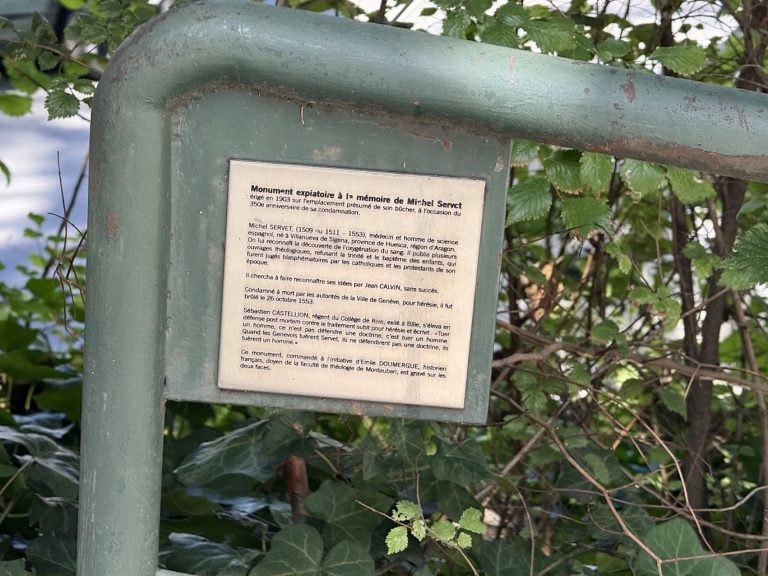
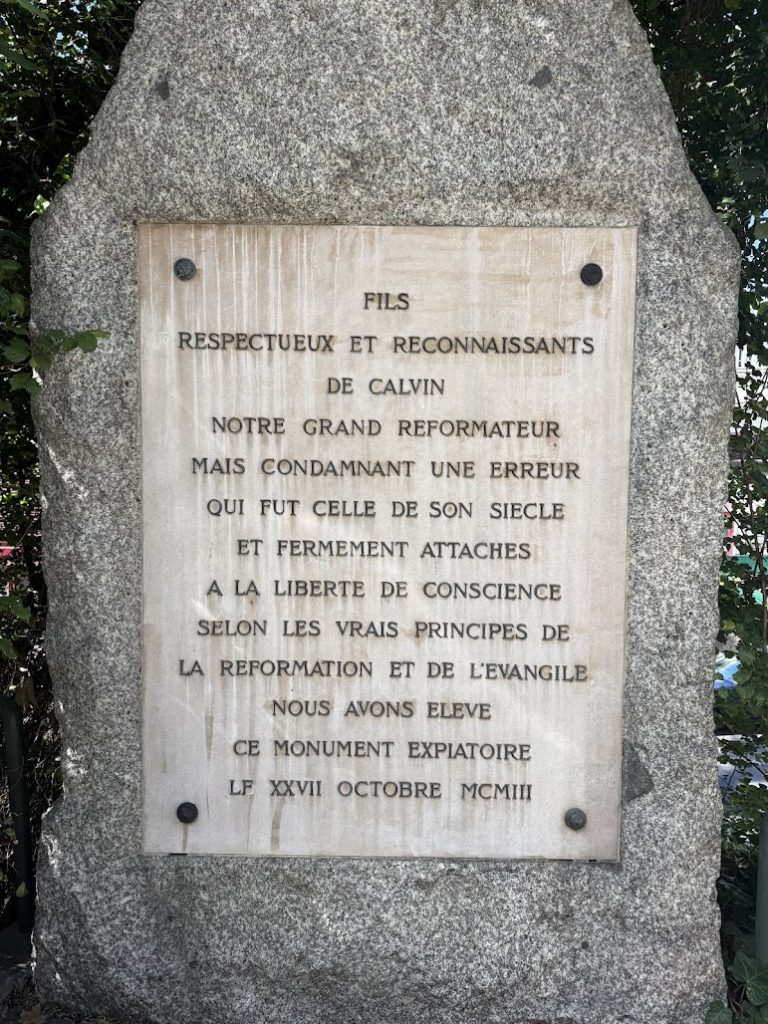
Duteous and grateful followers of Calvin our great Reformer, yet condemning an error which was that of his age, and strongly attached to liberty of conscience according to the true principles of his Reformation and gospel, we have erected this expiatory monument. Oct. 27, 1903
What to say about Servetus? From John Calvin’s Geneva: A Walking Guide
“In 1903, some Protestants felt it necessary to erect a monument of reconciliation in Geneva admitting that the death of Servetus was an error born out of the mistake of the age, which violated the spirit of the Reformation. Some would like for the Roman Catholic Church to do the same.”
♦ _____ ♦
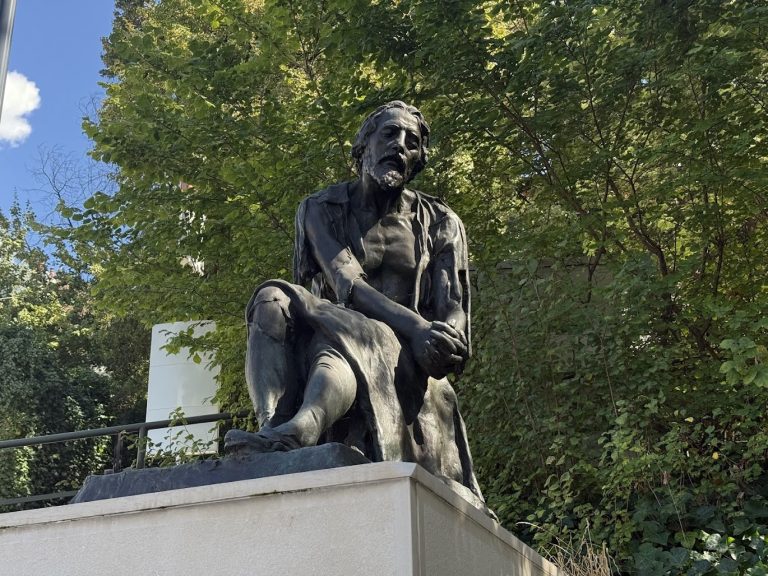
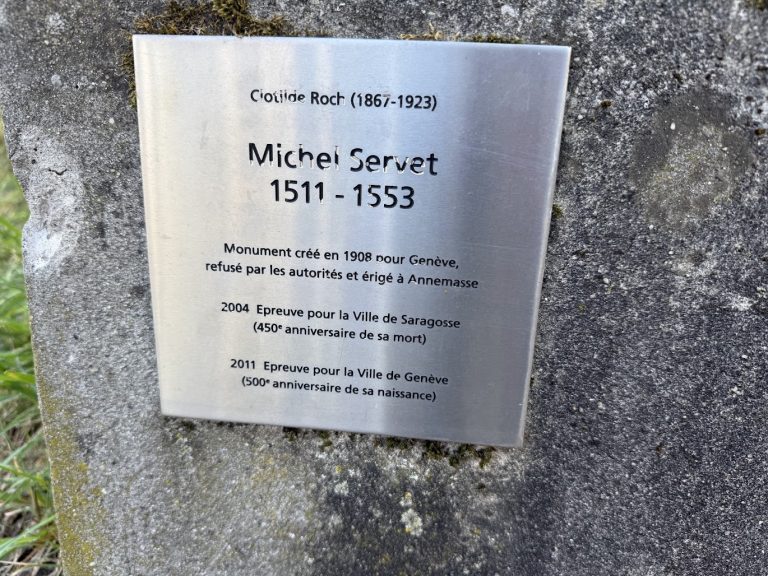
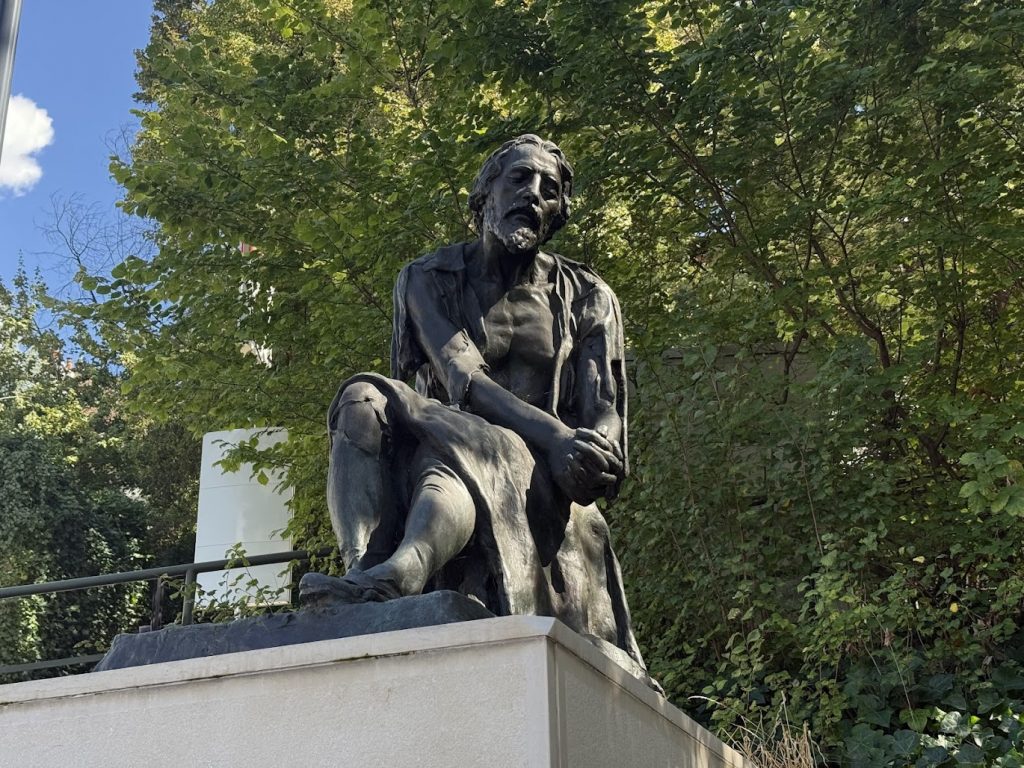
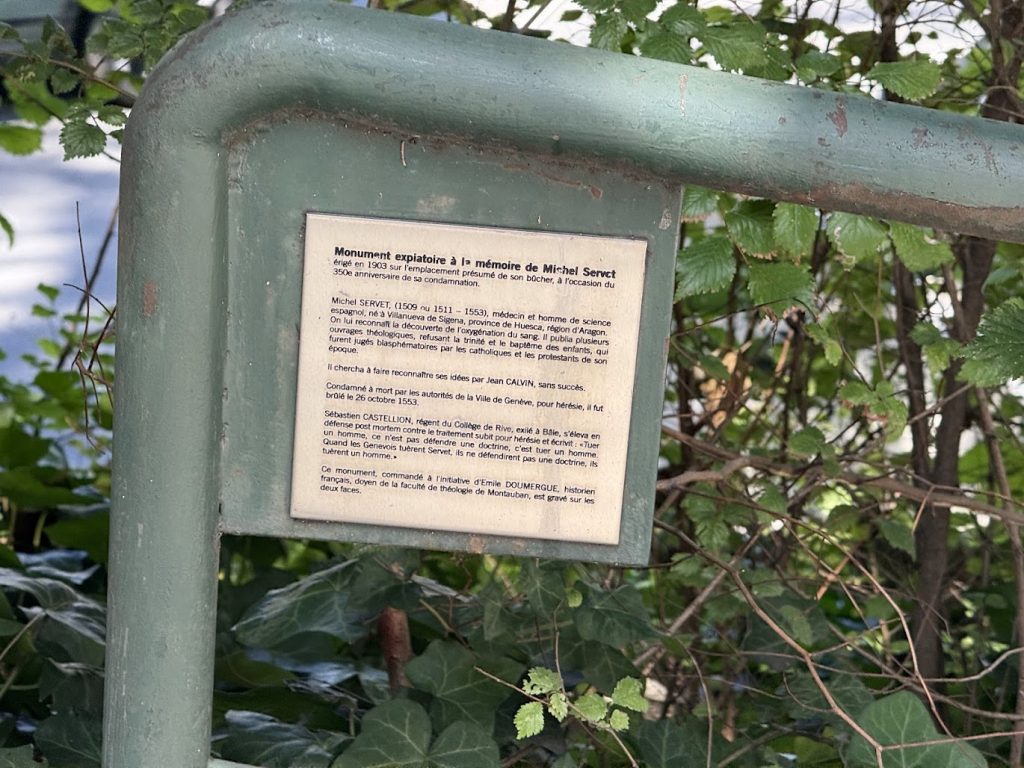
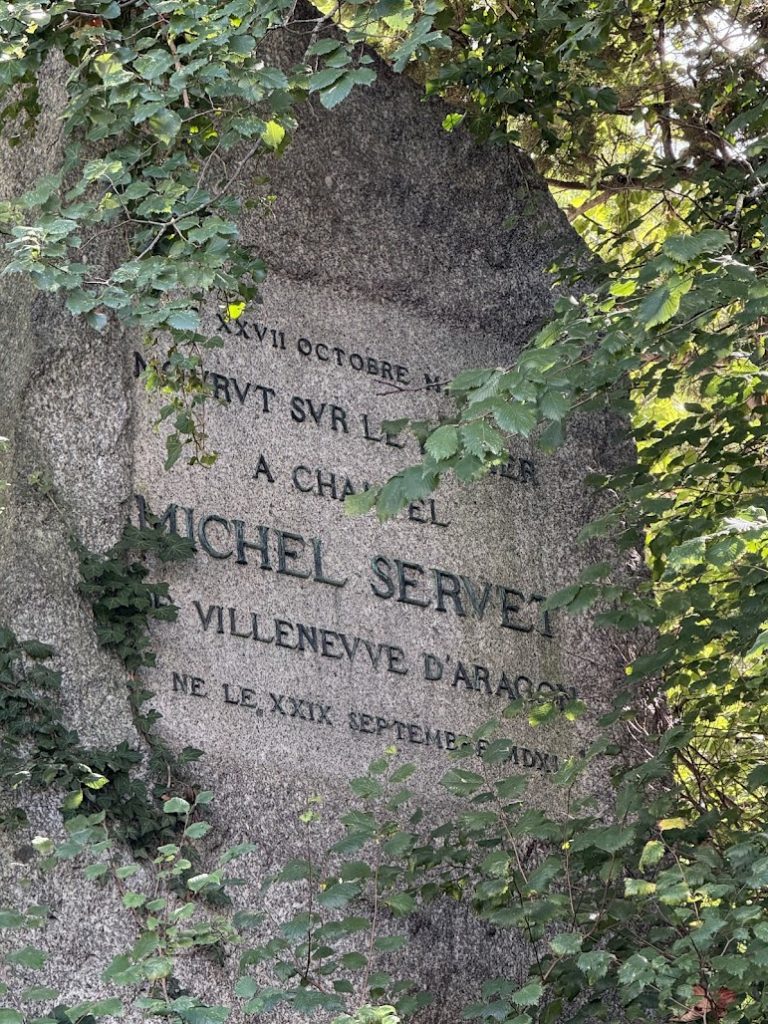
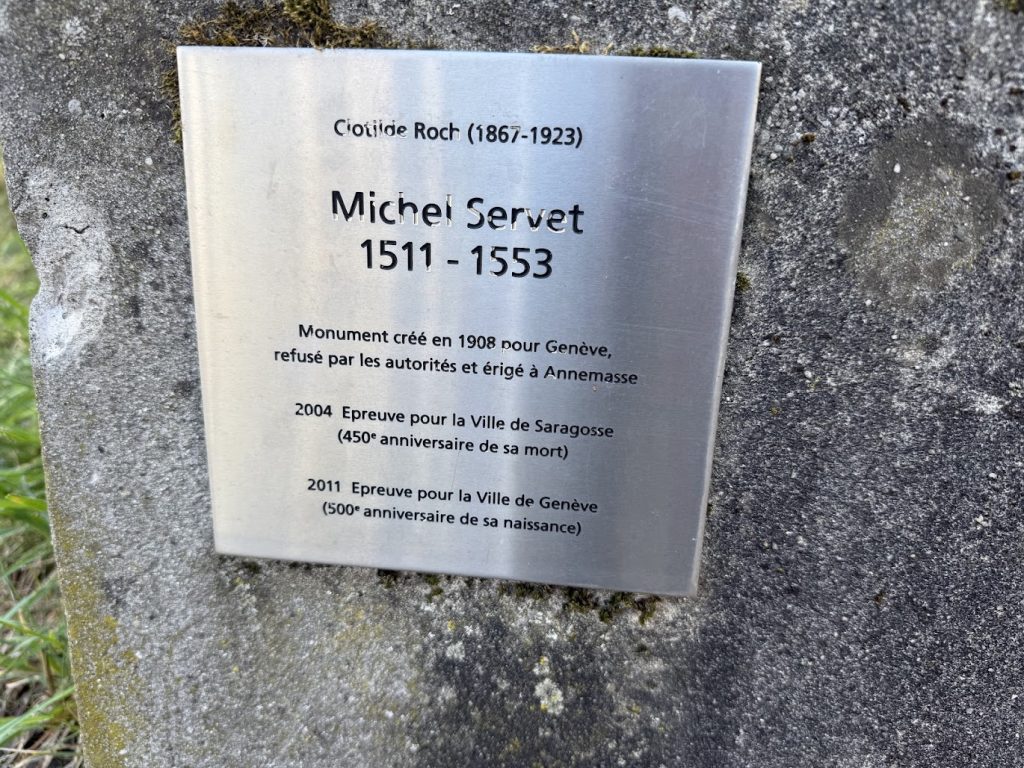
The Michael Servetus Memorial in Geneva stands as a solemn reminder of one of the most tragic episodes in the history of the Reformation. Commemorating the Spanish theologian and physician Michael Servetus, the monument reflects both the intense theological conflicts of the sixteenth century and the gradual emergence of modern ideals of religious liberty.
Servetus was a brilliant yet controversial figure whose writings challenged orthodox Christian doctrines, particularly the Trinity. His most famous work, Christianismi Restitutio (1553), rejected long-held teachings and called for a return to what he believed was the purity of early Christianity. These views placed him at odds not only with the Roman Catholic Church but also with leading Protestant reformers, including John Calvin.
In 1553, Servetus was arrested in Geneva, which had become a center of Protestant reform under Calvin’s leadership. After a lengthy trial, he was convicted of heresy. On October 27, 1553, he was executed by burning at the stake at Champel, just outside the city. His death shocked many even in his own time, and it has since been regarded as a stark example of the dangers of religious intolerance—ironically carried out within a movement that had itself arisen in protest against persecution.
For centuries, Servetus’s execution remained a subject of controversy and reflection. By the late nineteenth and early twentieth centuries, as ideas of freedom of conscience gained broader acceptance, there was a growing desire to acknowledge the injustice of his death. This led to the erection of the Michael Servetus Memorial in 1903, near the site of his execution in the Champel district of Geneva.
The memorial itself is both simple and deeply symbolic. It consists of a stone monument bearing an inscription that expresses regret for the execution and honors Servetus as a victim of his time. Significantly, the inscription was commissioned by descendants of the Reformed tradition in Geneva, reflecting a willingness to confront and confess the errors of the past. Rather than glorifying Servetus as a martyr in a triumphal sense, the monument adopts a tone of humility and repentance.
The legacy of the Michael Servetus Memorial is profound. It stands not only as a tribute to one man’s life and suffering but also as a broader acknowledgment of the importance of intellectual freedom and religious tolerance. In commemorating Servetus, the monument implicitly critiques the coercive use of religious authority and affirms the principle that faith must not be enforced by violence.
Today, visitors to the memorial are invited to reflect on the complexities of history. The Reformation, often celebrated for advancing biblical truth and reforming church practice, is also shown here to have had its darker moments. The Servetus Memorial thus serves as a corrective, reminding us that even movements rooted in sincere conviction can fall into error when they abandon charity and liberty.
In the end, the Michael Servetus Memorial endures as a powerful witness to the lessons of history. It calls for humility, tolerance, and a steadfast commitment to the freedom of conscience—principles that remain as vital today as they were in the sixteenth century.
_____
Image Source/Credit:
• Photographs from Our Christian Heritage.
Related
Sorry, no records were found. Please adjust your search criteria and try again.
Sorry, unable to load the Maps API.