The International Museum of the Reformation stands as one of the most important institutions dedicated to preserving and interpreting the history of the Protestant Reformation. Located in the heart of Geneva, near Saint Pierre Cathedral, the museum offers a rich and thoughtful presentation of a movement that reshaped the religious, cultural, and political life of Europe and beyond.
The museum was officially opened in 2005, though its roots extend back much earlier through the historical consciousness of Geneva itself. The city had long been associated with the Reformation, particularly through the work of John Calvin, who established Geneva as a center of Protestant thought and discipline in the sixteenth century. Recognizing the need for a dedicated institution to tell this story, church leaders, historians, and civic authorities collaborated to create a museum that would present the Reformation in both its local and global dimensions.
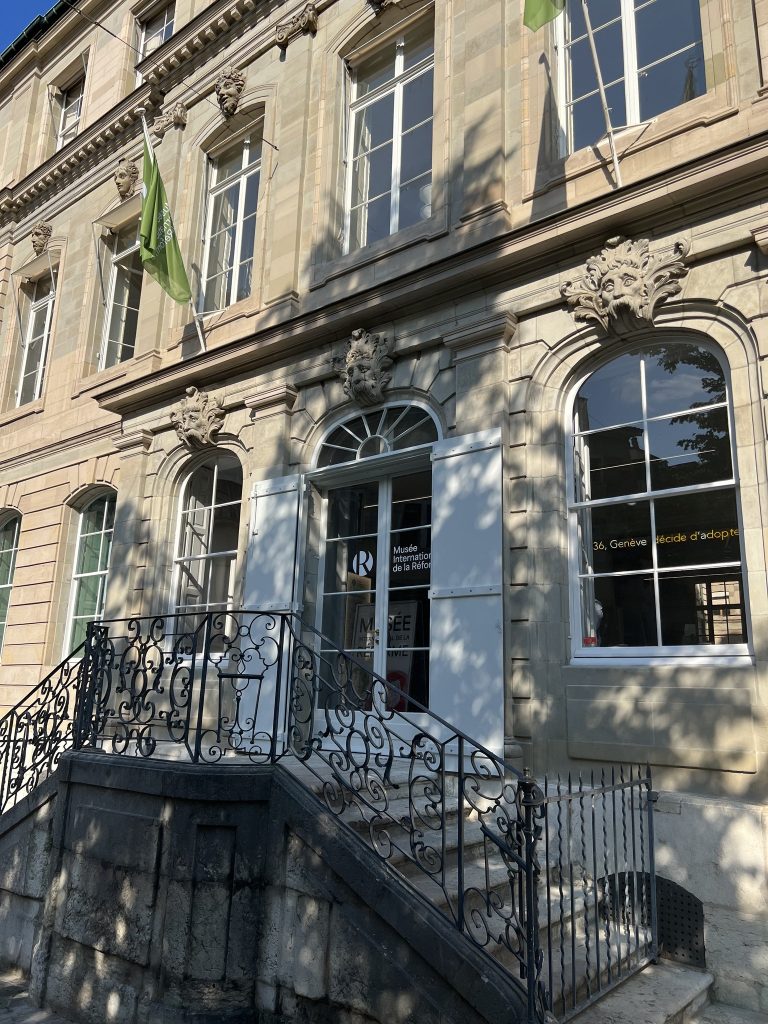
Housed in the historic Maison Mallet, an eighteenth-century building with close ties to Geneva’s past, the museum is uniquely situated on ground that has witnessed centuries of religious transformation. Archaeological remains beneath the building connect visitors to the earlier Christian history of the site, while the exhibitions above trace the dramatic changes brought about by the Reformers.
The collections of the International Museum of the Reformation are extensive and varied, bringing together manuscripts, printed books, paintings, engravings, and artifacts from across Europe. Among the highlights are early editions of the Bible, documents related to the spread of Reformed teaching, and personal items connected with leading figures of the movement. These materials help to illustrate not only the theological debates of the period but also the everyday realities of those who lived through it.
Particular attention is given to the role of Geneva as a hub for the dissemination of Reformed ideas. Under Calvin’s leadership, the city became a place of refuge for Protestant exiles and a center for printing and education. The museum explores how these networks extended far beyond Switzerland, influencing developments in France, the Netherlands, Scotland, and even the New World. In doing so, it emphasizes the international character of the Reformation and its lasting global impact.
At the same time, the museum does not shy away from the complexities and controversies of the era. It presents the Reformation as a movement marked by both conviction and conflict, including divisions among reformers and episodes of intolerance. By offering a balanced perspective, the museum encourages visitors to engage thoughtfully with the past rather than viewing it in overly simplistic terms.
The legacy of the International Museum of the Reformation lies in its ability to connect history with contemporary concerns. In a world still grappling with questions of faith, freedom, and identity, the museum serves as a place of reflection and learning. It highlights the enduring importance of conscience, the value of dialogue, and the need to understand the historical roots of modern beliefs.
Today, the museum continues to welcome visitors from around the world, providing a comprehensive and accessible account of the Reformation’s history. Through its exhibitions and educational programs, it ensures that the story of this transformative movement remains alive, offering insight and perspective for future generations.
♦ _____ ♦
From Geneve.com:
Housed in one of the most elegant town houses in the old town, next to the Cathedral, the Musée International de la Réforme presents a history of the Protestant Reformation in nine rooms. From the 16th century to the present day, paintings, manuscripts, books, prints, objects, music and films paint a portrait of an influential movement in Geneva, Switzerland and beyond. From Calvin to Martin Luther King, from Marie Dentière to Aretha Franklin, from Luther’s 95 theses to Dietrich Bonhoeffer’s handwritten letters, with Lukas Cranach, Jean Etienne Liotard or Ferdinand Hodler, the permanent exhibition offers chronological and thematic approaches. A ten-language tour guide can be activated via smartphone. Fifteen major works are brought to life in augmented reality. Two temporary exhibitions are held each year.
_____
Image Source/Credit (in order):
• Musée International De La Réforme | Geneva (>www.facebook.com/photo/?fbid=720074460125229&set=a.543777367754940)
Related
Sorry, no records were found. Please adjust your search criteria and try again.
Sorry, unable to load the Maps API.