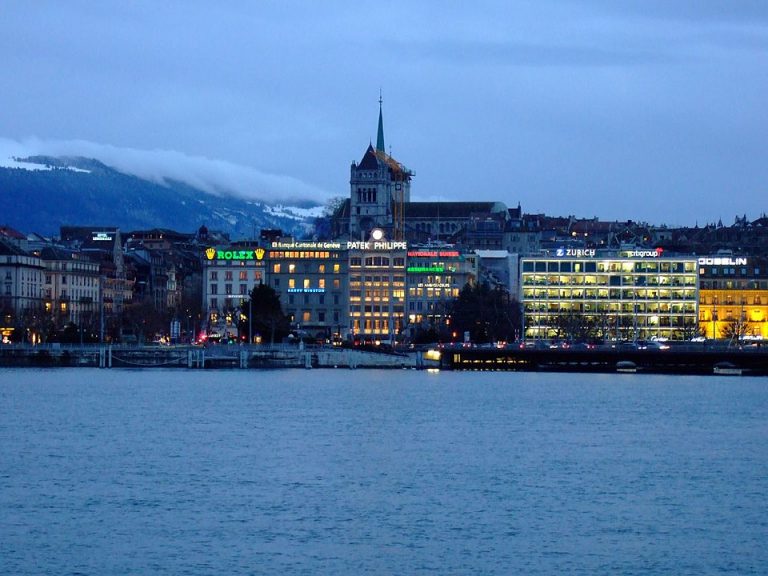
The Saint Pierre Cathedral stands at the heart of Geneva as one of the most historically and spiritually significant landmarks of the Protestant Reformation. With roots stretching back to late antiquity and a central role in the religious transformation of the sixteenth century, the cathedral embodies centuries of Christian worship, conflict, and renewal.
The site of Saint Pierre Cathedral has been a place of Christian worship since at least the fourth century. Archaeological excavations beneath the present structure reveal a complex of earlier churches, reflecting the growing importance of Geneva as a religious center in the early medieval period. Construction of the current cathedral began in the twelfth century in the Romanesque style, though it would undergo numerous modifications over the centuries, including Gothic additions and later neoclassical elements.
During the medieval era, Saint Pierre Cathedral served as the seat of the Bishop of Geneva and was a focal point of Catholic life in the region. Its interior was richly adorned with altars, images, and relics, and it functioned as a center of liturgical and ceremonial activity. However, this role would be dramatically altered in the sixteenth century with the arrival of the Protestant Reformation.
The decisive turning point came with the ministry of John Calvin. After his return to Geneva in 1541, Calvin made Saint Pierre Cathedral the primary location for his preaching. From its pulpit, he delivered sermons that emphasized the authority of Scripture, the sovereignty of God, and the need for moral and spiritual reform. Under his influence, the cathedral was stripped of its images and decorations, reflecting the Reformed commitment to simplicity in worship.
Saint Pierre Cathedral thus became the principal church of the Reformed tradition in Geneva. It was here that many of the key ideas of the Reformation were proclaimed and where the new patterns of worship were established. The transformation of the cathedral from a Catholic episcopal seat into a center of Protestant preaching symbolized the broader changes taking place throughout the city and beyond.
In addition to its role in worship, the cathedral was closely connected to the educational and organizational efforts of the Reformation. Students and ministers trained in Geneva often gathered there, and it served as a visible expression of the city’s identity as a hub of Reformed thought. Its influence extended far beyond Switzerland, as those shaped by its teaching carried Reformed theology to other parts of Europe and the wider world.
Over the centuries, Saint Pierre Cathedral has been carefully preserved and restored. Today, visitors can explore not only the main sanctuary but also the archaeological site beneath it, which provides insight into the long history of Christian worship on the location. The cathedral’s blend of architectural styles reflects the many stages of its development, while its interior retains the simplicity characteristic of Reformed churches.
The legacy of Saint Pierre Cathedral is both local and global. It stands as a symbol of Geneva’s central role in the Reformation and as a reminder of the enduring importance of faith, preaching, and community. At the same time, it invites reflection on the complexities of religious history, including the tensions and transformations that have shaped the Christian tradition.
In its enduring presence, Saint Pierre Cathedral continues to bear witness to a pivotal era in history. It remains a place where the past and present meet, offering a lasting testimony to the power of belief and the ongoing search for truth.
♦ _____ ♦
From Wikipedia:
Saint Pierre Cathedral is a historic church in Geneva, Switzerland. It was originally a Roman Catholic cathedral but became a Calvinist Church in 1535. It is known as the adopted home church of John Calvin, one of the leaders of the Protestant Reformation. Inside the church is a wooden chair used by Calvin.
_____
Image Source/Credit (in order):
• Tom Purves, CC BY 2.0 <https://creativecommons.org/licenses/by/2.0>, via Wikimedia Commons
Related
Sorry, no records were found. Please adjust your search criteria and try again.
Sorry, unable to load the Maps API.