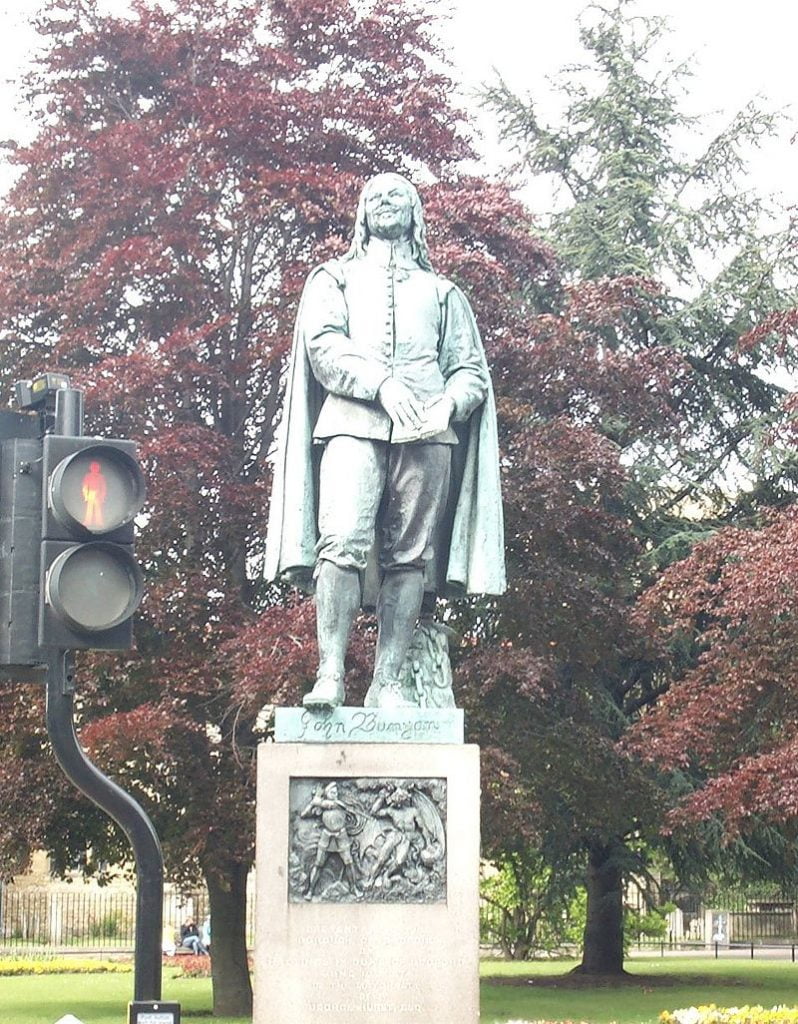
John Bunyan Statue stands prominently in the market town of Bedford, commemorating one of England’s most beloved religious writers, John Bunyan. The statue not only honors Bunyan’s literary achievement but also reflects the enduring influence of his life, his faith, and his role in the history of religious dissent.
John Bunyan (1628–1688) is best known for his classic work The Pilgrim’s Progress, an allegory that has been translated into numerous languages and read by generations of Christians around the world. Bunyan spent much of his life in and around Bedford, where he served as a preacher among the Nonconformists—those who did not adhere to the practices of the established Church of England. His refusal to conform led to his imprisonment for more than twelve years, during which time he continued to write and preach.
By the nineteenth century, Bunyan’s reputation had grown far beyond his local setting. He was widely recognized as a central figure in English religious and literary history. In Bedford, there was a strong desire to commemorate his life in a visible and lasting way. This led to the commissioning of a statue that would serve as both a tribute and a reminder of his enduring message.
The John Bunyan Statue was unveiled in 1874 and was the work of the noted Victorian sculptor Sir Joseph Edgar Boehm. The statue was funded by public subscription, reflecting the widespread admiration for Bunyan across different segments of society. Its location in St. Peter’s Green, a prominent area of Bedford, ensures that it remains a focal point for both residents and visitors.
The statue depicts Bunyan standing, holding a book—representing his writings—and gazing forward with a sense of purpose. The figure conveys both humility and determination, qualities associated with Bunyan’s life and character. Around the base of the statue are bronze relief panels that illustrate scenes from The Pilgrim’s Progress, bringing to life the characters and themes that have made the work so enduring. These artistic details add depth to the monument, connecting Bunyan’s personal story with his literary legacy.
The unveiling of the statue was a significant event in Bedford’s history. It symbolized not only local pride but also a broader recognition of the importance of religious liberty and individual conscience. Bunyan had suffered imprisonment for preaching without official approval, and by the nineteenth century, his experience was seen as part of the larger struggle for freedom of worship in England.
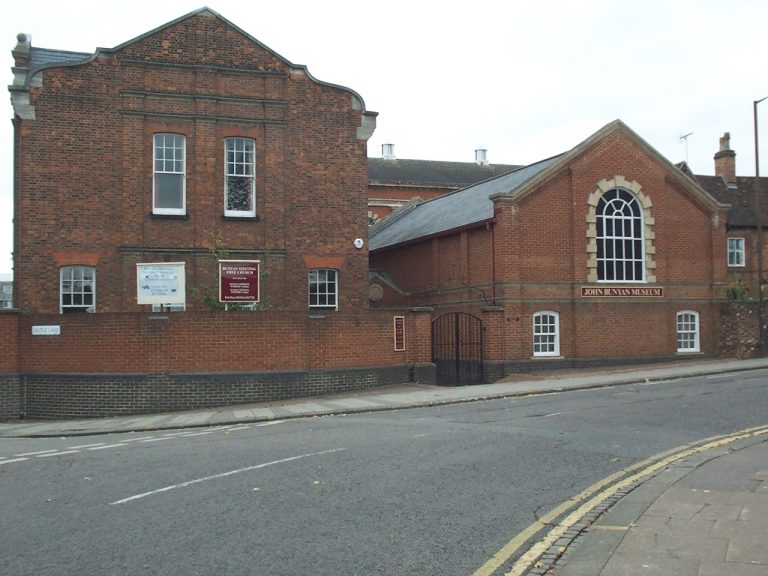
Over the years, the statue has become an integral part of Bedford’s identity. It serves as a gathering point for commemorations and events related to Bunyan’s life and work. Visitors to the town often begin their exploration of Bunyan’s legacy at the statue, before continuing to other sites such as the Bunyan Meeting Free Church and the Bunyan Museum.
The impact of the John Bunyan Statue lies in its ability to keep alive the memory of a man whose influence extends far beyond his own time. It stands as a testament to the power of conviction, the importance of religious freedom, and the enduring value of literature that speaks to the human experience.
Today, the statue continues to watch over Bedford, a silent but eloquent reminder of the town’s most famous son. Through its presence, it invites reflection on Bunyan’s life and encourages new generations to engage with the message that made him one of the most widely read authors in the English language.
_____
Image Source/Credit:
• RichTea, CC BY-SA 2.0 <https://creativecommons.org/licenses/by-sa/2.0>, via Wikimedia Commons
Related
Sorry, no records were found. Please adjust your search criteria and try again.
Sorry, unable to load the Maps API.