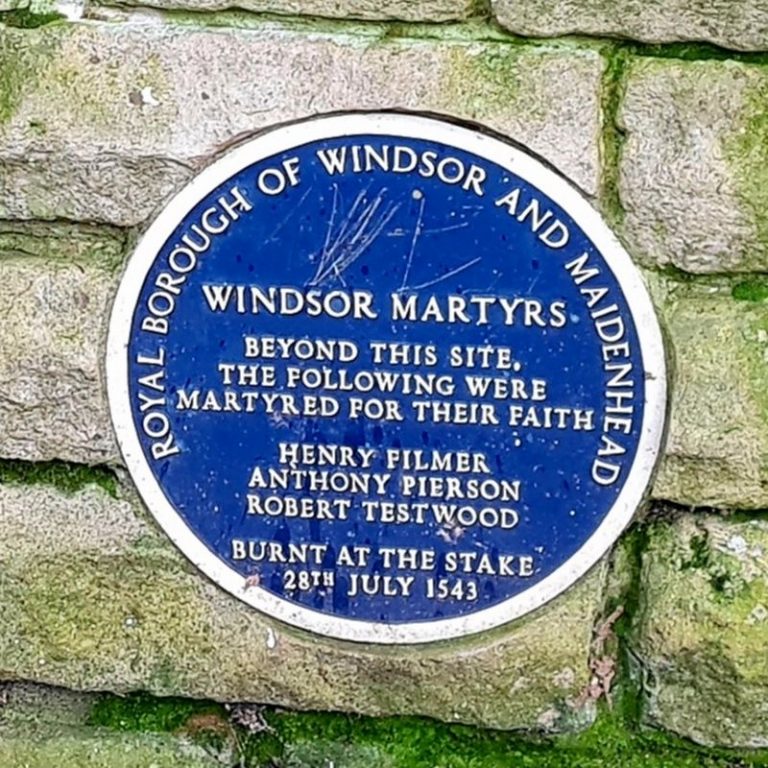
The Windsor Martyrs represent a lesser-known but deeply significant episode in the turbulent years of the English Reformation. Taking place during the reign of Henry VIII, the executions at Windsor in 1543 reveal the complex and often contradictory religious climate of the period—when reformist ideas were spreading, yet severe punishment still awaited those who moved too far beyond official boundaries.
The martyrs were three men: Henry Filmer, Robert Testwood, and Anthony Person. Each was associated with Windsor and had connections to St George’s Chapel, one of the most important ecclesiastical institutions in England. Testwood, for example, served as a singer at the chapel, placing him at the heart of royal religious life.
Their offense was adherence to Protestant doctrines, particularly those associated with the early reform movement in England. They were influenced by the growing availability of the English Bible and the teachings of reformers who emphasized justification by faith and the authority of Scripture over church tradition. In an age when access to the Bible in the vernacular was still controversial, their willingness to read, discuss, and defend these ideas brought them under suspicion.
The religious policy of Henry VIII during the 1540s was marked by inconsistency. While he had broken with Rome and established the Church of England, he remained doctrinally conservative in many respects. Laws such as the Six Articles Act (1539) reaffirmed traditional teachings and imposed harsh penalties on those who deviated from them. As a result, individuals who embraced Protestant reforms too openly could find themselves accused of heresy.
The Windsor martyrs were arrested and brought to trial under these conditions. They were subjected to interrogation and pressure to recant their beliefs. Historical accounts suggest that they remained steadfast, refusing to deny what they had come to believe from Scripture. Their trials were not merely legal proceedings but also theological confrontations, in which the accused were expected to submit to the authority of the established church.
Ultimately, all three men were condemned and executed by burning—a punishment reserved for heresy. Their deaths took place in Windsor, a location closely associated with royal authority, which underscored the seriousness with which their perceived offenses were regarded. The manner of their execution was intended not only to punish but also to serve as a warning to others.
Despite the intent to suppress reformist ideas, the deaths of the Windsor martyrs contributed to the spread of Protestant conviction. Stories of their courage circulated among sympathizers, reinforcing the belief that their cause was just. In later years, their accounts were preserved in Protestant martyrologies, most notably in the works of John Foxe, whose Book of Martyrs helped shape Protestant identity in England.
The legacy of the Windsor martyrs lies in their witness to conscience and conviction. They were not prominent political figures or leading theologians, but ordinary men who held firmly to their beliefs in the face of death. Their story illustrates the human cost of religious change during the Reformation and the dangers faced by those who sought to follow Scripture as they understood it.
Today, the Windsor martyrs are remembered as part of the broader history of religious struggle in England. Their lives and deaths serve as a reminder of a time when matters of faith were deeply contested and often perilous. In honoring their memory, one recognizes the enduring importance of religious conviction and the sacrifices made by those who sought to uphold it.
_____
Image Source/Credit:
• Photographed by Stephen Palmer, March 5, 2023, HMDB.org
Related
Sorry, no records were found. Please adjust your search criteria and try again.
Sorry, unable to load the Maps API.