Thanks to Sarah (friend of the site) for finding this and noting the Wikipedia article:
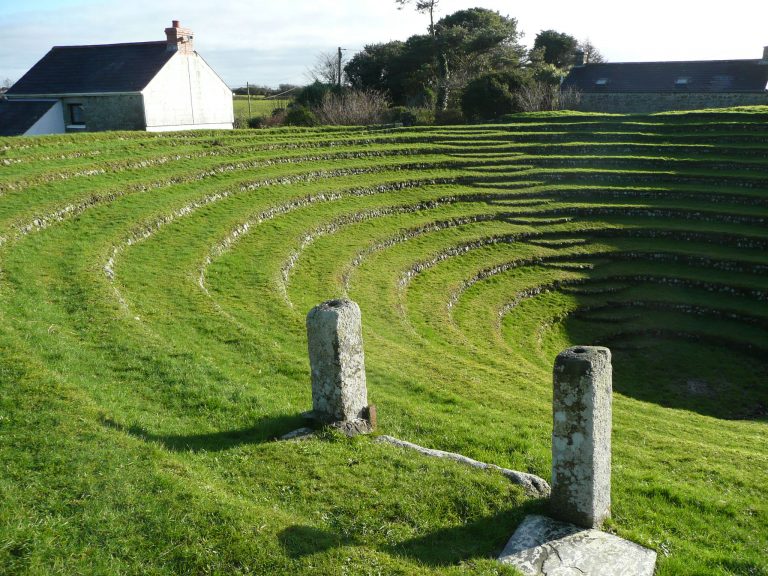
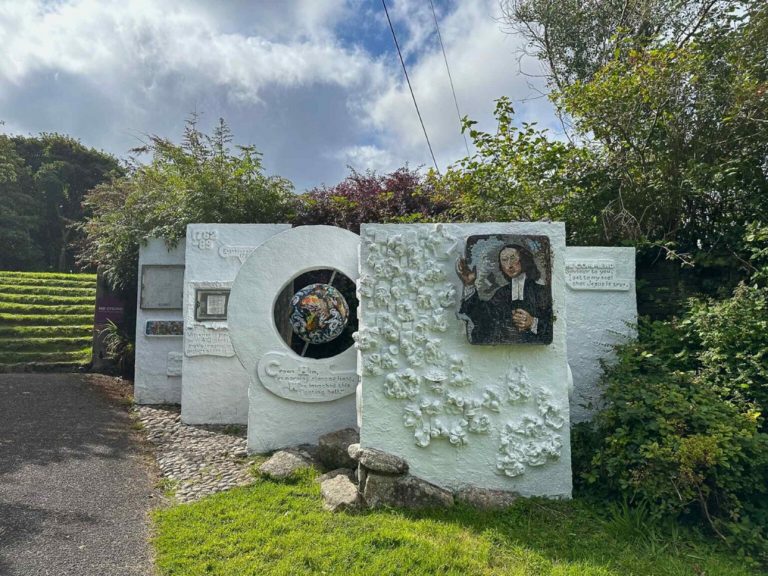
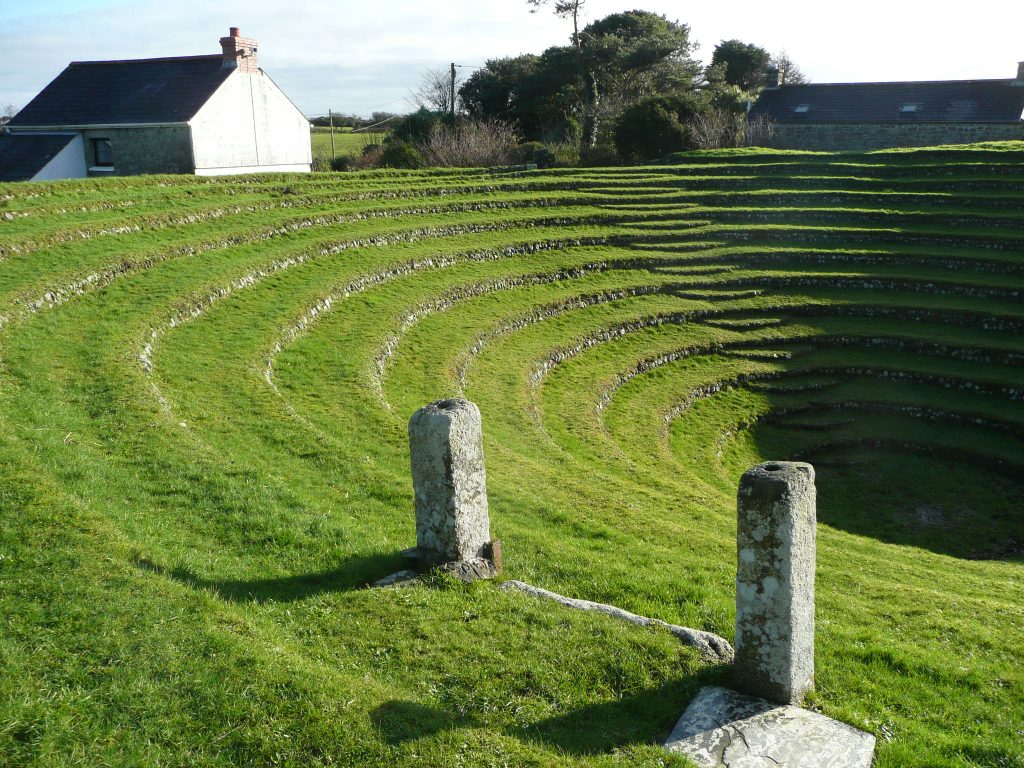
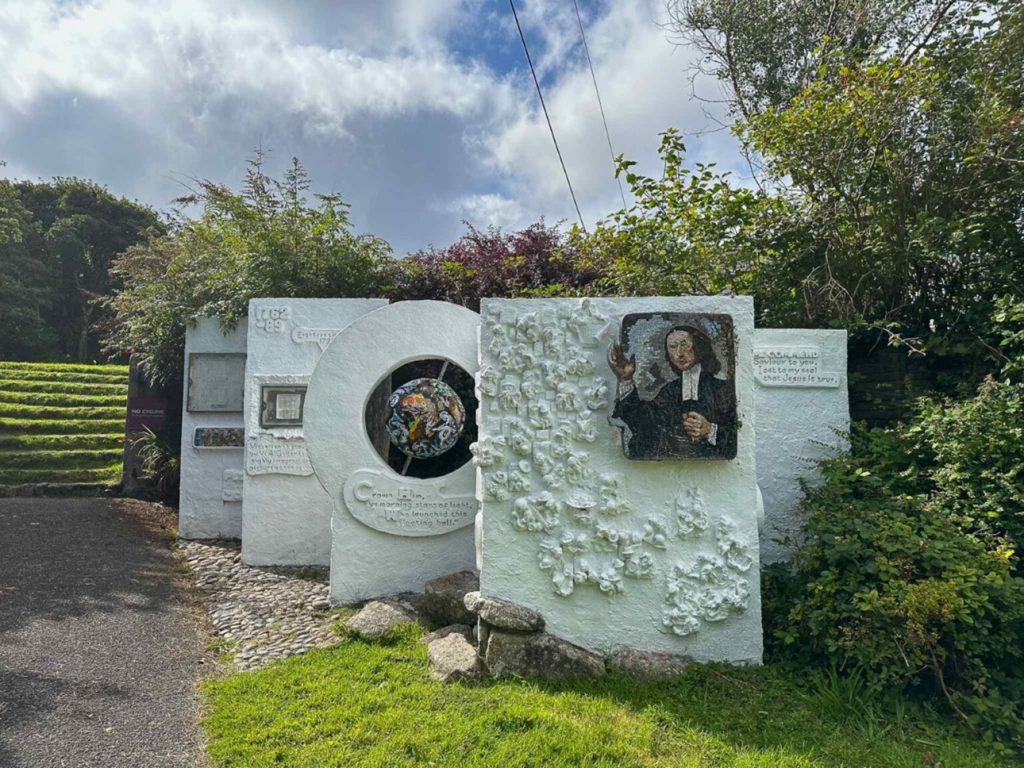
On 6 September 1762 John Wesley came to Gwennap and attracted a great crowd of copper tin miners. Unfortunately the day was very windy and Wesley could not make himself heard. Someone suggested the shelter of Gwennap Pit, about 1.5 miles away, so the whole crowd walked there and Wesley was able to preach his sermon. Wesley’s Journal records, “The wind was so high that I could not stand at the usual place at the village of Gwennap; but a small distance was a hollow capable of containing many thousands of people. I stood on one side of this amphitheatre towards the top and with people beneath on all sides, I enlarged on those words in the gospel for the day, ‘Blessed are the eyes which see the things that ye see….hear the things that ye hear.'”He continued to use the Pit for a total of 18 times. The pit provides comfortable seating for 2,000. His final visit was in 1789.The white concrete is known as the Wesley pulpit.
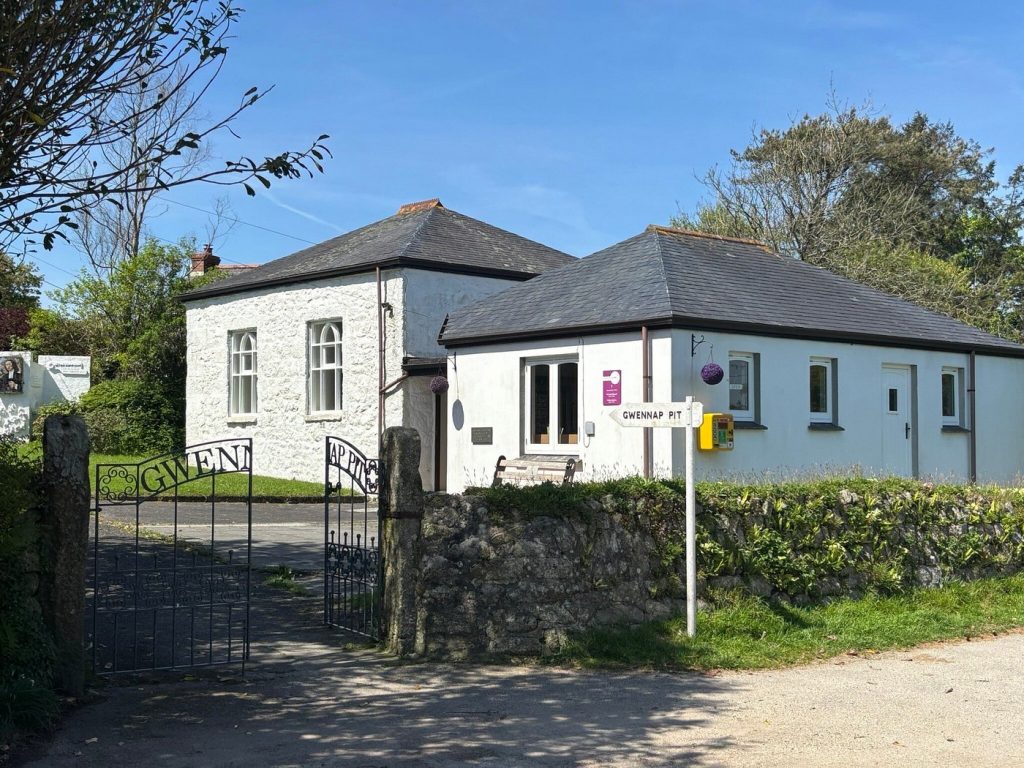
Gwennap Pit is one of the most remarkable outdoor preaching sites in the history of British Christianity. Located near the village of Gwennap, the natural amphitheater became closely associated with the ministry of John Wesley and the rise of the Methodist movement in the eighteenth century.
Gwennap Pit was originally the result of mining activity. Cornwall was a major center of tin and copper mining, and the ground at the site had collapsed into a circular depression formed by the sinking of an abandoned mine shaft. Over time, the hollow created a bowl-shaped formation with natural tiers of earth that resembled the seating of an amphitheater. Because of its unique shape, the site proved ideal for large outdoor gatherings.
John Wesley first preached at Gwennap Pit in 1762 during his extensive travels through Cornwall. Wesley often held meetings in open-air locations because many churches refused to allow Methodist preachers to use their pulpits. The natural acoustics of the pit allowed large crowds to hear his sermons clearly, even when thousands of people gathered to listen.
Wesley quickly came to regard Gwennap Pit as one of his favorite preaching locations. He is said to have preached there on numerous occasions during the later years of his ministry. In his journal, Wesley described the pit as “the most magnificent spectacle I have ever seen,” referring to the vast crowds that filled the terraced slopes while he stood at the center to deliver his message.
The site soon became an important center for Methodist gatherings in Cornwall. Large crowds of miners and local residents assembled there to hear preaching, sing hymns, and participate in revival meetings. The gatherings helped spread Methodist teaching throughout the mining communities of the region and strengthened the movement’s influence in Cornwall.
In later years, Gwennap Pit was preserved and maintained as a historic religious landmark. A small pulpit structure was erected at the center of the pit to mark the place where Wesley preached. The site eventually came under the care of the Methodist Church of Great Britain, which continues to preserve it today.
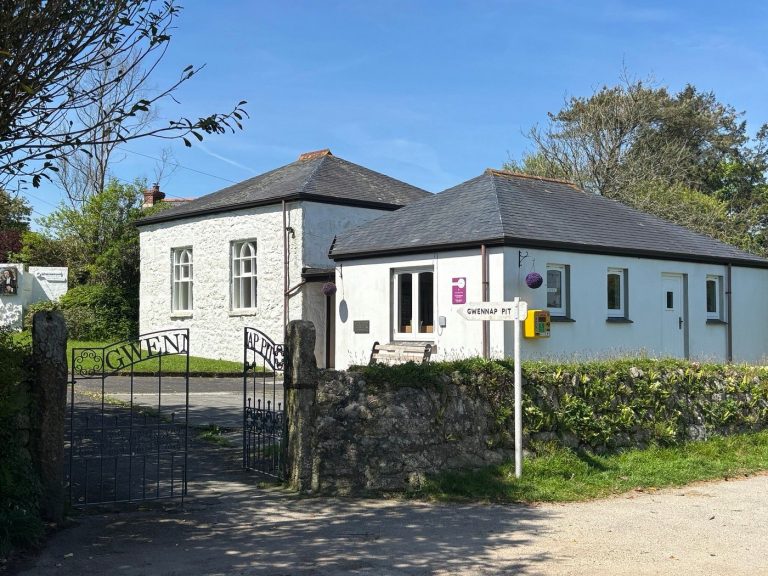
Now recognized as an important part of Methodist heritage, Gwennap Pit remains a place of pilgrimage for many who are interested in the history of the Methodist movement. Visitors come to see the natural amphitheater and reflect on the powerful open-air preaching that once drew thousands to hear the message of John Wesley.
_____
Image Source/Credit (in order):
• The ‘pulpit’, Gwennap Pit by Humphrey Bolton, CC BY-SA 2.0 <https://creativecommons.org/licenses/by-sa/2.0>, via Wikimedia Commons
• Smith, Nick. “Gwennap Pit.” Explore Cornwall, 26 Aug. 2024 (explorecornwall.uk/attractions/gwennap-pit)
• Tripadvisor. “Gwennap Pit (2026) All You MUST Know Before You Go (W/ Reviews).” Tripadvisor (www.tripadvisor.ca/Attraction_Review-g528871-d2271992-Reviews-Gwennap_Pit-Redruth_Cornwall_England.html)
Related
Sorry, no records were found. Please adjust your search criteria and try again.
Sorry, unable to load the Maps API.