The Neshaminy Presbyterian Church, often associated with William Tennent, stands as one of the most important sites connected with the early Presbyterian movement and the Great Awakening in colonial America. Located in Warminster, Pennsylvania, the church is closely linked to the life and ministry of Tennent, whose influence helped shape American evangelical religion in the eighteenth century.
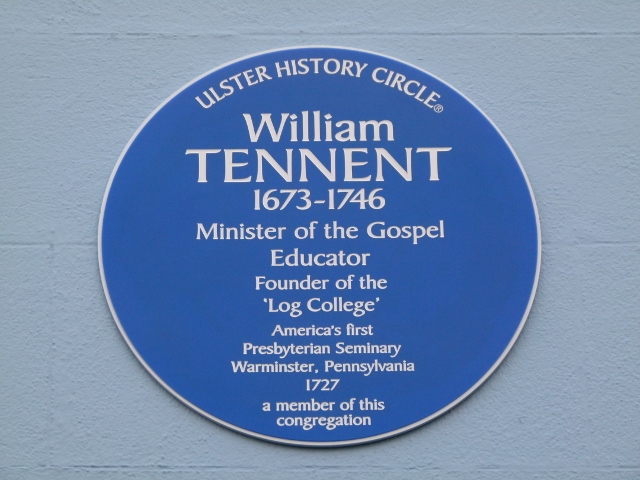
William Tennent, born in Ireland in 1673, emigrated to the American colonies in the early 1700s. Originally ordained in the Anglican Church, he later joined the Presbyterian ministry and became a leading figure in the development of Presbyterianism in the Middle Colonies. Around 1716, he established a congregation at Neshaminy, which would become the center of his pastoral work for the remainder of his life.
The church itself, though rebuilt and expanded over time, traces its origins to these early gatherings of believers under Tennent’s leadership. He was known for his strong emphasis on sound doctrine, personal piety, and the necessity of a well-trained ministry. It was out of this concern that he established what became known as the “Log College,” a small theological school located nearby.
The Log College, though modest in structure, was profound in its influence. It served as a training ground for ministers who would play key roles in the Great Awakening, a widespread revival movement that swept through the American colonies in the 1730s and 1740s. Among its most notable students was Gilbert Tennent, William Tennent’s son, who became a powerful voice in the revival.
Neshaminy Presbyterian Church thus became more than a local congregation—it was a center of spiritual renewal and theological education. The preaching associated with the church emphasized the need for genuine conversion, heartfelt religion, and a personal relationship with God. These themes resonated deeply with many colonists and contributed to the spread of evangelical Christianity across the region.
The legacy of William Tennent’s Church is closely tied to the broader development of American Presbyterianism. The ministers trained at the Log College helped to establish new congregations, promote revival preaching, and influence the direction of the church in America. Their efforts also played a role in shaping the intellectual and spiritual climate that would later contribute to the founding of institutions such as the College of New Jersey, now known as Princeton University.
Over the centuries, Neshaminy Presbyterian Church has been preserved as a historic site. The present building, dating from the early nineteenth century, stands as a reminder of the congregation’s long history, while the surrounding grounds include the burial place of William Tennent himself. Visitors to the site can reflect on the humble beginnings of a movement that would have a lasting impact on American religious life.
Today, the church continues as an active congregation, maintaining its connection to the past while serving a modern community. Its enduring presence speaks to the strength of the foundations laid by Tennent and his associates.
In its history and legacy, William Tennent’s Church represents the power of faithful ministry combined with a commitment to education and spiritual renewal. From a simple meeting place in colonial Pennsylvania emerged a center of influence that helped shape the course of American Christianity, leaving a legacy that continues to be felt to this day.
_____
Image Source/Credit:
• Website design and website development by Tibus. Rev William Tennent Celebrated With Blue Plaque (www.ulsterscotsagency.com/news/article/511/rev-william-tennent-celebrated-with-blue-plaque)
Related
Sorry, no records were found. Please adjust your search criteria and try again.
Sorry, unable to load the Maps API.