
The Protestant Martyrs’ Prison stands as a solemn reminder of religious conflict and steadfast faith during one of the most turbulent periods in European history. Located in the medieval citadel of Sighișoara, this small but historically significant site is traditionally associated with the imprisonment of Protestant believers during times of persecution, particularly in the sixteenth and seventeenth centuries.
Sighișoara itself is one of the best-preserved medieval towns in Eastern Europe, its fortified walls and narrow streets bearing witness to centuries of political and religious change. During the era of the Reformation, Transylvania became a region marked by a unique mixture of religious traditions, including Lutheran, Calvinist, Unitarian, and Roman Catholic communities. While the region is often noted for its relative tolerance compared to other parts of Europe, periods of tension and conflict were nevertheless unavoidable. It is within this complex historical landscape that the Protestant Martyrs’ Prison finds its place.
The prison is believed to have been used to detain individuals who adhered to Protestant teachings during times when such beliefs were under pressure or viewed with suspicion. Though detailed records are limited, tradition holds that those confined within its walls were subjected to hardship for their refusal to renounce their faith. These prisoners were often ordinary men and women—preachers, teachers, and lay believers—whose commitment to their convictions placed them at odds with prevailing authorities.
Architecturally, the prison is modest and austere. Typically consisting of a small, enclosed chamber built of stone, it conveys an immediate sense of confinement and severity. The thick walls, narrow openings, and limited light serve as a tangible reminder of the conditions endured by those held within. Unlike grand cathedrals or monuments, the simplicity of the structure underscores the personal nature of the suffering it represents. It is not a place of public spectacle but of quiet endurance.
The significance of the Protestant Martyrs’ Prison lies not only in its physical presence but in what it symbolizes. It represents the broader struggle for religious conviction that defined much of the Reformation era. Across Europe, individuals faced imprisonment, exile, or death for their beliefs. In this context, the prison in Sighișoara becomes part of a larger story—a story of conscience, courage, and the cost of faithfulness.
Visitors to the site today often approach it with a sense of reverence. Though small, the prison invites reflection on the sacrifices made by those who came before. It serves as a place to consider the value of religious freedom and the price that has sometimes been paid to secure it. For many, it is also a reminder of the importance of tolerance and mutual respect in a world still marked by differences of belief.
The memory of Protestant martyrs has long been preserved in church history, through writings, hymns, and commemorations. Sites such as this prison provide a physical connection to those accounts, grounding them in a specific place and time. They help ensure that the stories of these individuals are not forgotten, even as the centuries pass.
In modern times, the Protestant Martyrs’ Prison has become part of Sighișoara’s broader historical heritage. The town itself is recognized as a UNESCO World Heritage site, drawing visitors from around the world who come to experience its medieval character. Within this setting, the prison offers a quieter, more contemplative point of interest, distinct from the more prominent towers and public squares.
Ultimately, the Protestant Martyrs’ Prison stands as a symbol of steadfast conviction. It reminds us that history is not only shaped by kings and armies but also by individuals who remained faithful under pressure. Their stories, preserved in places like this, continue to speak across generations. In remembering them, we are called to reflect on our own values and the principles we hold dear.
Though simple in form, the prison carries a weight of meaning that far exceeds its size. It is a place where history, faith, and memory converge—a lasting testament to those who endured hardship rather than abandon their beliefs.
_____
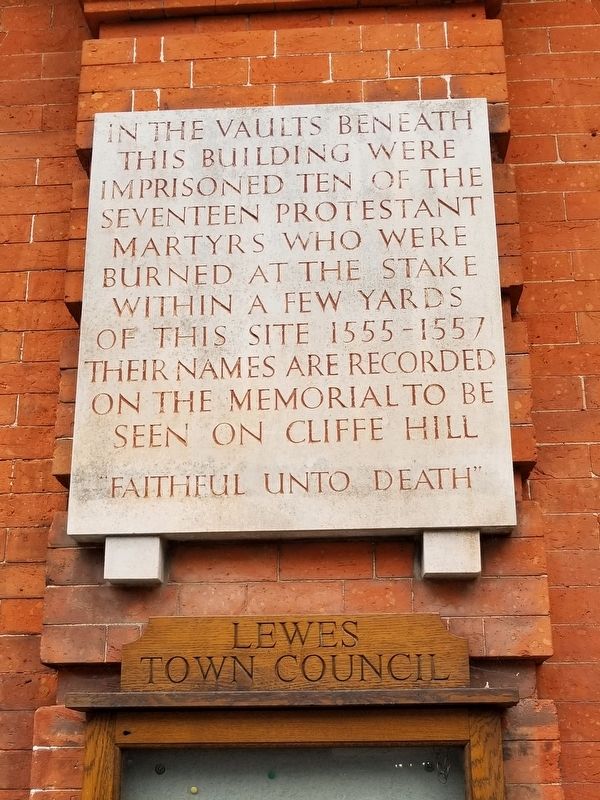
Image Source/Credit:
• Photographed by Michael Herrick, September 12, 2018, HMDB.org
Related
Sorry, no records were found. Please adjust your search criteria and try again.
Sorry, unable to load the Maps API.