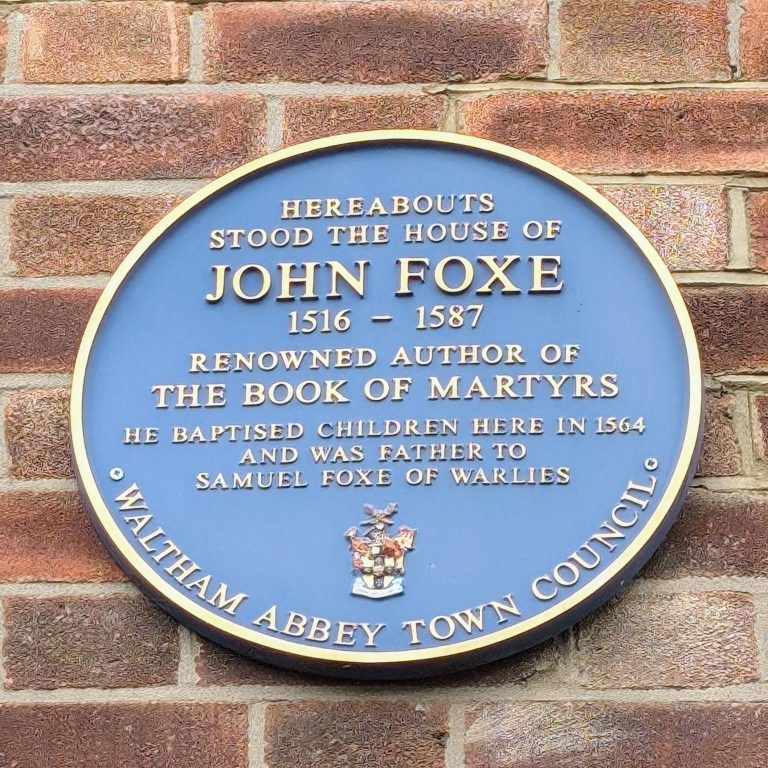
John Foxe (1516–1587) was an English historian and Protestant writer best known for his influential work documenting the suffering of Christians during periods of religious persecution. His writings played an important role in shaping Protestant identity in England and preserving the memory of those who died for their faith during the English Reformation.
Foxe was born in 1516 in Boston. He received his education at Oxford University, where he became known for his scholarly ability and interest in classical literature and theology. While studying at Oxford, Foxe gradually embraced Protestant beliefs, which were spreading across Europe following the teachings of reformers such as Martin Luther.
Because Protestant ideas were considered dangerous during certain periods of English history, Foxe eventually faced difficulties for his beliefs. When the Catholic Queen Mary I of England came to the throne, persecution of Protestants intensified. Foxe fled to the European continent, joining other English Protestant exiles who sought refuge in cities such as Basel and Strasbourg.
While living in exile, Foxe began compiling accounts of Christians who had been persecuted or executed for their Protestant faith. After the accession of Elizabeth I, Foxe returned to England and published his most famous work, Acts and Monuments in 1563. The book, often popularly known as Foxe’s Book of Martyrs, described in vivid detail the experiences of individuals who had suffered for their faith, particularly during the reign of Mary I.
The work quickly became one of the most widely read books in Protestant England, second only to the Bible in many households. Churches sometimes placed copies where parishioners could read the accounts of the martyrs. Foxe’s writing helped preserve the stories of figures such as Hugh Latimer and Nicholas Ridley, whose executions became powerful symbols of Protestant perseverance.
Although historians today carefully evaluate some of Foxe’s sources, his work remains an important historical record of Reformation-era persecution. More importantly, it shaped the religious memory of generations of English Protestants.
John Foxe spent his later years continuing his scholarship and ministry before his death in 1587. His legacy endures through the lasting influence of his writings, which preserved the stories of countless individuals who stood by their faith during one of the most turbulent periods in English religious history.
_____
Image Source/Credit:
• The Wub, CC 4.0
Related
Sorry, no records were found. Please adjust your search criteria and try again.
Sorry, unable to load the Maps API.