Hymn History: The Doxology
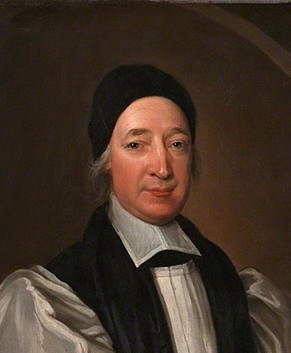
Author: Thomas Ken
“He came as near to the ideal of Christian perfection as human weakness permits.”
(Stephen C. Weber)
The Origin of the Hymn “Doxology”
The hymn “Doxology” — most commonly known by its opening line, “Praise God, from whom all blessings flow” — is one of the most widely recognized and enduring expressions of Christian praise. Simple in structure yet profound in meaning, it has been sung for centuries in churches across many denominations, often as a concluding act of worship.
The text of the “Doxology” was written by Thomas Ken (1637–1711), an English clergyman and one of the earliest and most influential writers of English hymnody. Ken composed the verses as part of a larger work titled A Manual of Prayers for the Use of the Scholars of Winchester College, published in 1674. Within this devotional manual, he included morning and evening hymns for students, each concluding with a short stanza of praise to God. It is this concluding stanza that became known as the Doxology.
The word “doxology” itself comes from Greek roots meaning “a word of glory” or “an expression of praise.” Ken’s text reflects this idea perfectly. In just a few lines, it offers praise to God the Father, Son, and Holy Spirit, affirming the doctrine of the Trinity in a clear and memorable way:
Praise God, from whom all blessings flow;
Praise Him, all creatures here below;
Praise Him above, ye heavenly host;
Praise Father, Son, and Holy Ghost.
The music most commonly associated with the Doxology is the tune known as Old 100th, which is often attributed to Louis Bourgeois and dates back to the sixteenth century. Originally composed for a metrical version of Psalm 100 in the Genevan Psalter, the tune was later paired with Ken’s text. The combination proved remarkably effective, uniting a stately melody with words of universal praise.
By the eighteenth and nineteenth centuries, the Doxology had become a standard element of Protestant worship, especially in English-speaking churches. It was often sung at the conclusion of services, after the offering, or as part of special ceremonies. Its brevity and familiarity made it easy for congregations to memorize and sing together, reinforcing a shared sense of reverence and unity.
The hymn’s influence extends beyond any single denomination. It has been embraced by Anglican, Methodist, Presbyterian, Baptist, and many other traditions. Its use in both formal liturgies and informal gatherings has made it one of the most unifying hymns in Christian worship. Even in settings where musical styles vary widely, the Doxology often remains a common element.
One of the enduring strengths of the Doxology is its theological clarity. In a few simple lines, it expresses gratitude for God’s blessings, calls all creation to praise, and affirms the triune nature of God. This balance of simplicity and depth has allowed it to remain relevant across generations.
The legacy of the Doxology is also tied to its role in shaping patterns of worship. For many believers, it serves as a natural conclusion to prayer, a moment of reflection, or a response to God’s goodness. Its repeated use over centuries has embedded it deeply in the memory and practice of the church.
Today, “Praise God, from Whom All Blessings Flow” continues to be sung around the world. Whether in a small country church or a large cathedral, the Doxology remains a timeless expression of praise. Its enduring presence is a testament to the power of simple, faithful words joined with a melody that has carried them through the ages.
_____
Image Source/Credit (in order):
• Thomas Ken | Hymnary.org (hymnary.org/person/Ken_Thomas)
• Thomas Ken | Hymnary.org (hymnary.org/person/Ken_Thomas)
Related

Sorry, no records were found. Please adjust your search criteria and try again.
Sorry, unable to load the Maps API.