

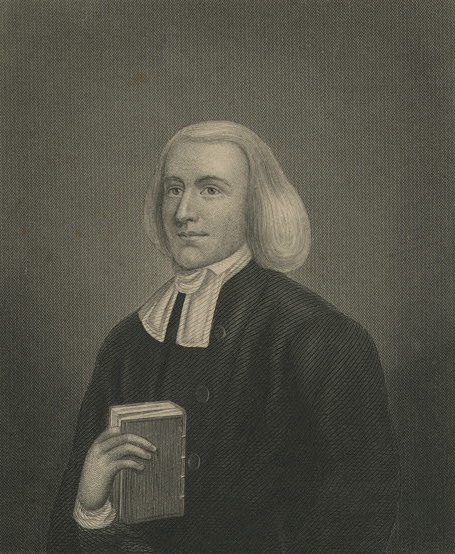
John Gano (1727–1804) stands as one of the most influential Baptist leaders in early American history. A preacher, patriot, and church organizer, Gano’s life intersected with some of the most formative moments of the eighteenth century, including the spiritual awakenings that reshaped colonial religion and the political upheaval of the American Revolution. His legacy endures not only in Baptist life but also in the broader story of religious liberty in the United States.
John Gano was born on July 22, 1727, in Hopewell Township, New Jersey, into a family of French Huguenot descent. His father, Daniel Gano, was a devout man who helped shape John’s early religious inclinations. As a young man, Gano initially pursued a practical trade—learning to be a surveyor—but his spiritual interests soon led him toward ministry. Influenced by the fervor of the Great Awakening, he experienced a deep personal conversion and committed himself to preaching the gospel.
Gano was ordained as a Baptist minister in 1754. At that time, Baptists were still a minority group in the American colonies, often viewed with suspicion by established churches such as the Congregationalists and Anglicans. Despite these challenges, Gano proved to be a tireless evangelist. He traveled extensively throughout the Middle Colonies and the South, preaching in rural communities and frontier settlements. His message emphasized personal faith, believer’s baptism, and the authority of Scripture—hallmarks of Baptist theology.
One of Gano’s most notable early pastorates was in Morristown, New Jersey, where he helped establish and strengthen a Baptist congregation. His reputation as a powerful and persuasive preacher continued to grow, and he became known for his ability to connect with ordinary people. Unlike more formal clergy of the era, Gano’s style was direct and heartfelt, reflecting the revivalist spirit of the age.
With the outbreak of the American Revolutionary War, Gano’s role expanded beyond the pulpit. A committed patriot, he supported the cause of independence and served as a chaplain in the Continental Army. During the war, he ministered to soldiers, preached sermons, and provided spiritual encouragement in difficult circumstances. His presence among the troops highlighted the important role clergy played in sustaining morale and reinforcing the moral dimension of the revolutionary cause.
Gano’s connection to George Washington has become one of the most discussed aspects of his life. According to a long-standing Baptist tradition, Gano baptized Washington by immersion in the Hudson River in 1780. While historians continue to debate the historical certainty of this event, the story has held symbolic importance among Baptists, representing the possibility that even the nation’s foremost leader embraced their distinctive practice of believer’s baptism.
After the war, Gano accepted a call to pastor the First Baptist Church of New York City, one of the most prominent Baptist congregations in the young nation. He served there for several years, helping to rebuild the church after the disruptions of the war and contributing to the growth of Baptist influence in an urban setting. Later, he moved to Kentucky, where he continued his ministry on the American frontier. In this new environment, Gano once again took on the role of a pioneer preacher, helping to establish churches and strengthen the Baptist presence in the expanding western territories.
Throughout his life, Gano was deeply committed to the principle of religious liberty. Baptists in the eighteenth century often faced legal restrictions and social discrimination, particularly in colonies where established churches dominated public life. Gano and his fellow ministers advocated for the separation of church and state, arguing that faith must be freely chosen rather than imposed by government authority. This conviction aligned closely with the broader revolutionary ideals of freedom and individual rights.
John Gano died on August 10, 1804, in Kentucky, leaving behind a legacy that extended far beyond his immediate ministry. He had helped to shape the Baptist movement during a critical period of growth and transition, guiding it from a marginalized sect into a more established and influential denomination. His efforts in church planting, evangelism, and pastoral leadership laid a foundation for future generations.
In assessing Gano’s legacy, it is clear that his influence operated on several levels. As a preacher, he brought the message of the gospel to countless individuals across a wide geographic area. As a patriot, he contributed to the spiritual life of the American Revolution. And as an advocate for religious liberty, he helped to advance principles that would become central to the American experiment.
Today, John Gano is remembered as a man whose life bridged faith and public life in a remarkable way. His story illustrates how religious conviction and civic responsibility were often intertwined in the early years of the United States. For Baptists in particular, he remains a figure of enduring respect—a faithful minister who helped shape both their tradition and the nation in which it took root.
_____
Image Source/Credit (in order):
• Public domain, via Wikimedia Commons
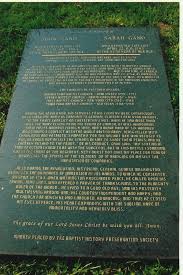
• John Gano’s Gravemarker, Frankfort, KY Cemetery (baptisthistoryhomepage.com/gano.john.gravemarker.html)
Related
Sorry, no records were found. Please adjust your search criteria and try again.
Sorry, unable to load the Maps API.