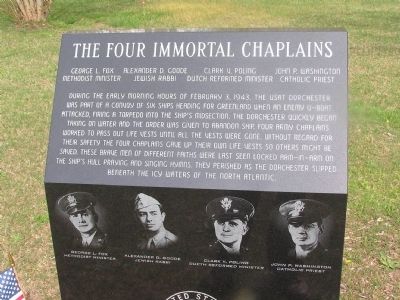
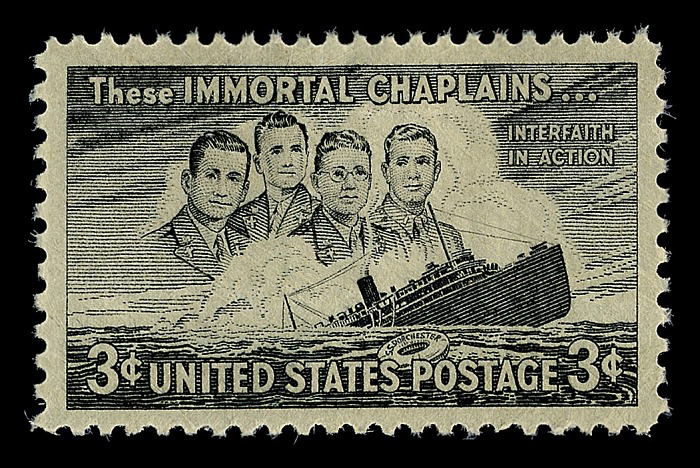
The story of the Four Chaplains disaster remains one of the most moving accounts of courage and self-sacrifice in modern history. Often referred to as “The Four Immortal Chaplains,” these four men—George L. Fox, Alexander D. Goode, John P. Washington, and Clark V. Poling—gave their lives during World War II in an act of extraordinary compassion and unity.
On February 3, 1943, the troop transport ship USAT Dorchester was crossing the icy waters of the North Atlantic, carrying over 900 soldiers and crew members. The ship was part of a convoy en route to Greenland when it was struck by a torpedo from a German U-boat. The explosion caused widespread panic as the ship quickly began to sink in the freezing darkness.
Amid the chaos, the four chaplains moved calmly among the frightened soldiers. Each represented a different faith tradition—Methodist, Jewish, Roman Catholic, and Reformed—but in that moment, denominational distinctions faded. Witnesses later recalled how they offered prayers, comforted the injured, and guided men to lifeboats. Their presence brought a sense of order and hope in a situation that might otherwise have descended entirely into despair.
As the ship continued to sink, it became clear that there were not enough life jackets for everyone. Without hesitation, the chaplains removed their own life vests and gave them to four young soldiers. This simple yet profound act sealed their fate. In the freezing waters of the North Atlantic, survival without a life jacket was almost impossible.
Eyewitnesses who survived the disaster described seeing the four men standing together on the deck as the ship went down. They were praying and encouraging others, linked arm in arm, united not only in purpose but in sacrifice. Their final moments have become a powerful symbol of selflessness and faith under extreme circumstances.
Of the more than 900 men aboard the Dorchester, 672 lost their lives. Yet the actions of the Four Chaplains ensured that many others survived. Their example quickly spread across the United States, becoming a source of inspiration during a time of global conflict. Newspapers, churches, and civic organizations shared their story, emphasizing the unity and courage they displayed.
In the years following the war, the Four Chaplains were honored in numerous ways. Memorials were established, including chapels, statues, and commemorative events. In 1960, Congress authorized a special medal—the Four Chaplains’ Medal—to recognize their heroism. Though it was awarded posthumously, it stands as a lasting tribute to their sacrifice.
Beyond formal recognition, the legacy of the Four Immortal Chaplains continues to resonate on a deeper level. Their story speaks to the power of faith expressed through action. It also highlights the importance of unity across religious and cultural lines. At a time when differences could easily divide, these four men demonstrated that compassion and service transcend such boundaries.
Their example has been particularly meaningful in military contexts, where chaplains serve soldiers of many backgrounds and beliefs. The Four Chaplains embody the ideal of ministry in its purest form—placing the needs of others above one’s own, even at the cost of life itself.
Today, the story of the Four Immortal Chaplains is remembered each year on Four Chaplains Day, observed on February 3. Their legacy endures not only in monuments and ceremonies but in the values they exemplified: courage, sacrifice, and unity. In a moment of great crisis, they chose to act with compassion and faith, leaving behind a powerful testimony that continues to inspire generations.
_____
Image Source/Credit (in order):
• The Four Immortal Chaplains Historical Marker. 19 Mar. 2026 (www.hmdb.org/m.asp?m=41887)
• United States Post Office Department, Public domain, via Wikimedia Commons
Related
Sorry, no records were found. Please adjust your search criteria and try again.
Sorry, unable to load the Maps API.