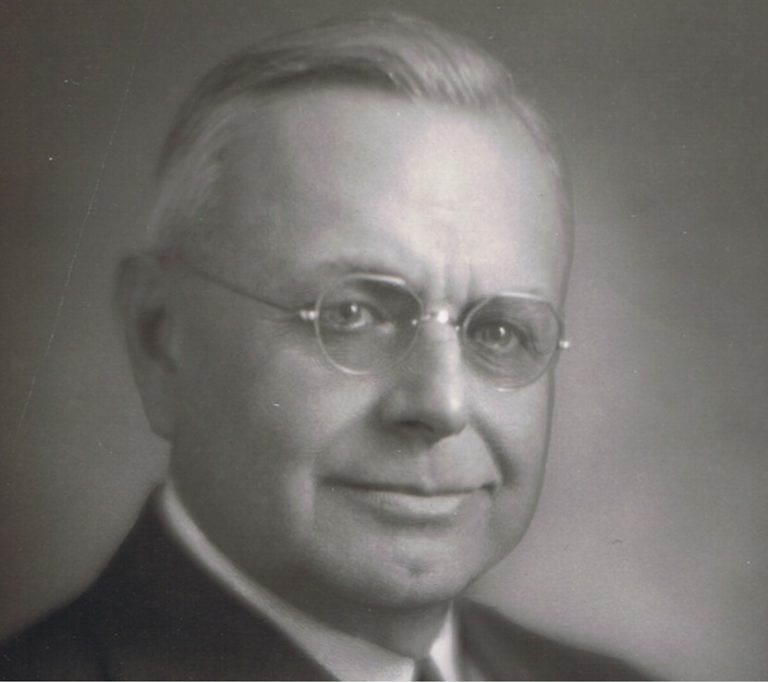
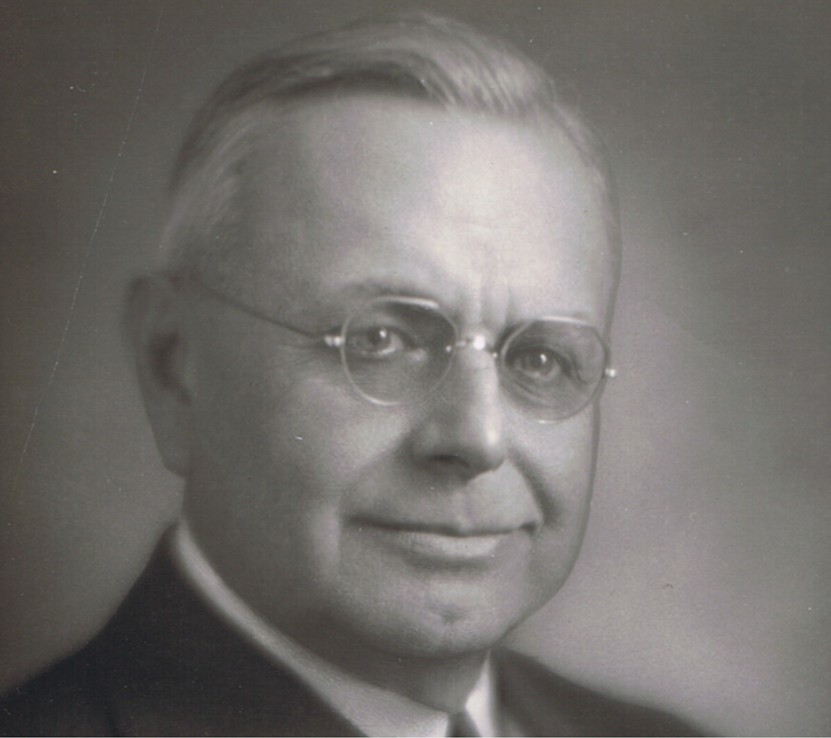
Melvin Ernest Trotter
“Mel Trotter believed the old saying, ‘saved to serve.’ … His mission work provided shelter to the homeless, clothing to the poor, and food to the hungry. But primarily his ministry provided people the
gospel of Jesus Christ.”
(David Oliver)
The Life and Legacy of Melvin Ernest Trotter
Melvin Ernest Trotter stands among the most compelling testimonies to the transforming power of Christian grace in the early twentieth century. His story is not that of a man born into influence or steeped in religious discipline from youth. Rather, his name endures because he rose from the depths of addiction and despair to become one of the era’s most trusted rescue-mission leaders and evangelists. In an age when revival movements swept across the nation, Trotter offered a living example of what the Lord can do with a man fully yielded to Him. His life demonstrated the quiet strength of simple faith and the practical effectiveness of ministry directed toward the down-and-out.
Trotter was born on May 16, 1870, in Orangeville, Illinois, the son of a barber who himself struggled with alcohol. Though his parents cared for him, the instability caused by his father’s bondage to drink shaped the boy’s early years. As Mel grew older, he followed in the same destructive path. By his teens, he had already formed habits that would tighten their grip in the years to come. He trained as a barber and eventually married, but even these responsibilities could not pull him free from his addiction. His alcoholism worsened until his life spiraled into crisis after crisis, causing harm not only to himself but also to those he loved.
A tragic turning point came with the death of his young child. Trotter later testified that, in the depth of his grief and shame, he stole the shoes from his own child’s body to pawn them for drink. It was this moment that confronted him with the true cost of his sin. Broken, guilt-ridden, and nearly hopeless, he boarded a train to Chicago with the intent of ending his life. Providence, however, had other plans. After stepping off the train in early January of 1897, he wandered into the Pacific Garden Mission—known already as a place where many lost men had found new life. There he heard a straightforward gospel message from the mission’s superintendent, the earnest Harry Monroe. The words were simple, the appeal direct, and that night Trotter surrendered his life to Christ. The burden he carried for years lifted, replaced with the peace he had long sought.
From the moment of his conversion, Trotter’s life began to take on new direction. He entered Bible study with eagerness and grew under the discipleship of the mission workers. Before long, he began sharing his testimony, and people were moved by the honesty and humility with which he spoke. His transformation was so evident that he soon felt compelled to help others trapped in the same struggles he once knew. He joined the staff at Pacific Garden Mission, working alongside Monroe and learning the practical side of rescue ministry—feeding the hungry, clothing the poor, and offering Scripture and prayer to men no one else cared to reach.
In 1900, Trotter was invited to Grand Rapids, Michigan, to oversee a struggling rescue mission. Under his leadership, the mission grew into one of the most respected in the country. He named it the Mel Trotter Rescue Mission—not out of vanity, but because those he served insisted that his story be attached to the work. For the next four decades, he built the mission on three solid convictions: the Bible is sufficient for every need, the gospel alone changes lives, and no man is beyond the reach of God’s mercy. The mission developed programs for housing, sobriety, job training, and spiritual restoration at a time when such support systems were rare.
Trotter’s work soon stretched beyond Grand Rapids. He became a trusted speaker in evangelistic meetings, Bible conferences, and church gatherings across the nation. His testimony was used by God to stir countless hearts, especially among young men wrestling with the same battles he had once fought. He helped establish nearly seventy rescue missions across the country and played a central role in the formation of the International Union of Gospel Missions. His method was humble and consistent: preach the gospel plainly, offer practical help without conditions, and trust God for the results.
Despite increased responsibilities, Trotter remained a man of simple habits and steady devotion. He had no interest in fame and never sought the spotlight. He preferred to spend time among the men at the mission, encouraging them personally and reminding them that no fall is too deep for God’s grace. Pastors and evangelists spoke of him with respect, not because he was a polished theologian, but because he lived what he preached. His life illustrated the old truth that character is forged in quiet faithfulness rather than in grand gestures.
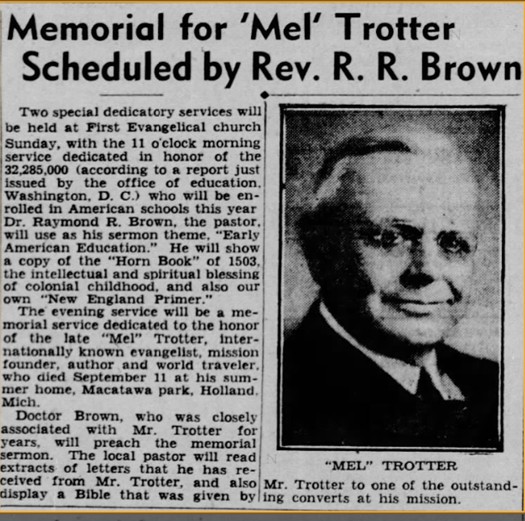
Trotter continued his ministry until his health failed in the late 1930s. He passed away on September 11, 1940, leaving behind a legacy not measured in institutions alone but in the thousands of lives changed through his influence. Even today, the Mel Trotter Rescue Mission stands as a living testimony to his vision, offering shelter, guidance, and the hope of the gospel to the needy.
In remembering Melvin Ernest Trotter, one sees more than the story of a rescued alcoholic who became a preacher. His life remains a reminder of the steady, time-tested truth that the Lord delights to restore the broken and use them mightily. His legacy continues to encourage those who serve faithfully in rescue missions, churches, and quiet corners of ministry where compassion and steadfastness still make all the difference.
_____
Image Source/Credit (in order):
• Trotter, Mel. “Melvin Trotter’S Story – Mel Trotter Ministries.” Mel Trotter Ministries, 2 Oct. 2023 (www.meltrotter.org/melvin-trotters-story)
• Newspapers.com, Lansing State Journal, September 21, 1940 (https://www.newspapers.com/article/lansing-state-journal/190993721/)
Related
Sorry, no records were found. Please adjust your search criteria and try again.
Sorry, unable to load the Maps API.