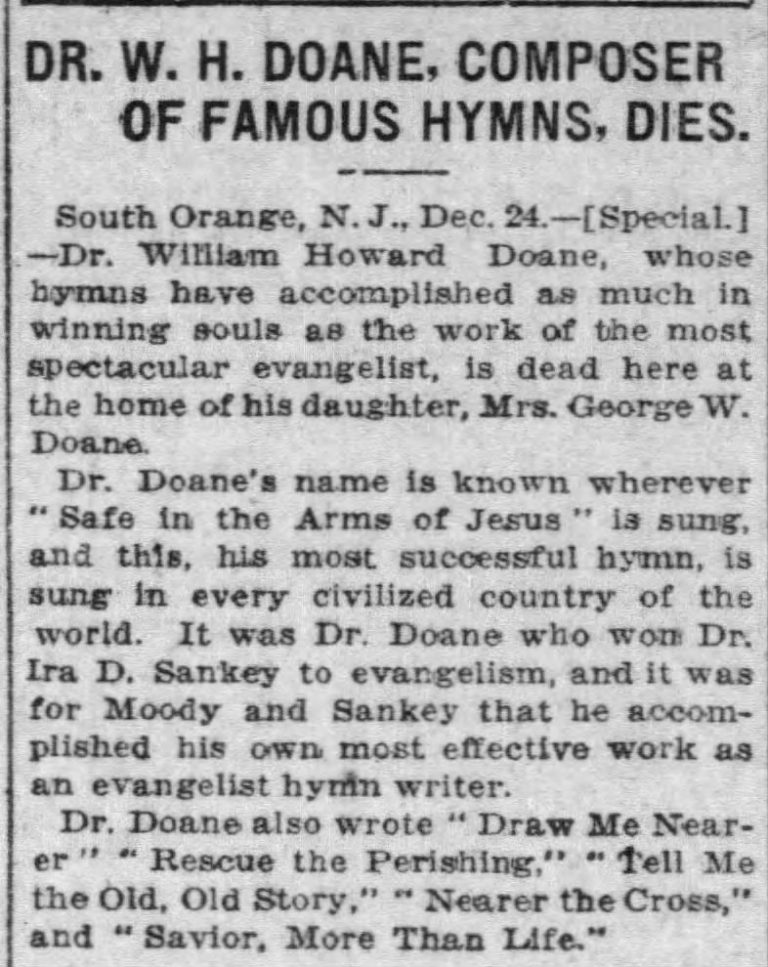
The Life and Legacy of William Howard Doane
William Howard Doane (1832–1915) was one of the most influential gospel composers of the nineteenth century, a man whose life joined commercial success with deep and active Christian commitment. Remembered especially for his collaborations with leading hymn writers of his day, Doane helped shape the sound of evangelical worship in America during a period of revival and expansion. His melodies carried Scripture into the hearts of congregations and gave enduring voice to the faith of ordinary believers.
Born in Preston, Connecticut, Doane was raised in a devout Baptist home. His father was both a cotton manufacturer and a church leader, and from an early age young William learned the disciplines of business and the habits of church life side by side. Music became a central interest in his youth. He studied vocal and instrumental music, eventually developing skill as a composer and conductor. Yet, in keeping with the practical spirit of his upbringing, he did not abandon business for music. Instead, he entered the manufacturing field and built a distinguished career in Cincinnati, Ohio, as head of the J. A. Fay & Company, a firm producing woodworking machinery.
Though a successful industrialist, Doane regarded his musical work as a sacred calling. He composed hundreds of hymn tunes and gospel songs, many of which found wide use in churches, Sunday schools, and revival meetings. His music is marked by clarity, warmth, and a strong sense of structure—qualities that made it especially suitable for congregational singing. In an age that valued accessible and heartfelt expression, Doane’s melodies struck a balance between musical craftsmanship and simplicity.
His most enduring legacy lies in his partnership with the prolific hymn writer Fanny Crosby. Together they produced dozens of hymns that remain beloved today. Among these are “Rescue the Perishing,” “Pass Me Not, O Gentle Savior,” and “To God Be the Glory.” Doane’s gift was to frame Crosby’s texts with tunes that supported their message and carried their emotional force. The union of her poetic expression and his melodic sense proved remarkably fruitful.
One of the finest examples of their collaboration is “To God Be the Glory.” The hymn opens with a triumphant declaration of praise and moves steadily through the themes of redemption and rejoicing. Doane’s tune lifts the text with a strong, ascending line and a memorable refrain, inviting the entire congregation to join in. The structure is straightforward, yet the effect is stirring. It is the sort of hymn that gathers a congregation into unified praise without strain or artifice.
Beyond his work with Crosby, Doane composed tunes for other texts and contributed to numerous hymnals. He was closely associated with Baptist life and education, serving as a trustee for institutions such as Denison University, where the Doane Administration Building stands as a reminder of his generosity. His philanthropy reflected the same steady conviction that marked his musical work: the advancement of Christian faith through practical means.
Doane’s life illustrates a model once common but now less frequently seen—the layman deeply engaged in both commerce and church service. He did not treat business and faith as separate compartments. Instead, he used his resources, influence, and abilities in service of the church. His leadership in music conventions and Sunday school gatherings further extended his reach, encouraging congregational singing and musical literacy among believers.
Musically, Doane belonged to the gospel song movement that flourished in the latter half of the nineteenth century. This tradition, shaped also by figures like Philip Paul Bliss and Ira D. Sankey, emphasized personal faith, evangelistic appeal, and memorable refrains. While some critics of the era questioned the simplicity of gospel songs compared to older hymnody, their effectiveness in revival settings and everyday worship was undeniable. Doane’s contributions helped define that style at its best—earnest, singable, and doctrinally clear.
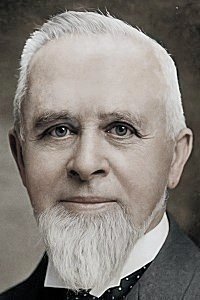
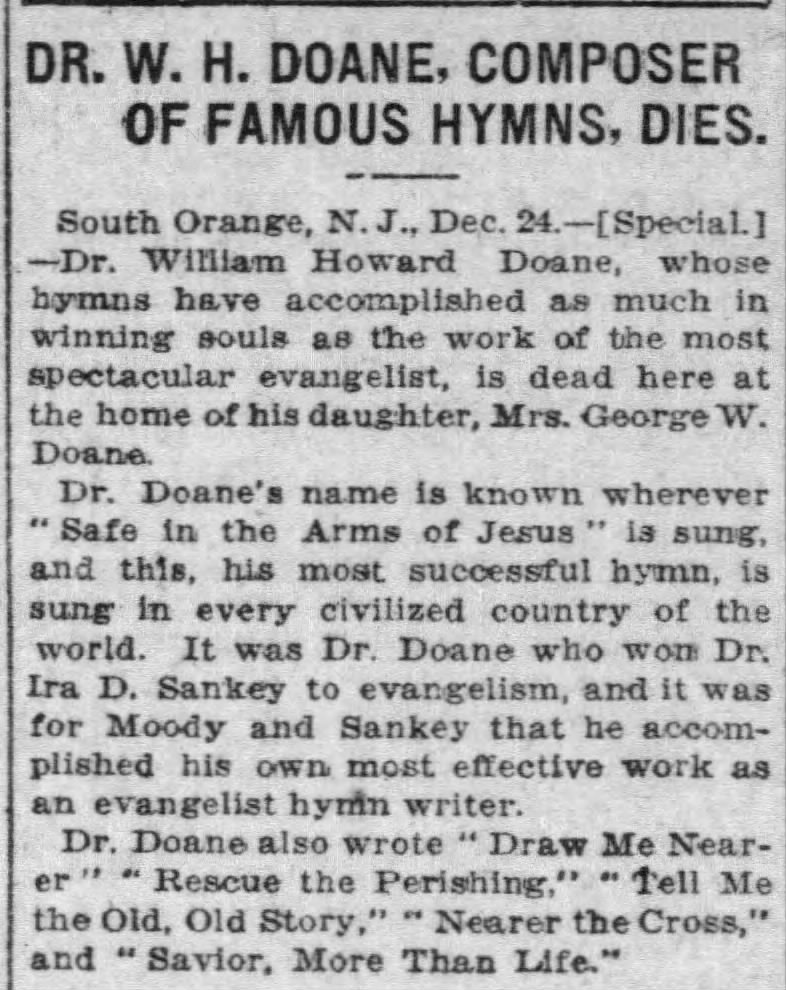
He continued composing well into his later years, even as he remained active in business and civic life. When he died in 1915, he left behind more than two thousand published compositions. Though musical fashions have changed, many of his hymns remain in regular use. Congregations still rise to sing “To God Be the Glory,” often unaware of the industrialist-composer who shaped its melody.
William Howard Doane’s legacy rests not merely in the number of hymns he wrote, but in the spirit with which he wrote them. He served faithfully, combined talent with discipline, and gave the church music that has endured across generations. In his life one sees the strength of steady devotion—work done well, offered in gratitude, and dedicated to the glory of God.
_____
Image Source/Credit (in order):
• http://www.hymntime.com/tch/bio/d/o/a/n/doane_wh.htm
• Newspapers.com, Chicago Tribune, December 25, 1915 (www.newspapers.com/article/chicago-tribune/191743884/)
Related
Sorry, no records were found. Please adjust your search criteria and try again.
Sorry, unable to load the Maps API.