From Wikipedia:
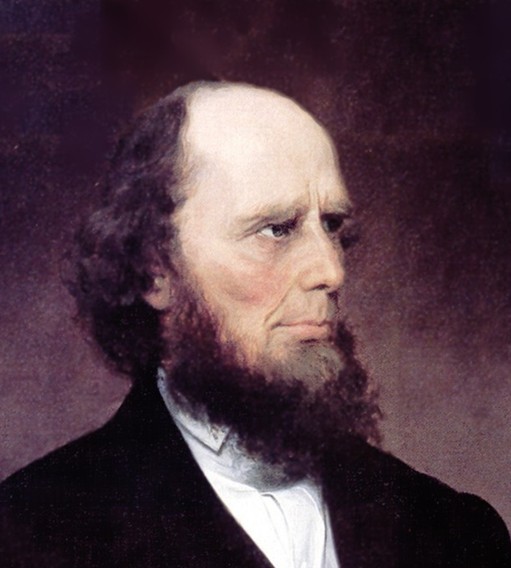
Charles Grandison Finney (August 29, 1792 – August 16, 1875) was an American Presbyterian minister and leader in the Second Great Awakening in the United States. He has been called the “Father of Old Revivalism“.[1] Finney rejected much of traditional Reformed theology.
Finney was best known as a passionate revivalist preacher from 1825 to 1835 in the Burned-over District in Upstate New York and Manhattan, an opponent of Old School Presbyterian theology, an advocate of Christian perfectionism, and a religious writer.
His religious views led him, together with several other evangelical leaders, to promote social reforms, such as abolitionism and equal education for women and African Americans. From 1835 he taught at Oberlin College of Ohio, which accepted students without regard to race or sex. He served as its second president from 1851 to 1865, and its faculty and students were activists for abolitionism, the Underground Railroad, and universal education.
_____
Charles Grandison Finney (1792–1875) was one of the most influential revivalists in American religious history and a central figure in the movement known as the Second Great Awakening. Through his powerful preaching, innovative revival methods, and commitment to social reform, Finney helped shape nineteenth-century evangelical Christianity in the United States.
Finney was born on August 29, 1792, in Warren, but he spent much of his youth on the frontier in western New York. As a young man he studied law and worked as a lawyer’s apprentice. While preparing legal documents, he often encountered references to the Bible and Christian faith, which began to stir spiritual questions in his mind. In 1821, Finney experienced a dramatic religious conversion that changed the course of his life. Soon afterward he abandoned his legal career and committed himself to preaching the gospel.
Finney was licensed as a minister by the Presbyterian Church, but his preaching style was far from traditional. Beginning in the 1820s, he conducted revival meetings across upstate New York, an area that later became known as the “Burned-over District” because of the intensity of religious revivals there. His sermons emphasized personal repentance, moral responsibility, and the immediate need for individuals to turn to Christ.
Unlike many earlier preachers, Finney introduced what he called “new measures” in revival services. These included public invitations for individuals to come forward for prayer, extended revival meetings, and the use of direct, conversational preaching rather than formal sermons. Though controversial at the time, these practices later became common in evangelical revival meetings.
Finney’s influence expanded significantly when he held large revivals in major cities such as Rochester and New York City. Thousands attended his meetings, and many churches reported large numbers of converts. His revivals were known not only for religious enthusiasm but also for their emphasis on moral reform.
Deeply concerned about social issues, Finney supported movements aimed at improving society according to Christian principles. He was particularly associated with the Abolition Movement and spoke strongly against slavery. He also supported temperance and other moral reforms that were widely promoted during the nineteenth century.
In 1835, Finney became a professor of theology at Oberlin College in Oberlin. The school was known for its progressive stance on education and social reform, including the admission of women and African American students. Finney later served as the college’s president from 1851 to 1866. During his years at Oberlin, he continued preaching, writing, and training young ministers.
Finney also authored several influential books, including Lectures on Revivals of Religion, which explained his methods and theology of revival. His writings helped spread his ideas across the United States and influenced generations of evangelists and pastors.
Charles Finney died on August 16, 1875, at the age of eighty-two. By the time of his death, he had become one of the most recognized religious leaders of the nineteenth century. His methods helped shape modern revivalism, and many later evangelists adopted practices similar to those he pioneered.
Today Finney’s legacy remains significant in American religious history. His emphasis on personal decision, revival meetings, and social reform helped define the character of evangelical Protestantism during a crucial period of national development. While historians continue to debate aspects of his theology and methods, there is little doubt that Charles Finney left a lasting imprint on the history of American Christianity.
_____
Image Source/Credit:
• Public domain, via Wikimedia Commons
Related
Sorry, no records were found. Please adjust your search criteria and try again.
Sorry, unable to load the Maps API.