The Life and Legacy of William Augustine Ogden
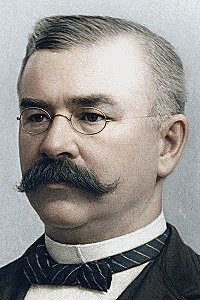
William Augustine Ogden (1841–1897) stands among the industrious and gifted church musicians of nineteenth-century America whose work strengthened congregational song during a time of revival, expansion, and missionary zeal. Though not as widely remembered as some of his contemporaries, Ogden’s hymns and gospel songs were sung in churches, Sunday schools, and evangelistic meetings across the United States and abroad. His life reflects the steady, practical devotion that characterized much of American Protestant music in that era.
Born in Ohio in 1841, Ogden showed musical aptitude at an early age. The mid-nineteenth century was a fertile time for sacred music in America. Singing schools flourished, shape-note traditions remained influential, and the growing Sunday school movement required simple, memorable songs suitable for children and families. Ogden developed his gifts in this environment, eventually becoming both a teacher and a composer. His work aligned with the expanding culture of gospel hymnody that emphasized clarity of message, tuneful melodies, and heartfelt expression.
Ogden’s career brought him into association with some of the leading figures of gospel song. He collaborated with well-known composers and publishers of his day, contributing music to collections used in revival campaigns and church services. The partnership between text writers and composers was central to the spread of gospel hymns, and Ogden proved adept at setting words to music that ordinary congregations could readily sing. His melodies were direct and accessible, neither overly ornate nor musically complex, but strong enough to support congregational participation.
Among the hymns commonly associated with Ogden is “Look and Live,” a gospel song that takes its theme from the biblical account of the bronze serpent in the Book of Numbers and applies it to faith in Christ. The refrain’s simple appeal—urging the sinner to look to Christ and live—captures the evangelistic spirit that marked much of Ogden’s output. Songs of this kind were designed not merely for contemplation, but for invitation. They were sung at the close of sermons, during altar calls, and at camp meetings where earnest appeals were made for repentance and faith.
Ogden’s musical style bears the marks of the gospel song tradition shaped by figures such as Philip Paul Bliss and Ira D. Sankey. Like them, he favored strong refrains, clear harmonic progressions, and rhythms that carried the text forward. The purpose was always practical: to enable a congregation—trained or untrained—to sing with confidence and understanding. His compositions were published in numerous hymn collections, many of which circulated widely in churches across the Midwest and beyond.
In addition to composing, Ogden was active as a music educator and compiler of hymnbooks. The late nineteenth century saw a proliferation of denominational and independent songbooks tailored to specific needs—revivals, Sunday schools, temperance meetings, and missionary societies. Ogden contributed both original tunes and editorial guidance, helping shape the soundscape of American Protestant worship during a formative period.
Ogden’s influence was not confined to the United States. As American gospel hymnals were carried overseas by missionaries, his songs found audiences in other lands. The straightforward theological message and memorable tunes translated well into other languages and cultural contexts. In this way, his work participated in the broader global spread of evangelical hymnody at the close of the nineteenth century.
He died in 1897, leaving behind a body of work that, while perhaps less celebrated today, once formed part of the regular worship life of thousands. The durability of gospel hymns often rests not in artistic novelty but in usefulness. Ogden’s songs were useful: they taught Scripture, invited faith, and encouraged believers in plain and earnest language.
In assessing Ogden’s legacy, one sees the importance of faithful craftsmanship. He did not seek to revolutionize church music; rather, he served the church as it stood in his day. His melodies were shaped for the meetinghouse, the revival tent, and the Sunday school room. They carried biblical truths in forms that ordinary people could remember and sing long after the service ended.
William Augustine Ogden belongs to that company of nineteenth-century composers whose steady labor undergirded a vibrant era of congregational song. His hymns remind us that the strength of church music lies not only in towering masterpieces, but in the simple, sturdy songs that help generations lift their voices together in faith.
Hymns by William Augustine Ogden in Great Hymns of the Faith:
#195 – Look and Live
#201 – He Is Able to Deliver Thee
#401 – Where He Leads I’ll Follow
#425 – Seeking the Lost
_____
Image Source/Credit (in order):
• William Augustine Ogden (www.hymntime.com/tch/bio/o/g/d/e/ogden_wa.htm)
Related
Sorry, no records were found. Please adjust your search criteria and try again.
Sorry, unable to load the Maps API.