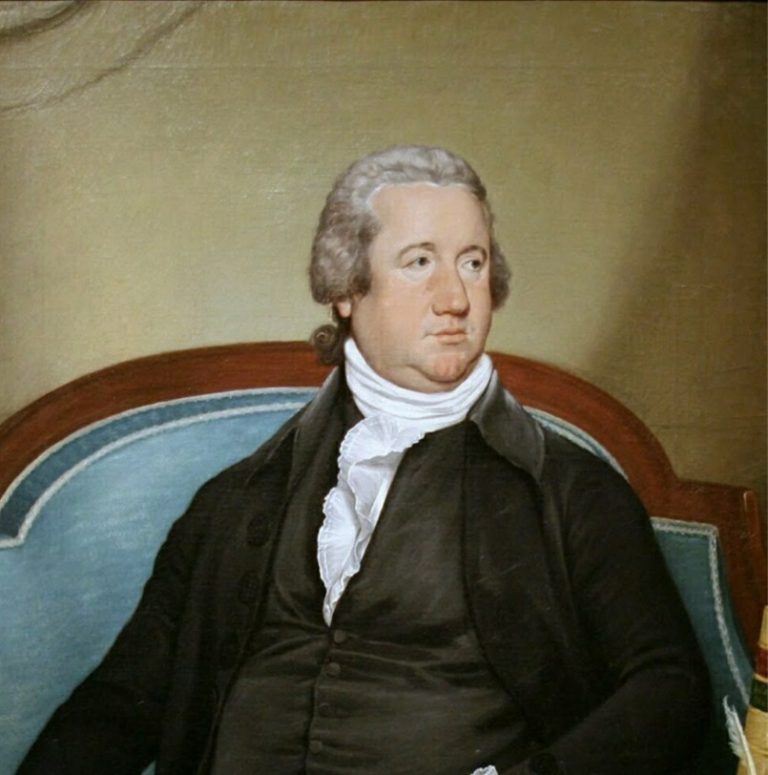
Frederick Muhlenberg stands as one of the steady, formative figures of Lutheranism in early America. Though he later became widely known for his service in public life, his roots were firmly planted in the church. As a Lutheran pastor in colonial America, he carried forward the spiritual and cultural heritage brought from Germany while helping shape a distinctly American Lutheran identity.
Born on January 1, 1750, in Trappe, Pennsylvania, Frederick Muhlenberg was the son of the renowned patriarch of American Lutheranism, Henry Melchior Muhlenberg. His father had come from Germany in 1742 at the request of struggling Lutheran congregations in Pennsylvania. Through tireless effort, Henry Melchior Muhlenberg organized churches, established order among scattered settlements, and laid the foundation for what became the Ministerium of Pennsylvania, the first permanent Lutheran synod in North America. Frederick grew up in this atmosphere of discipline, faith, and responsibility.
As was customary among German Lutheran families of means and education, Frederick was sent abroad for formal theological training. He studied at the University of Halle in Germany, an institution closely tied to the Pietist movement that had influenced his father. This education gave him a firm grounding in Lutheran doctrine, pastoral care, and practical ministry—qualities much needed in the rough-and-ready conditions of colonial America.
After returning to Pennsylvania, Frederick Muhlenberg entered the ministry and served congregations in the region of New Hanover and Philadelphia. His work reflected the challenges of the time. Lutheran congregations were often scattered across rural settlements. Travel between churches required stamina and resolve. Ministers were expected not only to preach and administer the sacraments but also to teach, counsel families, mediate disputes, and maintain congregational records.
Language was an important concern. Many early Lutheran congregations worshiped in German, reflecting the heritage of their members. Yet the younger generation increasingly spoke English. Frederick Muhlenberg ministered during this transitional period. He understood the value of preserving doctrinal faithfulness while recognizing that the church in America could not remain isolated from its surroundings. The gradual introduction of English into worship and instruction was part of the broader adaptation taking place in colonial society.
The American Revolution presented additional strain. Like many clergy, Muhlenberg faced divided loyalties within his congregations. Some members favored independence; others remained loyal to the Crown. Ministers had to walk carefully, maintaining spiritual leadership without inflaming political tensions. The Muhlenberg family, however, became closely associated with the patriot cause. Frederick’s brother, Peter Muhlenberg, famously left the pulpit to serve as a general in the Continental Army. Frederick himself would later move into public service, but his pastoral experience during the revolutionary era shaped his understanding of leadership and order.
In his ministry, Frederick Muhlenberg reflected the steady Lutheran emphasis on catechesis and sacramental life. Instruction of the young through Luther’s Small Catechism remained central. Confirmation prepared youth to confess the faith publicly and receive the Lord’s Supper with understanding. The rhythm of preaching, baptism, communion, and pastoral visitation provided stability to communities facing political uncertainty and frontier hardship.
Colonial Lutheran pastors were also community leaders in a broader sense. They often participated in local education efforts, supported charitable work, and encouraged moral discipline. Muhlenberg’s upbringing under a father who insisted on ecclesiastical order likely shaped his careful attention to structure and governance. That concern for orderly procedure would later mark his public career, but it first found expression in church life—through minutes, correspondence, and cooperative work among congregations.
Though Frederick Muhlenberg eventually became the first Speaker of the United States House of Representatives, his earlier vocation as a Lutheran pastor was no mere prelude. It formed his habits of thought: careful listening, measured speech, and respect for established forms. The Lutheran tradition in which he was raised valued both faithfulness to Scripture and orderly administration. These qualities served congregations well in the colonial period and later proved equally valuable in the shaping of a new nation.
Frederick Muhlenberg died in 1801, leaving behind a legacy that bridged church and civic life. Yet at heart he remained a pastor shaped by the challenges of colonial America—serving immigrant congregations, maintaining doctrinal integrity, and guiding families through uncertain times. His life reminds us that the steady work of ministry, carried out with diligence and conviction, can influence not only congregations but the course of a nation.
_____
Sacred to the memory of
Frederick Augustus Muhlenberg
who was born on the 1st day of January, 1750
and departed this life
on the 4th day of June, 1801
Aged 51 years, 5 months and 5 days
——————————
Lutheran Pastor in Colonial America
Continental Congress 1779-80, Pennsylvania Assembly 1781-84
United States Congress 1789-1797
First Speaker – House of Representatives
_____
Image Source/Credit:
• National Portrait Gallery, Public domain, via Wikimedia Commons
Related
Sorry, no records were found. Please adjust your search criteria and try again.
Sorry, unable to load the Maps API.