

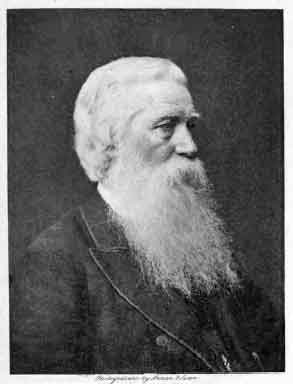
John G. Paton (1824–1907) was a Scottish missionary whose life and work in the South Pacific made him one of the most celebrated figures in nineteenth-century Protestant missions. Serving primarily among the islands then known as the New Hebrides (modern-day Vanuatu), Paton became widely known for his perseverance in the face of extreme hardship, his commitment to evangelism, and his influence on the global missionary movement.
Paton was born on May 24, 1824, in Dumfriesshire, Scotland, into a devout Presbyterian family. His upbringing was marked by strong religious instruction, personal discipline, and a deep respect for Scripture. From an early age, he was shaped by the Calvinist tradition of the Church of Scotland, which emphasized both the sovereignty of God and the responsibility of believers to spread the gospel.
Before becoming a missionary, Paton worked in various roles, including as a teacher and as a city missionary in Glasgow. During this period, he experienced firsthand the spiritual and social needs of urban populations, which helped strengthen his conviction that he should dedicate his life to foreign missions. In 1857, he and his wife Mary Ann Paton were commissioned by the Reformed Presbyterian Church of Scotland to serve in the South Pacific.
Later that same year, the Patons arrived in the New Hebrides, a group of islands in the South Pacific known for their isolated communities and, at the time, for practices that included intertribal warfare and cannibalism. The region had already seen the deaths of earlier missionaries, and Paton’s arrival was met with both danger and uncertainty.
One of the most defining moments of Paton’s early mission came shortly after his arrival on the island of Tanna. Hostility from local inhabitants was intense, and within months, his wife Mary Ann and their infant son died due to illness and the harsh conditions. Despite this devastating personal loss, Paton chose to remain on the island, continuing his work under constant threat. His decision became one of the most cited examples of missionary resolve in nineteenth-century evangelical literature.
Paton’s survival and perseverance were often attributed by him to divine protection. He described numerous instances in which he believed his life was spared by providential intervention, including moments when he narrowly escaped violent encounters. These accounts were widely circulated in missionary publications and contributed to his reputation as a man sustained by faith under extreme conditions.
After leaving Tanna, Paton continued his missionary work on other islands in the New Hebrides, including Aniwa, where he eventually found more receptive conditions. On Aniwa, he learned the local language, translated portions of Scripture, and established a stable Christian community. Over time, much of the island’s population converted to Christianity, and Paton worked to develop local leadership so that the church could become self-sustaining.
A key aspect of Paton’s mission strategy was his emphasis on education and translation. He believed that lasting missionary work required not only preaching but also literacy, Scripture distribution, and the training of indigenous teachers and pastors. This approach aligned with broader nineteenth-century missionary trends, which increasingly focused on cultural engagement and long-term institutional development.
Paton also played a significant role in raising awareness and support for missions in the Western world. After years in the field, he returned to Britain and became a powerful advocate for missionary work. Through speaking tours, publications, and personal testimony, he inspired many to support overseas missions financially and to consider missionary service themselves.
His autobiography, The Story of John G. Paton, became widely read and influential. It presented a vivid account of his experiences in the New Hebrides and helped shape popular perceptions of missionary life. The book was particularly effective in evangelical circles, where it was used to encourage prayer, fundraising, and missionary recruitment.
Paton’s legacy extends beyond his personal achievements. He contributed to the broader expansion of Protestant missions in the Pacific, particularly within Presbyterian and Reformed traditions. His work helped establish a pattern of sustained missionary engagement that included evangelism, education, medical care, and the development of indigenous church leadership.
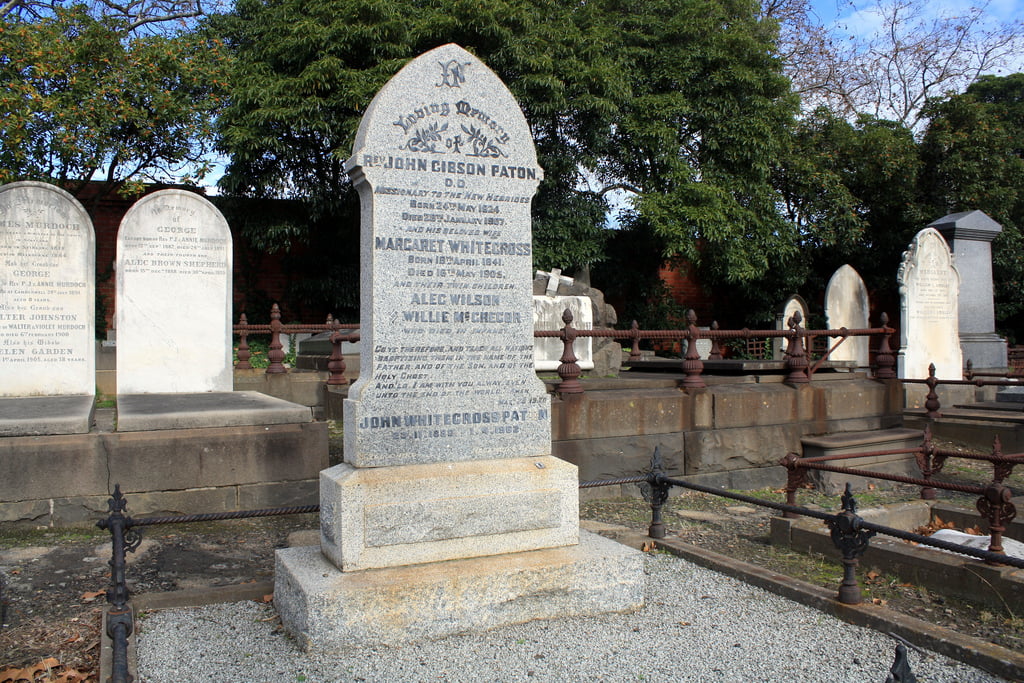
He died on January 28, 1907, in Scotland, having spent much of his life devoted to missionary service and advocacy. By the time of his death, the Christian communities he helped establish in the New Hebrides were well established, with local pastors and churches continuing the work he had begun.
The impact of John G. Paton can be understood on several levels. As a missionary, he brought the Christian message to remote islands under extremely difficult circumstances. As a survivor of personal tragedy, he became a symbol of endurance and faith. As an author and speaker, he helped mobilize support for missions across the English-speaking world.
In the broader history of Christianity, Paton is remembered as part of the great nineteenth-century missionary movement that carried Protestant Christianity to many parts of the globe. His life illustrates both the hardships and the convictions that characterized that era of mission expansion.
Today, his story continues to be read in missionary biographies and religious education settings. For many, John G. Paton remains an example of steadfast commitment, shaped by faith and expressed through decades of service in one of the most challenging mission fields of his time.
_____
Image Source/Credit:
• Wikipedia contributors. “John Gibson Paton.” Wikipedia, 11 Feb. 2025 (en.wikipedia.org/wiki/John_Gibson_Paton)
• Public Domain
Related
Sorry, no records were found. Please adjust your search criteria and try again.
Sorry, unable to load the Maps API.