

Charles Thomas Studd, commonly known as C. T. Studd, lived a life marked by remarkable transformation, deep conviction, and tireless missionary zeal. From the cricket fields of England to the mission stations of Africa, India, and China, his story reflects a wholehearted commitment to faith and service that left a lasting impact on global Christianity.
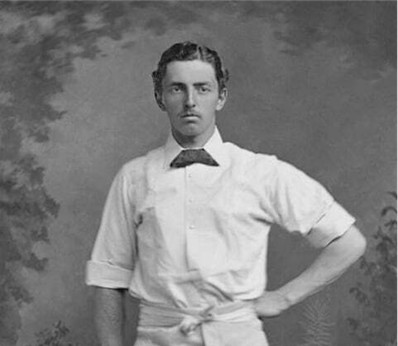
Born in 1860 into a wealthy family in London, Studd enjoyed the privileges of an upper-class upbringing. He was educated at Eton and later attended University of Cambridge, where he gained national recognition as a talented cricketer. He became one of the most celebrated players of his time, representing England in international matches and earning admiration for his athletic skill.
Despite his success, Studd experienced a profound spiritual awakening during his university years. Influenced by the preaching of Dwight L. Moody and the personal example of committed Christians, he came to a deep conviction about the importance of living for a higher purpose. The turning point came after the death of his brother, which led him to reflect seriously on the brevity of life and the value of eternal things. From that moment, he resolved to dedicate himself fully to Christian service.
Studd soon became associated with the Cambridge Seven, a band of young men who volunteered to serve as missionaries in China. Their decision captured public attention and inspired many, as they left behind promising careers and comfortable lives to serve abroad. Studd joined the China Inland Mission, founded by Hudson Taylor, and traveled to China in 1885.
While in China, Studd labored under challenging conditions, learning the language and adapting to a different culture. His approach to mission work emphasized personal sacrifice and complete reliance on God. He gave away much of his inherited wealth, believing that material possessions should not hinder spiritual service. This act of generosity became a defining feature of his life, reflecting his belief that faith should be expressed in practical ways.
After several years in China, health concerns forced Studd to return to England. Yet his commitment to missionary work remained unchanged. He later served in India for a period, continuing to preach and encourage others in their faith. Even when faced with physical limitations, he refused to adopt a life of ease.
Perhaps the most significant chapter of Studd’s later life began when he traveled to Africa. There, he founded the Worldwide Evangelization Crusade, which later became known as WEC International. Based in the heart of Africa, Studd and his colleagues worked to spread the Christian message in regions that had seen little previous missionary activity. The work was demanding, often involving travel through remote and difficult terrain, but Studd remained steadfast.
Studd’s personality was marked by intensity and determination. He was known for his strong convictions and his willingness to challenge others to greater commitment. One of his most famous sayings, “Only one life, ’twill soon be past, only what’s done for Christ will last,” captures the spirit of his outlook. He believed that life should be lived with urgency and purpose, focused on eternal rather than temporary goals.
In addition to his missionary work, Studd’s writings and letters helped inspire others. He communicated a vision of wholehearted devotion, urging Christians to move beyond comfort and to engage actively in service. His example, as much as his words, encouraged many to consider missionary work and to live with greater dedication.
Studd remained in Africa until his death in 1931. By that time, the movement he had founded had grown significantly, extending its reach to various parts of the world. His influence continued through the work of those he had inspired and through the organization that carried forward his mission.
The legacy of Charles Thomas Studd is one of sacrifice, courage, and unwavering faith. He gave up wealth, fame, and comfort in order to pursue what he believed to be a higher calling. His life serves as a reminder that true impact often comes not from personal achievement alone, but from a willingness to serve others with conviction and purpose.
Today, Studd is remembered not only as a gifted athlete or a determined missionary, but as a man who chose to live fully in light of his beliefs. His story continues to challenge and inspire, calling attention to the enduring value of a life devoted to service, faith, and the pursuit of something greater than oneself.
_____
Image Source/Credit (in order):
• File:Charles Studd c1882.jpg – Wikimedia Commons (commons.wikimedia.org/wiki/File:Charles_Studd_c1882.jpg)
• Newspapers.com, The Kalgoorlie Miner, July 29, 1931 (www.newspapers.com/article/the-kalgoorlie-miner/195140398/)
Related

Sorry, no records were found. Please adjust your search criteria and try again.
Sorry, unable to load the Maps API.