

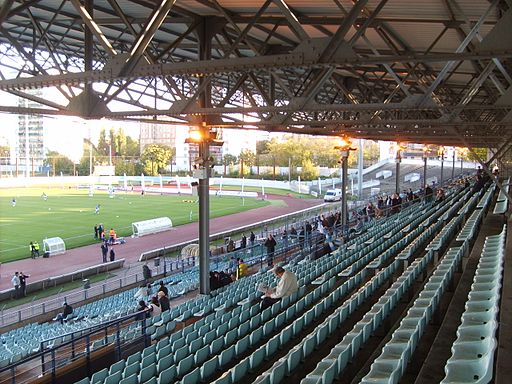
The Stade Olympique Yves-du-Manoir, located in Colombes just outside Paris, is one of the most historically significant sports venues in France. With a legacy stretching back more than a century, the stadium has hosted major international competitions, iconic sporting moments, and even events of global political importance. It remains a powerful symbol of early modern Olympic history and French sporting tradition.
Originally opened in 1907, the stadium was first known as the Stade de Colombes. It was later renamed in honor of French rugby player Yves du Manoir, who died tragically in 1928 and became a national sporting hero. His name was added to the stadium in recognition of his talent, sportsmanship, and enduring influence on French rugby culture.
The stadium’s most famous moment came when it served as a primary venue for the 1924 Summer Olympics. During these Games, Colombes became the center of international athletic competition, hosting track and field events as well as football matches. The 1924 Olympics were particularly notable for their scale and for helping to solidify the modern Olympic movement. The stadium’s role in these Games firmly established its place in global sporting history.
At its peak, the Stade de Colombes could hold more than 60,000 spectators, making it one of the largest stadiums in Europe at the time. It became a major venue for French football and rugby throughout the twentieth century. The French national football team regularly played matches there, and it also hosted numerous domestic cup finals and international fixtures.
Beyond sport, the stadium has occasionally been used for large public gatherings and cultural events, reflecting its importance as a civic space. Its open design and vast seating capacity made it suitable for events that brought together large segments of the population, particularly during the early and mid-twentieth century when fewer large venues existed.
Over time, however, the stadium’s prominence declined as newer, more modern facilities were constructed in and around Paris. The opening of venues such as the Parc des Princes gradually shifted major sporting events away from Colombes. Despite this, the stadium retained its historical significance and continued to host rugby matches and lower-profile competitions.
In preparation for future use and to preserve its legacy, the stadium has undergone renovation and modernization efforts. These upgrades have reduced its capacity but improved its facilities, ensuring that it remains functional while respecting its historic character. Today, it serves as a venue for rugby, athletics, and community sports, maintaining a connection to its athletic roots.
The Stade Olympique Yves-du-Manoir also holds a special place in French cultural memory. It represents an era when sport was becoming a major international phenomenon and when France played a central role in the development of global athletics. Its association with the 1924 Olympics, in particular, links it permanently to the early history of the modern Olympic movement.
As France prepared to host the 2024 Summer Olympics, the stadium’s historical significance was once again highlighted. Although not a primary venue for the modern Games, its legacy was widely acknowledged as part of the Olympic heritage of the Paris region.
In conclusion, the Stade Olympique Yves-du-Manoir stands as more than just a sports venue. It is a landmark of Olympic history, a memorial to sporting achievement, and a witness to more than a century of athletic and cultural change. From its origins in the early 1900s to its enduring presence today, it remains a powerful symbol of France’s contribution to international sport.
♦ _____ ♦
From Wikipedia:
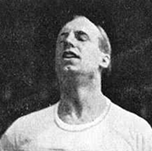
The 1924 Summer Olympics were hosted by the city of Paris. A devout Christian, Liddell refused to run in a heat held on Sunday and was forced to withdraw from the 100-metre race, his best event. The schedule had been published several months earlier, and his decision was made well before the Games. Liddell spent the intervening months training for the 400-metre race, though his best pre-Olympics time of 49.6 seconds, set in winning the 1924 AAA championship 440-yard race,[7] was modest by international standards. On the morning of the Olympic 400-metre final, 11 July 1924,[8] Liddell was handed a folded square of paper by one of the team masseurs. Reading it later he found the message: “In the old book it says: ‘He that honours me I will honour.’ Wishing you the best of success always.” Recognising the reference to 1 Samuel 2:30, Liddell was profoundly moved that someone other than his coach believed in him and the stance he had taken.[9]
The pipe band of the 51st Highland Brigade played outside the stadium for the hour before he ran. The 400-metre had been considered a middle-distance event in which runners raced round the first bend and coasted through the back leg. Inspired by the Biblical message, and deprived of a view of the other runners because he drew the outside lane, Liddell raced the whole of the first 200 metres to be well clear of the favoured Americans.[10] With little option but to then treat the race as a complete sprint, he continued to race around the final bend. He was challenged all the way down the home straight but held on to take the win. He broke the Olympic and world records with a time of 47.6 seconds.[11] It was controversially ratified as a world record, despite it being 0.2 seconds slower than the record for the greater distance of 440 yards.[12]
_____
Image Source/Credit (in order):
• unknown (Sports event handout)[1], Public domain, via Wikimedia Commons
• Dr.Clint.Beans, CC BY-SA 3.0 <https://creativecommons.org/licenses/by-sa/3.0>, via Wikimedia Commons
Related
Sorry, no records were found. Please adjust your search criteria and try again.
Sorry, unable to load the Maps API.