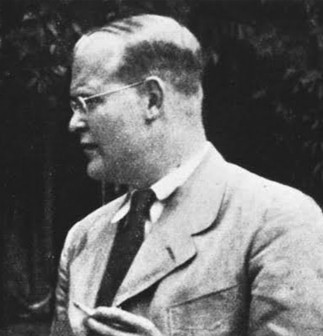
The execution of Dietrich Bonhoeffer on April 9, 1945, stands as one of the most solemn and powerful episodes of Christian witness in the twentieth century. A pastor, theologian, and outspoken critic of Adolf Hitler’s regime, Bonhoeffer’s death came in the final days of World War II, when the collapse of Nazi Germany was imminent.
Bonhoeffer had long opposed the rise of National Socialism. From the early 1930s, he recognized the dangers posed by Hitler’s ideology, particularly its attempts to control the German church and exclude those of Jewish descent. In response, he became a leading figure in the Confessing Church, a movement that resisted state interference in religious life. Bonhoeffer believed that the church must remain faithful to Christ above all earthly authority, a conviction that placed him in direct conflict with the Nazi regime.
As the years passed, his resistance deepened. Bonhoeffer became involved, through family and associates, in efforts connected to the German resistance movement, including plots to overthrow Hitler. Though not a man inclined toward violence, he came to believe that extraordinary evil might require extraordinary action. His involvement led to his arrest in 1943 by the Gestapo.
During his imprisonment, Bonhoeffer continued to write and minister to fellow prisoners. His letters and reflections from this period, later published as Letters and Papers from Prison, reveal a man of deep faith, wrestling with profound theological and moral questions. He spoke of a “religionless Christianity,” emphasizing a lived faith expressed in obedience, responsibility, and trust in God even in suffering.
By early 1945, as Allied forces advanced into Germany, the Nazi leadership sought to eliminate political prisoners connected to resistance efforts. Bonhoeffer was transferred to the concentration camp at Flossenbürg concentration camp. There, he faced a summary trial ordered by high-ranking Nazi officials. The proceedings were swift and offered no real defense. Bonhoeffer was sentenced to death.
In the early morning hours of April 9, he was led to execution by hanging. Witnesses later recalled his composure and dignity. According to a camp doctor who observed the scene, Bonhoeffer faced death with remarkable calm, offering a final prayer before being taken away. His reported last words, “This is the end—for me, the beginning of life,” reflect a deep assurance rooted in his Christian faith.
The timing of his execution adds to its tragic weight. Within weeks, the war in Europe would end, and the Nazi regime would fall. Bonhoeffer did not live to see the liberation he had long hoped for, yet his death became a symbol of moral courage and faithful resistance.
The impact of Bonhoeffer’s life and execution has been far-reaching. His writings continue to influence theologians, pastors, and laypeople across denominational lines. He is remembered not only for his intellectual contributions but for his willingness to act on his convictions, even at the cost of his life. In a time when many remained silent or compliant, Bonhoeffer’s witness stands as a reminder of the cost of discipleship and the call to stand for truth in the face of injustice.
The execution of Dietrich Bonhoeffer was intended to silence a voice of resistance. Instead, it ensured that his testimony would endure, speaking across generations as a powerful example of faithfulness under the most severe trial.
♦ _____ ♦
From Wikipedia:
Dietrich Bonhoeffer (German: [ˈdiːtʁɪç ˈbɔn.høː.fɐ] ( listen); 4 February 1906 – 9 April 1945) was a Lutheran pastor, theologian, anti-Nazi dissident, and key founding member of the Confessing Church. His writings on Christianity’s role in the secular world have become widely influential, and his book The Cost of Discipleship has been described as a modern classic.[1]
Apart from his theological writings, Bonhoeffer was known for his staunch resistance to the Nazi dictatorship, including vocal opposition to Hitler’s euthanasia program and genocidal persecution of the Jews.[2] He was arrested in April 1943 by the Gestapo and imprisoned at Tegel prison for one and a half years. Later, he was transferred to Flossenbürg concentration camp.
After being accused of being associated with the 20 July plot to assassinate Adolf Hitler, he was quickly tried, along with other accused plotters, including former members of the Abwehr (the German Military Intelligence Office), and then hanged on 9 April 1945 as the Nazi regime was collapsing.
_____
Image Source/Credit:
• Bundesarchiv, Bild 146-1987-074-16 / CC-BY-SA 3.0, CC BY-SA 3.0 DE