
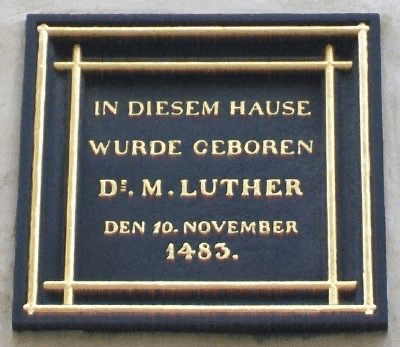
The Martin Luther’s Birthplace stands as a significant historical site connected to the early life of Martin Luther, whose actions would help spark the Protestant Reformation. Located in the town of Eisleben, the house marks the place where Luther was born on November 10, 1483. Though modest in appearance, the site has become a place of deep historical and spiritual reflection, drawing visitors from around the world.
The original house in which Luther was born did not survive in its earliest form. A fire in 1689 destroyed much of the structure, but it was later rebuilt and preserved as a memorial to the Reformer. Over time, the building was transformed into a museum, carefully designed to convey both the historical context of Luther’s early life and the broader significance of his legacy. Today, it is part of a UNESCO World Heritage Site that includes several locations associated with Luther’s life.
The birthplace offers insight into the humble beginnings of a man who would go on to challenge the religious and cultural institutions of his time. Luther was born into a mining family; his father, Hans Luther, worked in the copper industry and sought to provide his son with opportunities for advancement through education. Though Luther spent only a short time in Eisleben before his family moved to Mansfeld, the town remains closely tied to his identity, as it is both his place of birth and the location of his death decades later.
Inside the museum, visitors encounter exhibits that reconstruct aspects of daily life in late medieval Germany. These displays include period furnishings, household items, and interpretive materials that help illustrate the environment into which Luther was born. The museum does not claim to preserve the exact room of his birth in its original state, but it seeks to faithfully represent the conditions of the time, offering a sense of the world that shaped his earliest experiences.
The significance of Luther’s birthplace extends beyond its physical structure. It serves as a reminder that the Reformation did not begin in grand halls or centers of power, but in the life of an individual shaped by ordinary circumstances. From these beginnings, Luther would go on to study theology, wrestle with questions of faith, and ultimately challenge prevailing teachings through his writings and preaching.
The legacy of the site is closely tied to Luther’s enduring influence. His emphasis on the authority of Scripture, justification by faith, and the accessibility of religious truth to ordinary people reshaped Christianity in Europe and beyond. The birthplace in Eisleben stands as a point of origin for these far-reaching developments, connecting visitors to the beginnings of a movement that transformed religious history.
Today, the site continues to welcome scholars, pilgrims, and tourists alike. It offers not only historical information but also an opportunity for reflection on the nature of change and conviction. In preserving this humble home, those who maintain the museum honor the memory of a man whose life began in modest surroundings yet left a profound mark on the world.
In its history and legacy, Martin Luther’s Birthplace reminds us that great movements often arise from simple beginnings. It stands as a testament to the enduring impact of one individual’s faith, study, and determination.
_____
Image Source/Credit:
• Martin Luther Birthplace Historical Marker. 28 Jan. 2022 (www.hmdb.org/m.asp?m=70146)
Related
Sorry, no records were found. Please adjust your search criteria and try again.
Sorry, unable to load the Maps API.