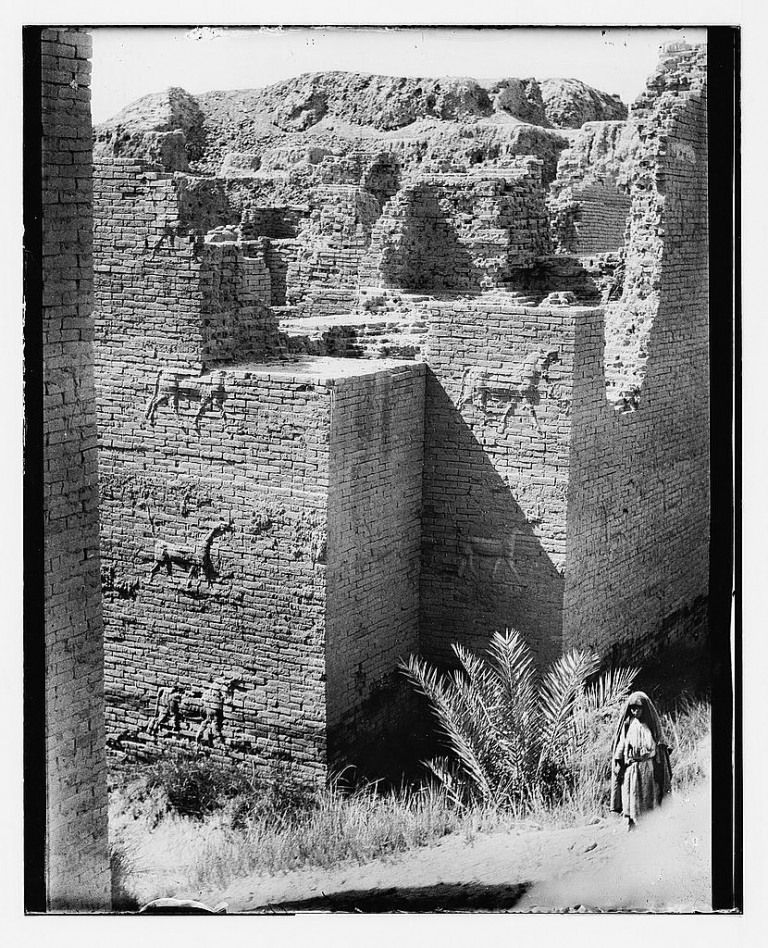
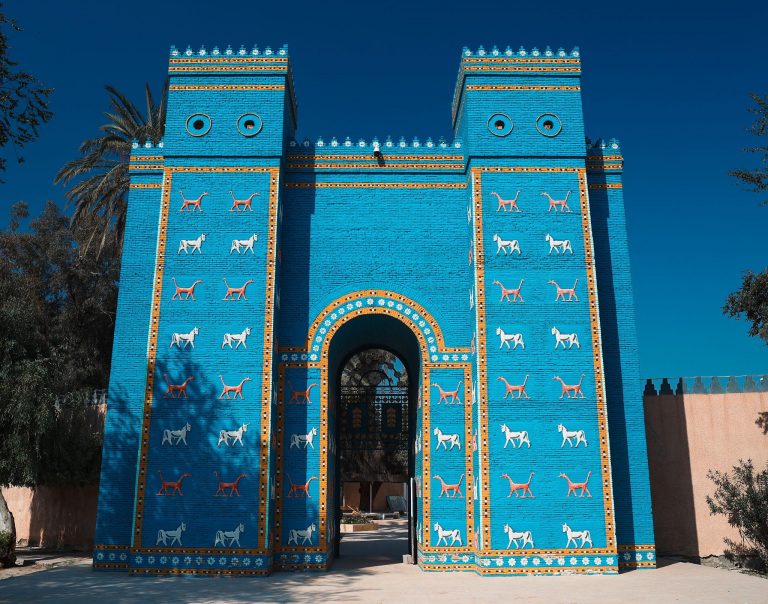
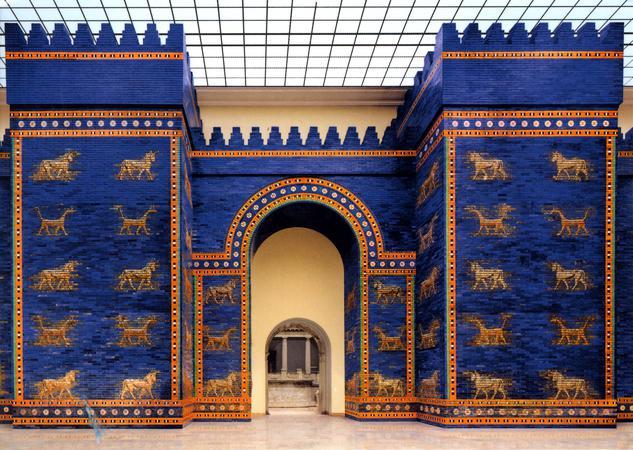
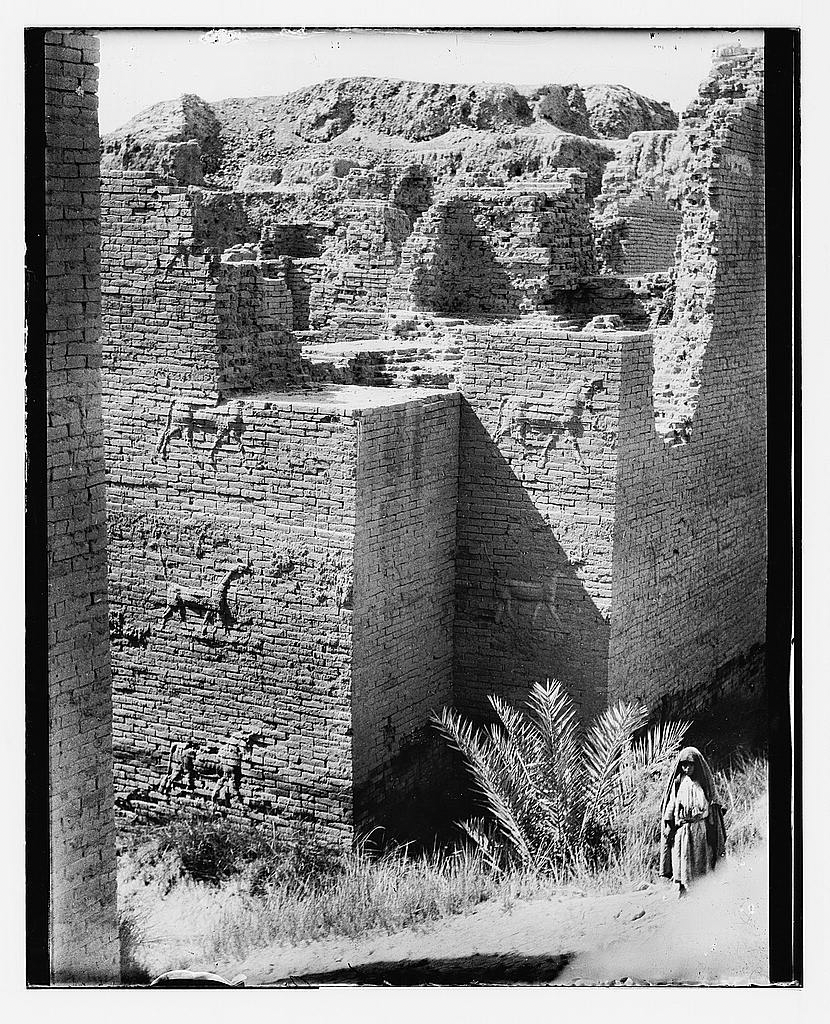
Originally located here, with most of the gate relocated to the Berlin Museum, and parts to the former Oriental Institute at the University of Chicago.
Built around 600 BC by Nebuchadnezzar, this is the gate Daniel and his three friends Hananiah, Michael, and Azariah would have entered and exited Babylon through.
♦ _____ ♦
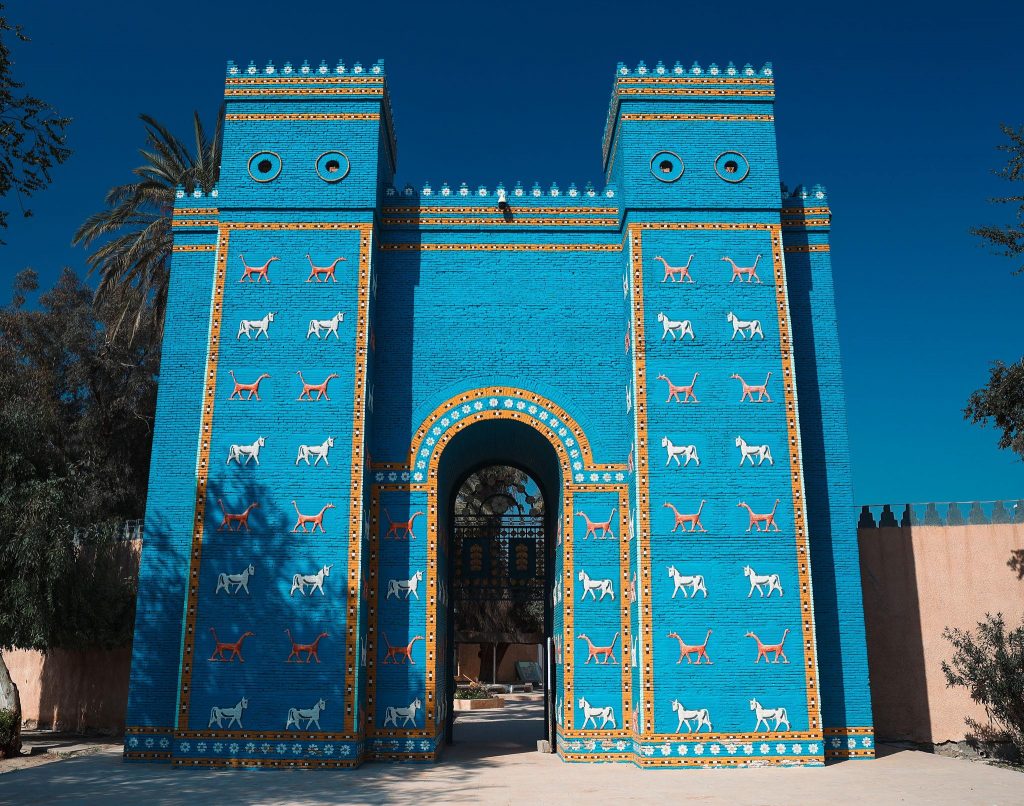
The Ishtar Gate stands as one of the most magnificent achievements of ancient Mesopotamian architecture. Constructed during the reign of Nebuchadnezzar II around 575 BC, the gate formed a grand ceremonial entrance to the city of Babylon, reflecting both the power of the empire and the religious devotion of its people.
Named after Ishtar, the gate was dedicated to one of the most important deities in the Babylonian pantheon. Ishtar was associated with fertility, warfare, and kingship, and her presence at the city’s entrance symbolized both protection and divine favor. The gate itself was not merely defensive in function; it served as a monumental statement of imperial strength and religious identity.
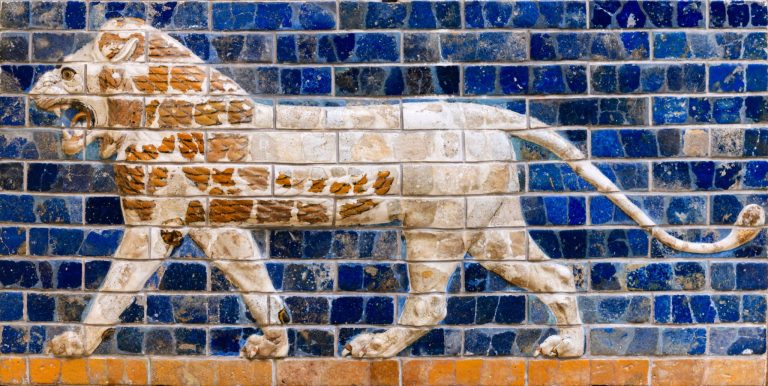
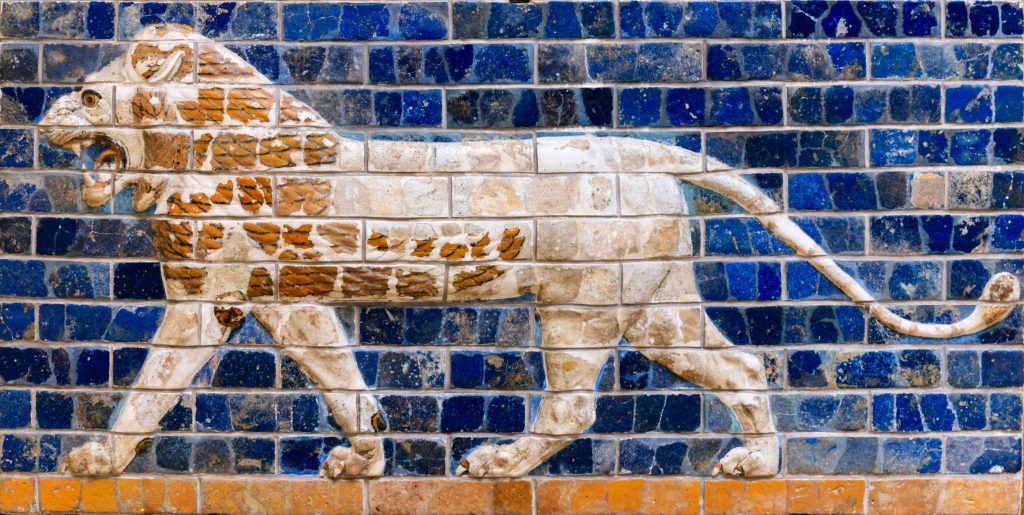
The most striking feature of the Ishtar Gate was its brilliant blue glazed brickwork. The deep blue color, achieved through a sophisticated glazing process, gave the structure a luminous quality that would have been especially impressive under the bright Mesopotamian sun. Set against this vibrant background were rows of carefully crafted reliefs depicting animals in profile. Among these were lions, symbolizing Ishtar; bulls, associated with the storm god Adad; and the mythical mušḫuššu, a dragon-like creature linked to the chief god Marduk. These figures were not merely decorative—they conveyed the presence and authority of the gods guarding the city.
The gate was part of a larger architectural complex that included the famous Processional Way, a ceremonial road lined with walls adorned with reliefs of striding lions. During major religious festivals, particularly the New Year celebration, this route would be used for grand processions involving priests, officials, and possibly the king himself. The Ishtar Gate thus functioned as both a physical and symbolic threshold, marking the transition from the outside world into the sacred and political heart of Babylon.
Although the original gate eventually fell into ruin after the decline of Babylon, its remains were rediscovered in the early 20th century by German archaeologists. Large portions of the structure were carefully excavated and transported to Pergamon Museum, where a reconstructed version now stands. This reconstruction allows modern visitors to appreciate the scale and artistry of the original monument, even though it is no longer in its original setting.
The Ishtar Gate provides valuable insight into the advanced craftsmanship and artistic vision of the Neo-Babylonian Empire. The precision of the brickwork, the durability of the glazed surfaces, and the harmonious integration of art and architecture all testify to a highly developed culture. Moreover, the gate illustrates how deeply religion was woven into the fabric of public life, with architecture serving as a medium through which divine power was expressed.
Today, the Ishtar Gate remains an enduring symbol of ancient Babylon’s grandeur. It reminds us of a civilization that sought to honor its gods through beauty, order, and monumental design. Even in its reconstructed form, the gate continues to inspire awe, standing as a testament to human creativity and the enduring legacy of one of history’s greatest cities.
_____
Image Source/Credit (in order):
• LBM1948, CC BY-SA 4.0 <https://creativecommons.org/licenses/by-sa/4.0>, via Wikimedia Commons
• Matson Photo Service
• Carole Raddato from FRANKFURT, Germany, CC BY-SA 2.0 <https://creativecommons.org/licenses/by-sa/2.0>, via Wikimedia Commons
• “974 Ishtar Gate Royalty-Free Images, Stock Photos and Pictures | Shutterstock.” Shutterstock (www.shutterstock.com/search/ishtar-gate?dd_referrer=)
Related
Sorry, no records were found. Please adjust your search criteria and try again.
Sorry, unable to load the Maps API.