
First Baptist Church in Mawlamyine, Myanmar, stands as one of the earliest and most historically significant Baptist congregations in Southeast Asia. Its story is closely tied to the expansion of Baptist missionary work in the nineteenth century and the broader development of Christianity among the Karen and other ethnic groups in the region.
Mawlamyine, formerly known as Moulmein, is located in southeastern Myanmar along the Salween River. During the period of British colonial rule in Burma, the city served as an important administrative and trading center. It was also a key base for Christian missionary activity, particularly among Baptists working under the direction of the American Baptist Missionary Union.
The origins of First Baptist Church in Mawlamyine are closely associated with the pioneering missionary work of Adoniram Judson, one of the earliest American missionaries to Burma. Judson arrived in the region in the early nineteenth century and devoted his life to translating Scripture into Burmese, evangelism, and church planting. His efforts laid the foundation for the growth of Baptist Christianity throughout the country. While Judson himself focused much of his early work in Rangoon (Yangon), the influence of his mission quickly spread to other regions, including Mawlamyine.
As converts were made through preaching and translation work, local Baptist congregations began to form. First Baptist Church in Mawlamyine developed as one of these early communities of believers. It became a center for worship, instruction, and training for local Christians, many of whom were from the Karen ethnic group, which proved especially receptive to Baptist teaching. Over time, the church grew not only in spiritual influence but also as a hub for education and social development.
A defining feature of the church’s early history was its role in the development of indigenous Christian leadership. Rather than remaining dependent solely on foreign missionaries, the congregation increasingly included local pastors, evangelists, and teachers. This emphasis on self-supporting and self-governing churches reflected broader Baptist principles and contributed to the long-term sustainability of Christianity in the region.
Education played a central role in the life of the church. Like many missionary-founded institutions of the time, First Baptist Church was closely connected to schools and literacy programs. Missionaries and local leaders worked together to teach reading and writing, often using translated portions of the Bible as primary instructional material. This emphasis on literacy helped strengthen both religious understanding and broader educational development in the community.
Worship at First Baptist Church in Mawlamyine followed traditional Baptist patterns, including congregational singing, preaching, prayer, and the observance of ordinances such as baptism and the Lord’s Supper. Services were conducted in local languages, particularly Burmese and Karen, reflecting the growing indigenization of the church.
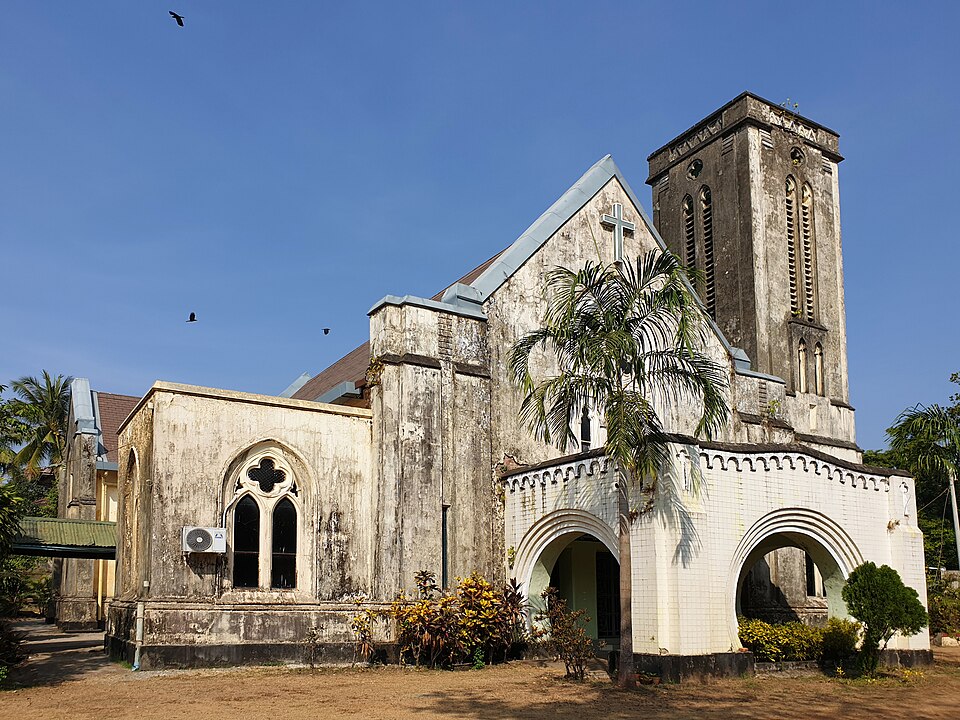
Over the years, the church building itself has undergone changes and rebuilding, reflecting both the passage of time and the challenges of maintaining historic structures in a tropical climate. Despite these changes, the congregation has remained active, continuing its mission of worship and service within the local community.
The legacy of First Baptist Church in Mawlamyine extends beyond its own congregation. It represents one of the early successes of Baptist missionary efforts in Southeast Asia and serves as a reminder of the complex interactions between Western missionaries and स्थानीय cultures during the colonial period. While missionaries provided theological and educational frameworks, local believers played a crucial role in shaping the church’s identity and ensuring its survival.
Today, First Baptist Church continues to function as a place of worship and community life in Mawlamyine. It stands as a historical landmark of the Baptist tradition in Myanmar and as a living testimony to nearly two centuries of Christian presence in the region. Its story reflects themes of faith, cultural exchange, education, and endurance, making it an important part of the broader history of Christianity in Southeast Asia.
_____
Image Source/Credit:
• Anagoria, CC BY 3.0
Related
Sorry, no records were found. Please adjust your search criteria and try again.
Sorry, unable to load the Maps API.