
The Robert Jermain Thomas Memorial Church stands as a powerful symbol of sacrifice, faith, and the unexpected ways in which history can unfold. Located in Pyongyang, the church commemorates the life and legacy of Robert Jermain Thomas, a missionary whose brief and tragic encounter with Korea would leave a lasting spiritual imprint on the peninsula.
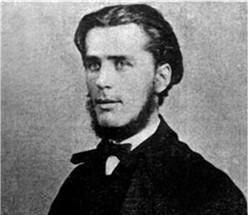
Robert Jermain Thomas was born in 1839 in Wales and became one of the earliest Protestant missionaries with a burden for East Asia. Initially serving in China, he developed a strong desire to bring the Christian message to Korea, then known as the “Hermit Kingdom” due to its strict isolationist policies. At the time, Korea was closed to most foreign contact, and attempts to enter the country were both dangerous and forbidden.
In 1866, Thomas joined the crew of the American merchant vessel SS General Sherman, which set out to establish trade relations with Korea. While the expedition had commercial motives, Thomas saw it as an opportunity to reach the Korean people with the Christian message. As the ship sailed up the Taedong River toward Pyongyang, tensions quickly escalated between the crew and Korean authorities. The situation deteriorated into violence, culminating in the destruction of the ship and the deaths of all aboard in what is now remembered as the General Sherman Incident.
According to widely recounted accounts, Thomas’s final moments were marked by a remarkable act of faith. As he came ashore, he reportedly distributed Bibles to those present, offering them even to the men who would ultimately kill him. One story tells of a Korean official who received a Bible from Thomas and later used its pages as wallpaper in his home. Over time, the text reportedly drew interest and led to conversions, illustrating how even a single act of witness can have far-reaching consequences.
The Robert Jermain Thomas Memorial Church was later established in Pyongyang to honor this legacy. Built near the site associated with the General Sherman Incident, the church became a significant landmark in the history of Korean Christianity. Pyongyang itself would later earn the nickname “Jerusalem of the East” due to the remarkable growth of Christianity in the late nineteenth and early twentieth centuries—a development that many trace, at least in part, to early figures like Thomas.
The church’s history is closely intertwined with the broader story of Christianity in Korea. Following the initial opening of the country to foreign influence in the late nineteenth century, missionaries from various denominations entered Korea and found a population increasingly receptive to their message. The groundwork laid by earlier contacts, including the distribution of Scripture by Thomas, helped prepare the way for this expansion. As churches were established and communities of believers grew, the memory of Thomas’s sacrifice took on symbolic importance.
During the twentieth century, however, the Korean Peninsula underwent dramatic upheaval. The rise of communism in the North and the subsequent division of the country following Korean War had profound effects on religious life. In North Korea, where Pyongyang is located, religious practice came under strict control, and many churches were closed or repurposed. Despite these challenges, the Robert Jermain Thomas Memorial Church has remained a notable site, often referenced as part of the historical narrative of Christianity in the region.
The legacy of the church extends beyond its physical structure. It serves as a reminder of the cost and commitment associated with early missionary efforts. Thomas’s story, though brief in duration, has been told and retold as an example of courage and conviction. For many, it illustrates the belief that faithfulness, even in the face of danger, can produce results that endure far beyond a single lifetime.
In a broader sense, the impact of the Robert Jermain Thomas Memorial Church lies in its connection to the remarkable growth of Christianity in Korea as a whole. Today, South Korea is home to one of the largest Christian populations in Asia, and Korean churches have become influential in global missions. While many factors contributed to this development, the story of Thomas and the early distribution of Scripture remains a foundational part of that history.
In conclusion, the Robert Jermain Thomas Memorial Church represents more than a historical monument. It stands as a testament to a life given in service, a moment of sacrifice that resonated across generations, and the enduring influence of faith in shaping both individual lives and entire communities.
_____
Image Source/Credit:
• Unknown source, CC0, via Wikimedia Commons
Related
Sorry, no records were found. Please adjust your search criteria and try again.
Sorry, unable to load the Maps API.