
From DannyTheDigger:
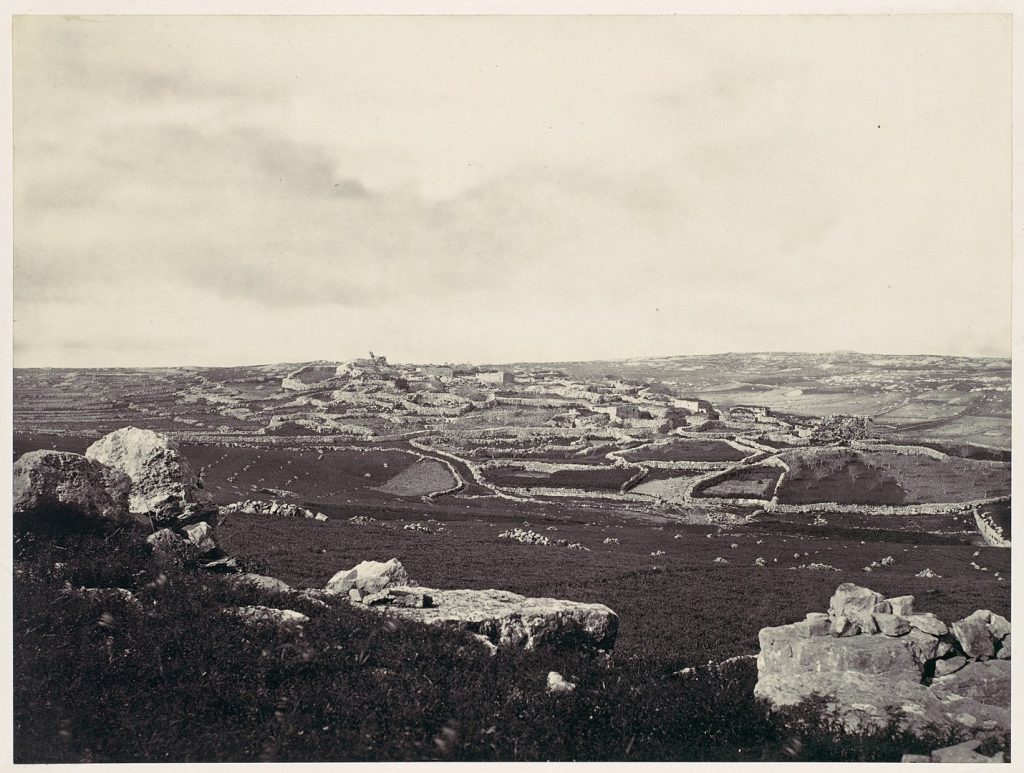
Today, there are almost no visible remains of biblical Bethel in Baytin. However, some exciting finds are at the summit of Mount Artas, 1 mile north of Baytin. Facing north is a big stone platform framed by a stone wall, forming a rectangular shape. By local tradition, Jeroboam’s temple stood here. Next to it, the Muslims erected a shrine (Maqam Sheikh Abdallah) over a chapel from the Crusaders’ times. According to local tradition, the chapel marks the site of Jacob’s dream. The site also provides one of the best panoramic views in Israel. The coastline, the Jordan Valley, the mountains of Moab, and even Mount Hermon are visible from here.
♦ _____ ♦
The archaeological sites associated with Jeroboam I’s temple and Jacob’s vision of the ladder provide a fascinating window into the intersection of biblical narrative and ancient Near Eastern history. Chief among these locations are Tel Dan, often linked with Jeroboam’s northern sanctuary, and Bethel, traditionally identified with Jacob’s dream.
Following the division of the united monarchy of Israel after the reign of Solomon, Jeroboam I established the northern kingdom and sought to consolidate both political and religious independence from Jerusalem. According to the biblical account, he set up alternative centers of worship at Dan in the north and Bethel in the south of his territory. At Dan—identified today with Tel Dan—archaeologists have uncovered a large elevated platform, often referred to as a “high place.” This structure is widely believed to be associated with the cultic site described in the biblical narrative, where Jeroboam placed a golden calf as a symbol of worship.
Excavations at Tel Dan have revealed impressive remains, including massive stone foundations and a broad staircase leading up to the platform. These findings suggest that the site was designed for public religious ceremonies and held considerable importance within the northern kingdom. While no golden calf has been discovered, the scale and prominence of the structure align well with descriptions of a major sanctuary. The site continued to be used and modified over successive periods, reflecting its enduring religious significance.
In contrast, the site of Bethel is associated with a much earlier biblical tradition. It is here, according to the Book of Genesis, that Jacob experienced his famous dream of a ladder—or stairway—reaching from earth to heaven, with angels ascending and descending upon it. This vision marked the place as sacred, and Jacob named it Bethel, meaning “house of God.” The site later became an important center of worship in Israelite history, including during the time of Jeroboam.
The identification of ancient Bethel is commonly linked with the modern site of Beitin in the West Bank. Archaeological work in this area has uncovered remains of ancient occupation, including fortifications and cultic features, though definitive evidence directly connecting the site to Jacob’s vision remains elusive. Nevertheless, the longstanding tradition associating Bethel with this event has made it a place of deep religious reflection.
The legacy of these sites is both historical and theological. Tel Dan offers tangible archaeological evidence of the religious practices of the northern kingdom, shedding light on how political realities shaped worship in ancient Israel. Bethel, while less archaeologically definitive, carries immense symbolic weight as a place where heaven and earth were believed to meet.
Together, these locations illustrate the complexity of biblical history. They reveal a world in which faith, politics, and geography were closely intertwined. For modern visitors and scholars alike, they serve as reminders that the stories preserved in Scripture are rooted in real places, where generations lived, worshiped, and sought understanding of the divine.
In their enduring legacy, the sites of Tel Dan and Bethel continue to invite study and reflection, bridging the gap between ancient tradition and present-day inquiry into the foundations of faith.
_____
Image Source/Credit:
• Francis Frith, CC0, via Wikimedia Commons
Related
Sorry, no records were found. Please adjust your search criteria and try again.
Sorry, unable to load the Maps API.