The Tomb of Caleb is a site of longstanding tradition and quiet reverence, associated with Caleb, one of the most faithful figures in the Old Testament. Though not universally verified by archaeology, the site reflects centuries of belief linking it to the burial place of Caleb, a companion of Joshua and one of the twelve spies sent by Moses into the land of Canaan.
Caleb’s story is recorded in the biblical books of Numbers and Joshua. Unlike most of the spies, who returned from Canaan with fear and discouragement, Caleb—along with Joshua—remained confident in God’s promise. He urged the Israelites to trust in divine provision and move forward in faith. Because of this steadfastness, Caleb was spared the judgment that befell the unbelieving generation and was later granted an inheritance in the land. The city of Hebron, with its deep biblical associations, became his possession, making it a fitting location for a traditional tomb attributed to him.
The Tomb of Caleb is situated near Hebron, a city rich in religious significance for Jews, Christians, and Muslims alike. Hebron is also home to the Cave of the Patriarchs, traditionally identified as the burial place of Abraham, Isaac, and Jacob. Within this broader sacred landscape, the Tomb of Caleb occupies a more modest but meaningful place, often visited by those who wish to honor the memory of a man known for his courage and loyalty.
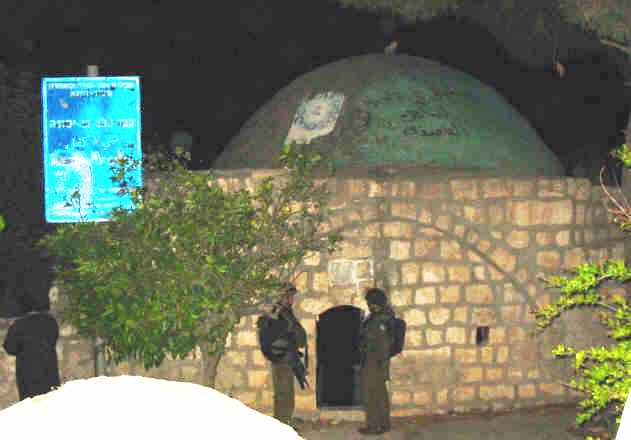
Architecturally, the structure marking the Tomb of Caleb is simple compared to more prominent shrines in the region. It typically consists of a small, enclosed space or monument, sometimes covered by a domed or rectangular building reflecting local architectural styles. Over time, the site has been maintained and adapted by successive communities, each preserving the tradition while adding their own cultural elements. The simplicity of the site mirrors the character often attributed to Caleb himself—faithful, steadfast, and unassuming.
The significance of the Tomb of Caleb lies less in its physical form than in the story it represents. For believers, Caleb stands as an example of unwavering trust in God’s promises. His willingness to stand apart from the majority, even when it meant opposing popular opinion, has made him a model of courage. The traditional tomb serves as a tangible reminder of these qualities, inviting visitors to reflect on the importance of faithfulness in their own lives.
Pilgrims and visitors who come to the site often do so in a spirit of quiet reflection. Unlike larger pilgrimage centers, the Tomb of Caleb does not attract vast crowds, which allows for a more personal experience. Those who visit may read biblical passages, offer prayers, or simply pause to consider the legacy of a man who remained faithful in the face of doubt and opposition.
Historically, the identification of specific burial sites from the biblical period is difficult to confirm with certainty. As with many traditional locations in the Holy Land, the Tomb of Caleb rests on a blend of scriptural association and long-standing local tradition rather than definitive archaeological proof. Nevertheless, such sites hold enduring value as expressions of collective memory and faith.
In the end, the Tomb of Caleb serves as more than a historical curiosity. It stands as a symbol of steadfast belief and the rewards of faithfulness. Rooted in the traditions of Hebron and the broader biblical narrative, it continues to draw those who seek to connect with the past and to be inspired by the enduring example of Caleb’s life.
_____
Image Source/Credit:
• Photo Shuki / released to Public Domain
Related
Sorry, no records were found. Please adjust your search criteria and try again.
Sorry, unable to load the Maps API.