Tabaga Prison Camp was one of the remote labor camps associated with the Soviet system of forced labor during the twentieth century. Located near the settlement of Tabaga, not far from Yakutsk, the camp existed within one of the coldest and most unforgiving regions on earth. Its history reflects the broader realities of the Soviet labor camp network, often referred to as the Gulag.
The camp at Tabaga functioned during the era of Gulag, particularly under the rule of Joseph Stalin. During this period, thousands of camps were established across the Soviet Union, especially in remote regions such as Siberia. These camps were used to detain a wide range of individuals, including political prisoners, accused dissidents, and ordinary citizens caught up in sweeping arrests. Many prisoners were sent to such camps without fair trials, often based on suspicion or minor offenses.
Tabaga’s location in Yakutia made it particularly harsh. Winters in this region are long and severe, with temperatures dropping far below freezing for extended periods. Prisoners housed in the camp were required to endure these extreme conditions while performing forced labor. Typical work included construction, logging, and infrastructure development, all of which were essential to Soviet expansion and resource extraction in the region.
Living conditions in the camp were extremely difficult. Prisoners were housed in basic barracks, often overcrowded and poorly insulated against the cold. Food rations were limited and typically insufficient for the level of physical labor required. As a result, malnutrition was common, weakening prisoners and making them more vulnerable to illness. Medical care was minimal, and diseases spread easily in such conditions.
Despite these hardships, accounts from former prisoners and historical records suggest that individuals in camps like Tabaga developed ways to endure. Some relied on personal resilience, while others found strength in small communities formed within the barracks. Acts of cooperation—sharing food, offering encouragement, or assisting the sick—became vital for survival in an environment where official support was scarce.
The purpose of camps like Tabaga was not only punitive but also economic. The Soviet government used forced labor as a means of developing remote regions and completing large-scale projects. In this sense, prisoners became an essential part of the labor force, contributing to infrastructure that would later serve the state. However, this came at a tremendous human cost, as many prisoners did not survive the conditions.
Following Stalin’s death in 1953, the Soviet Union began a gradual process of reform. Many prisoners were released, and the Gulag system was reduced in scale. Camps like Tabaga were eventually closed or abandoned, leaving behind only limited physical traces. In many cases, the memory of these camps has been preserved more through testimony and historical research than through surviving structures.
Today, Tabaga Prison Camp is remembered as part of the larger history of repression and forced labor in the Soviet Union. While it may not be as widely known as some other camps, it represents the same pattern of hardship experienced by countless individuals. The camp’s remote location underscores the isolation faced by prisoners, many of whom were far removed from their homes and families.
In sum, the history of the Tabaga Prison Camp in Russia reflects a difficult chapter in the twentieth century. It serves as a reminder of the human consequences of political repression and the resilience of those who endured it. Remembering such places helps ensure that the experiences of those who suffered are not lost to history.
♦ _____ ♦
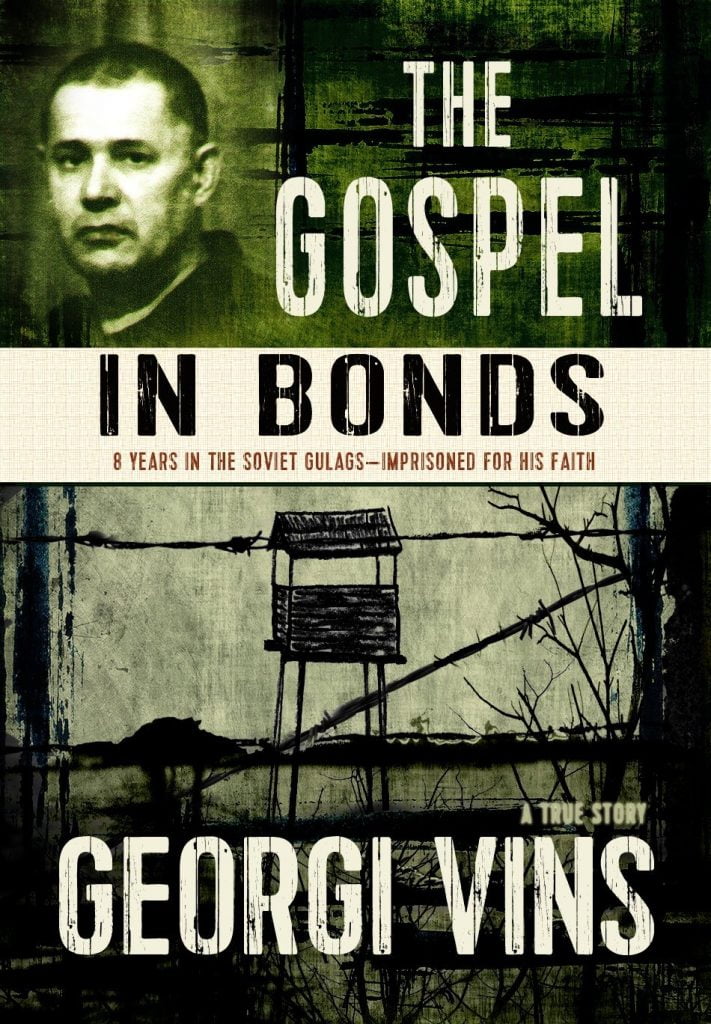
From The Gospel in Bonds
The camp at Tabaga was surrounded by four thick, wooden stockade-like fences nearly fifteen feet high. Over each fence stretched several rows of barbed wire and another wire connected to the alarm system. Massive spirals of barbed wire lay between the first two fences. Armed guards with dogs patrolled the area between the last set of fences. If the alarm was triggered, a piercing screech would rip through the air and a flashing red light at the control point pinpointed where the alarm was set off, sending soldiers rushing to the location.

_____
Image Source/Credit (in order):
• Publications: Profiles: Peter Wiens and Georgi Vins. mbhistory.org/profiles/wiens-vins.
• www.amazon.com/Gospel-Bonds-Georgi-Vins/dp/0989509362