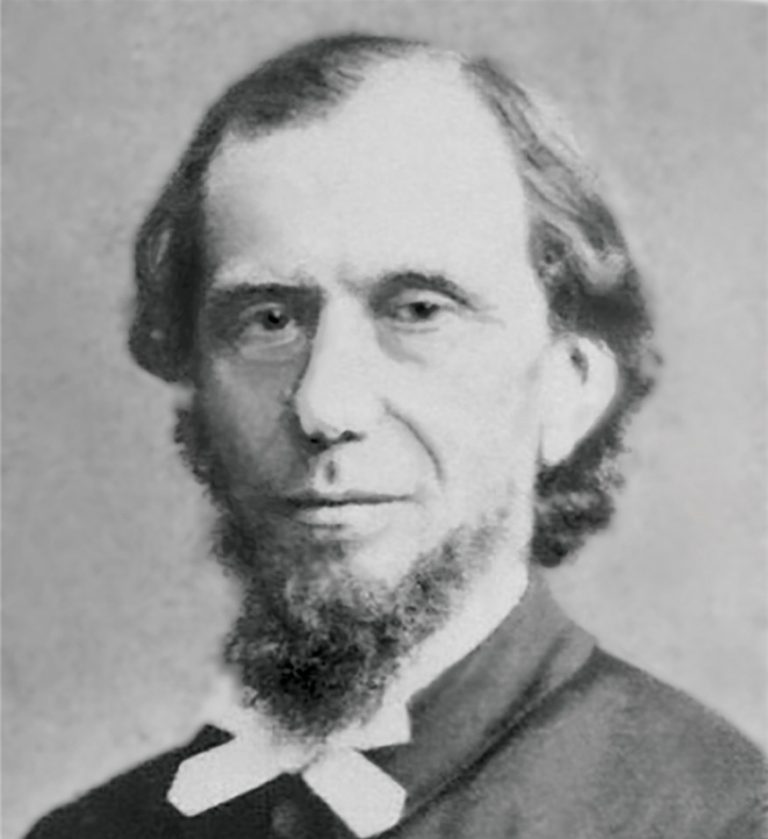
Andrew Murray remains one of the most influential devotional writers and missionary leaders of the nineteenth and early twentieth centuries. His life bridged continents, cultures, and eras of significant change, yet his central message never wavered: a deep, abiding relationship with God is the source of all true Christian strength and service.
Andrew Murray was born on May 9, 1828, in Graaff-Reinet, a small town in the Cape Colony of South Africa. He was the son of a Scottish Presbyterian minister, and from an early age he was immersed in a household shaped by faith, discipline, and missionary concern. Recognizing his potential, his parents sent him and his brother to Scotland for further education. There, Murray studied theology at the University of Aberdeen and later in the Netherlands, where he was exposed to the currents of evangelical revival and Reformed thought that would shape his ministry.
Ordained at the age of twenty, Murray returned to South Africa in 1848, where he began his lifelong work as a pastor and missionary. His early ministry took place in frontier regions, where congregations were scattered and travel was difficult. These years demanded resilience and adaptability, as he often rode long distances to preach, administer sacraments, and encourage isolated believers. Such experiences grounded his theology in practical realities and deepened his reliance on prayer.
Murray’s influence grew steadily, and he became a prominent leader within the Dutch Reformed Church in South Africa. He served several congregations, most notably in Worcester and later in Wellington, where he spent many of his most productive years. Beyond his pastoral duties, he was deeply committed to education and missionary training. He helped establish institutions for the preparation of ministers and missionaries, believing that the future of the church depended on well-formed, spiritually grounded leaders.
A defining moment in Murray’s ministry came during the revival of 1860, which swept through parts of the Cape Colony. This movement of spiritual awakening emphasized repentance, prayer, and renewed devotion. Murray himself played a significant role in guiding and interpreting the revival, though he approached it with a careful balance of openness and discernment. He welcomed genuine spiritual renewal but remained cautious about excesses or emotionalism detached from sound doctrine. This measured approach contributed to his reputation as both a revivalist and a steady theological voice.
Murray was also a prolific writer, and it is through his books that his influence has most widely spread. Works such as Abide in Christ, With Christ in the School of Prayer, and Absolute Surrender have been read by generations of Christians across denominational lines. His writing style is simple yet profound, marked by clarity, warmth, and a persistent call to deeper spiritual life. He had a gift for taking complex theological truths and presenting them in a way that spoke directly to the heart.
Central to Murray’s teaching is the concept of abiding in Christ, drawn from the words of Jesus in John 15. For Murray, the Christian life was not primarily about external activity, but about maintaining a living connection with Christ through faith and obedience. From this relationship flowed everything else—holiness, service, and effective ministry. He stressed that without this inward life, outward efforts would ultimately prove fruitless.
Another key theme in Murray’s work is prayer. Like E. M. Bounds, Murray saw prayer as essential to spiritual vitality. However, his emphasis often leaned toward the believer’s union with Christ as the foundation for confident, persistent prayer. He encouraged Christians to approach God with both humility and boldness, trusting in the promises of Scripture.
Murray’s impact extended beyond South Africa. He was involved in the broader missionary movement of his time, supporting efforts to bring the Christian message to unreached regions. He also played a role in the early development of what would later become the Pentecostal movement, particularly through his emphasis on the work of the Holy Spirit. While he did not fully align with all aspects of that movement, his teachings helped lay important groundwork.
In his later years, Murray suffered from health challenges, including a period when he lost his voice and could no longer preach regularly. Rather than ending his ministry, this limitation redirected his efforts toward writing and mentoring others. In this way, his influence continued to grow even as his public activity diminished.
Andrew Murray died on January 18, 1917, leaving behind a legacy that continues to shape Christian thought and practice. His writings remain in print and are widely read by those seeking a deeper spiritual life. More than a century later, his call to humility, surrender, and abiding faith still resonates.
In an age often characterized by activity and distraction, Murray’s life offers a steady reminder of what endures. His impact lies not in grand achievements alone, but in his consistent emphasis on the inner life with God—a foundation upon which lasting faith and faithful service are built.
_____
Image Source/Credit:
• Category:Andrew Dickson Murray – Wikimedia Commons (commons.wikimedia.org/wiki/Category:Andrew_Dickson_Murray#/media/File:Andrew_Murray.JPG)
Related
Sorry, no records were found. Please adjust your search criteria and try again.
Sorry, unable to load the Maps API.