The Reformation Wall stands as one of the most striking memorials to the Protestant Reformation, located in the Parc des Bastions in Geneva. Officially known as the International Monument to the Reformation, it commemorates the leaders, events, and ideals that shaped a movement which profoundly influenced the course of European and global history.
The Reformation Wall was inaugurated in 1909, marking the 400th anniversary of the birth of John Calvin and the 350th anniversary of the founding of the Geneva Academy. Its construction reflected a growing desire in the late nineteenth and early twentieth centuries to recognize the historical importance of the Reformation and Geneva’s central role within it. Designed by Swiss architects Charles Dubois, Alphonse Laverrière, Eugène Monod, and Jean Taillens, the monument was conceived on a grand scale to reflect the enduring significance of the movement it honors.
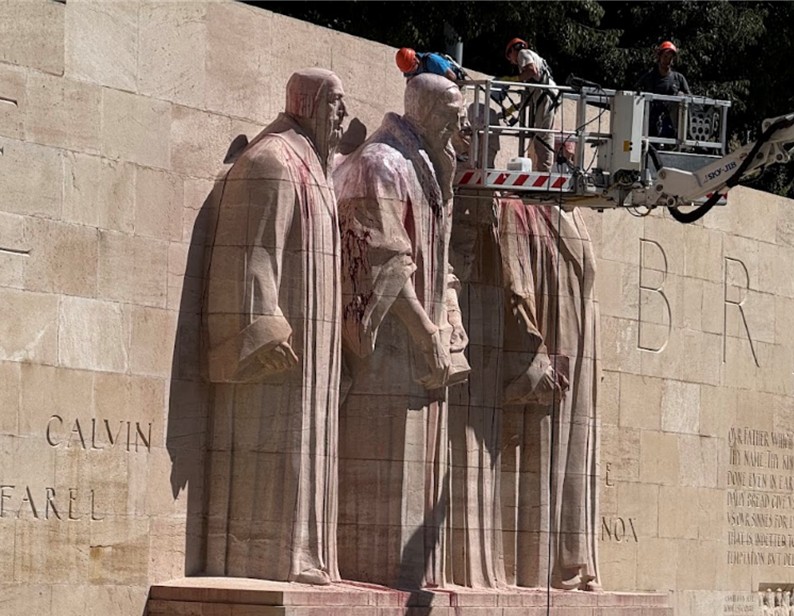
At the heart of the wall are four towering statues of key Reformation figures. Alongside Calvin stand William Farel, Theodore Beza, and John Knox. Each played a vital role in establishing and spreading Reformed theology, particularly from Geneva, which became a hub for Protestant thought and refuge for those fleeing persecution. The figures are depicted in solemn, dignified poses, emphasizing their commitment to Scripture and reform.
Beyond these central statues, the wall features additional reliefs and inscriptions that highlight significant events and individuals connected to the broader Reformation. Among these are references to the spread of Protestantism in countries such as France, England, Scotland, and the Netherlands. The inclusion of these elements underscores the international scope of the movement and the far-reaching impact of ideas that were nurtured in Geneva.
A prominent inscription running along the wall reads “Post Tenebras Lux,” a Latin phrase meaning “After darkness, light.” This motto, closely associated with the Reformation, captures the reformers’ conviction that the rediscovery of biblical truth brought renewed clarity and hope to the church. It also reflects the broader cultural and intellectual awakening that accompanied the movement.
The Reformation Wall is not merely a celebration of historical figures; it also serves as a place of reflection on the principles that emerged from the Reformation. These include the authority of Scripture, the importance of education, and the idea of a faith grounded in personal conviction. At the same time, the monument invites consideration of the complexities of the era, including the divisions and conflicts that arose alongside reform.
Over the years, the wall has become a focal point for visitors from around the world. It stands in a public park, accessible to all, symbolizing the enduring relevance of the ideas it represents. For many, it is a place to contemplate the legacy of a movement that shaped not only religious life but also political thought, education, and cultural development.
Today, the Reformation Wall continues to bear witness to Geneva’s historic role as a center of reform. Its massive stone figures and carefully chosen inscriptions serve as a lasting tribute to those who sought to reshape the church according to their understanding of Scripture. In doing so, it preserves the memory of a transformative period and invites each generation to reflect on its meaning and significance.
♦ _____ ♦
This monument ties together the story of the Reformation – Post Tenebras, Lux. After Darkness, Light.
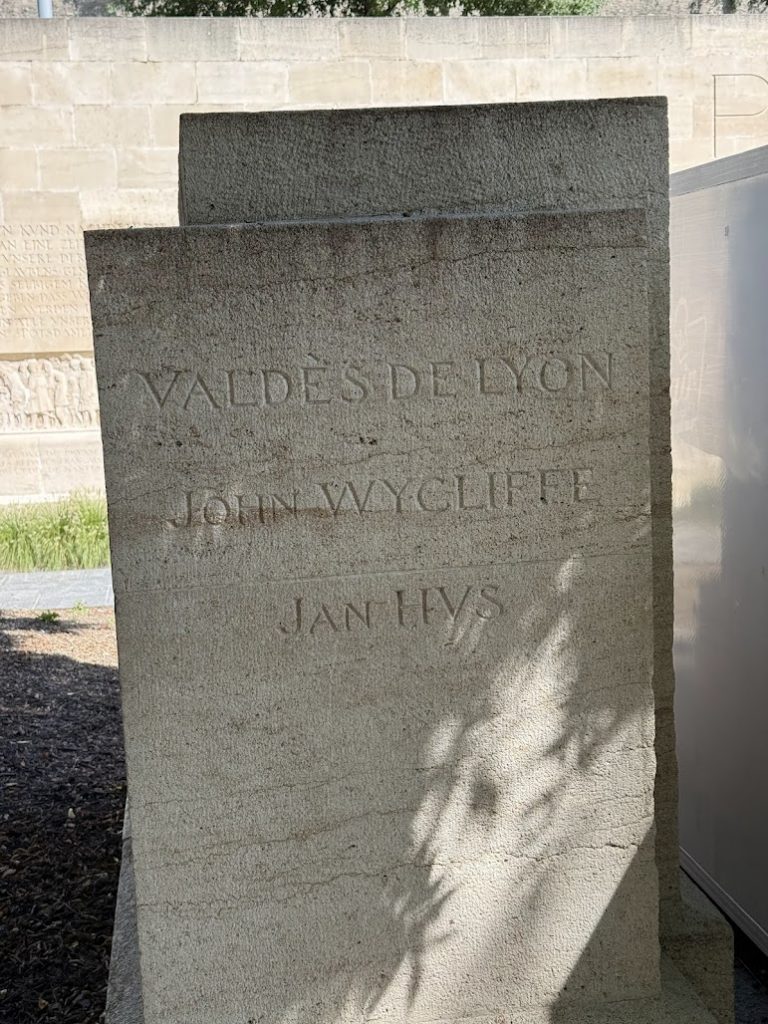
The Proto-Reformers leading up to Martin Luther:
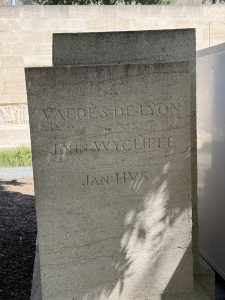
- Peter Waldo (c. 1140-c. 1205)
- John Wycliffe (c. 1328-1384)
- Jan Hus (c. 1369-1415)
- Martin Luther (1483-1546)
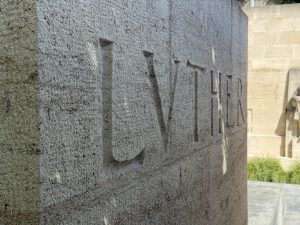
The Zurich Reformation
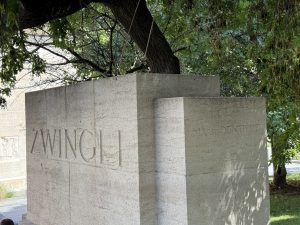
- Ulrich Zwingli (1484-1531)
- Marie Dentière (c. 1495-1561)
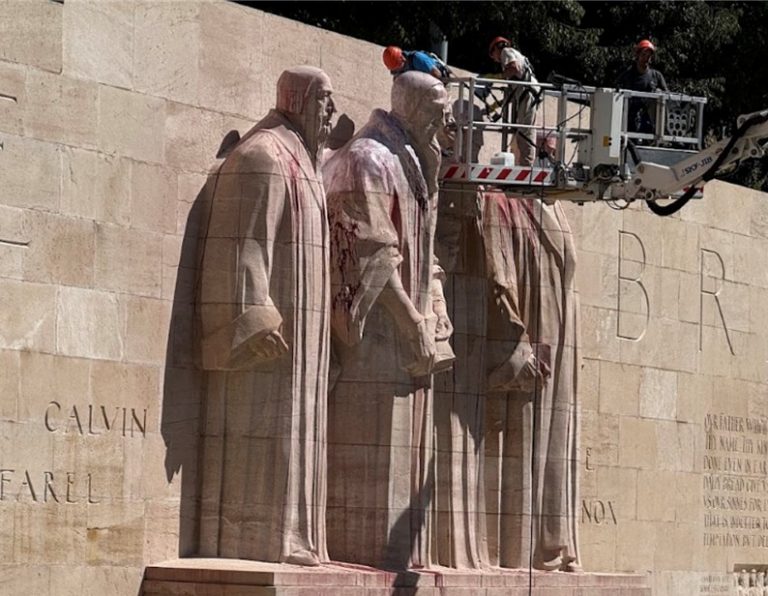
At the center, the Geneva Reformation. (At this time, the monument was vandalized with red paint to symbolize blood).
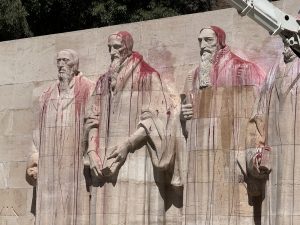
- William Farel (1489–1565)
- John Calvin (1509–1564)
- Theodore Beza (1519–1605)
- John Knox (c.1513–1572)
The German Reformation – especially that accepted 20,000 Huguenot refugees
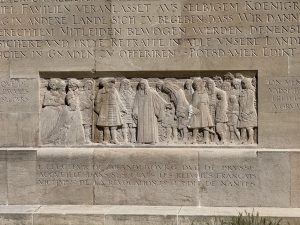
Several significant figures are also recognized.
- Frederick William of Brandenburg (1620–1688)
- William the Silent (1533–1584)
- Gaspard de Coligny (1519–1572)
- Roger Williams (1603–1684)
- Oliver Cromwell (1599–1658)
- Stephen Bocskai (1557–1606)
What is the purpose of the Reformation? ΙΗΣ – Jesus Christ, the Son of God.
_____
Image Source/Credit (in order):
• Photos from Our Christian Heritage