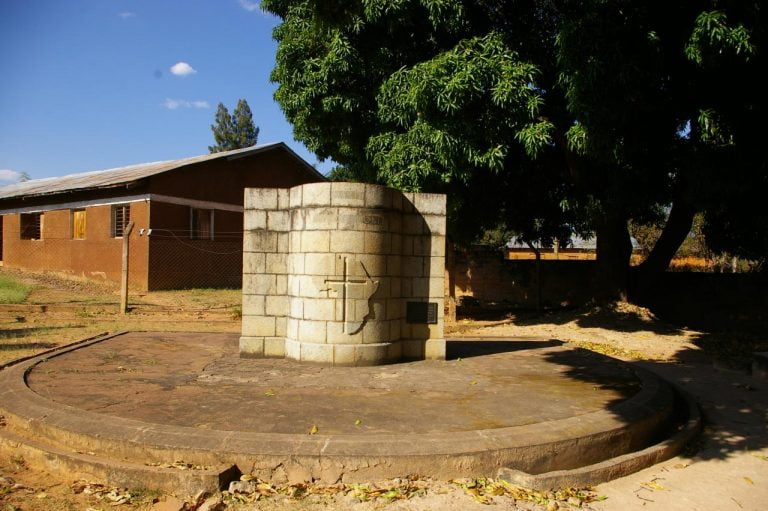
The David Livingstone Memorial
The David Livingstone Memorial in Blantyre, Scotland, stands as a lasting tribute to one of the most influential missionary-explorers of the nineteenth century. Situated on the banks of the River Clyde, the memorial preserves the birthplace and early environment of David Livingstone, offering visitors a meaningful connection to the formative years of a man whose work would reach far beyond his humble origins.
Born in 1813 into a working-class family, Livingstone spent his childhood in a single-room tenement near the cotton mills of Blantyre. From an early age, he worked long hours in the mill while pursuing education in the evenings, demonstrating a determination and discipline that would define his later life. The memorial site includes restored buildings that reflect these early conditions, allowing visitors to understand the modest circumstances from which he emerged.
At the heart of the memorial is the carefully preserved birthplace house, which has been restored to resemble its original appearance. This simple dwelling provides a vivid picture of early nineteenth-century industrial life in Scotland. Nearby, interpretive exhibits trace Livingstone’s journey from factory worker to medical missionary, highlighting the perseverance that enabled him to overcome social and economic barriers.
Livingstone’s career was closely associated with the London Missionary Society, through which he traveled to southern and central Africa. His work combined evangelism, exploration, and a deep concern for humanitarian issues, particularly the East African slave trade. His travels led to the mapping of previously uncharted regions and brought international attention to Africa’s geography and peoples.
The memorial goes beyond recounting his achievements; it seeks to place his life within a broader historical and cultural context. Exhibits explore his encounters with African communities, his efforts to promote legitimate commerce as an alternative to slavery, and the lasting consequences of his explorations. By presenting both the accomplishments and complexities of his work, the site encourages thoughtful reflection rather than simple admiration.
Surrounding the historic buildings are landscaped grounds that enhance the visitor experience. The setting along the River Clyde provides a peaceful environment for contemplation, contrasting with the demanding conditions Livingstone often faced during his travels. The grounds also include monuments and interpretive features that connect his early life in Scotland with his later work abroad.
In recent years, the memorial has undergone significant redevelopment to improve its educational and interpretive offerings. Now operating as a modern museum, it combines traditional displays with interactive exhibits designed to engage a wide range of visitors. These updates ensure that Livingstone’s story remains accessible and relevant to contemporary audiences, while preserving the historical integrity of the site.
The David Livingstone Memorial also plays an important role in preserving national heritage. It highlights Scotland’s contribution to global history and serves as a reminder of the values often associated with Livingstone—perseverance, faith, and a commitment to humanitarian causes. For many visitors, the memorial provides inspiration, illustrating how determination and conviction can lead to far-reaching influence.
At the same time, the site acknowledges the complexities of Livingstone’s legacy. His explorations were part of a broader era of European expansion into Africa, which had both positive and negative consequences. By addressing these issues, the memorial fosters a balanced understanding of history, encouraging visitors to consider multiple perspectives.
Today, the David Livingstone Memorial remains a place of education, reflection, and remembrance. It connects the story of a single individual to larger themes of faith, exploration, and social change. Through its preservation and interpretation, it ensures that the life and legacy of David Livingstone continue to be studied and appreciated by future generations.
_____
Image Source/Credit:
• Peter Levey, CC BY 2.0 <https://creativecommons.org/licenses/by/2.0>, via Wikimedia Commons
See more pictures of the museum
Related
Sorry, no records were found. Please adjust your search criteria and try again.
Sorry, unable to load the Maps API.