
University of Cambridge is one of the world’s oldest and most influential institutions of higher learning. Located in the historic city of Cambridge, the university has played a central role in the intellectual, scientific, and cultural development of Britain and the wider world for more than eight centuries.
The university traces its origins to 1209, when a group of scholars left University of Oxford following disputes with local townspeople. Seeking a place of safety and academic freedom, they settled in Cambridge, where a new center of learning gradually took shape. Over time, the university developed into a formal institution, receiving royal charters and establishing a system of colleges that remains a defining feature of Cambridge life.
One of the distinctive aspects of Cambridge is its collegiate structure. The university is made up of numerous independent colleges, each with its own traditions, governance, and community. Among the oldest are Peterhouse, founded in 1284, and King’s College, established in 1441 by King Henry VI. These colleges provide accommodation, academic support, and social life for students, while the university itself oversees teaching, examinations, and research.
Throughout its history, Cambridge has been a center of intellectual innovation. During the Scientific Revolution, it became associated with groundbreaking discoveries in mathematics and physics. Isaac Newton, one of its most famous alumni, developed the laws of motion and universal gravitation while at Cambridge, fundamentally changing the understanding of the natural world. In later centuries, the university continued to produce leading thinkers, scientists, and writers who shaped modern knowledge.
Cambridge has also played a significant role in religious and philosophical thought. During the Reformation, it was a center of theological debate and reform, influencing the direction of the Church of England. Many prominent church leaders and scholars were educated there, contributing to the development of English Protestantism and the broader intellectual life of Europe.
In the modern era, the university has expanded its scope to include a wide range of disciplines, from the humanities and social sciences to engineering and medicine. Its research contributions have been especially notable, with numerous discoveries in fields such as molecular biology, computer science, and cosmology. Cambridge-affiliated scientists have been awarded many Nobel Prizes, reflecting the institution’s ongoing commitment to excellence.
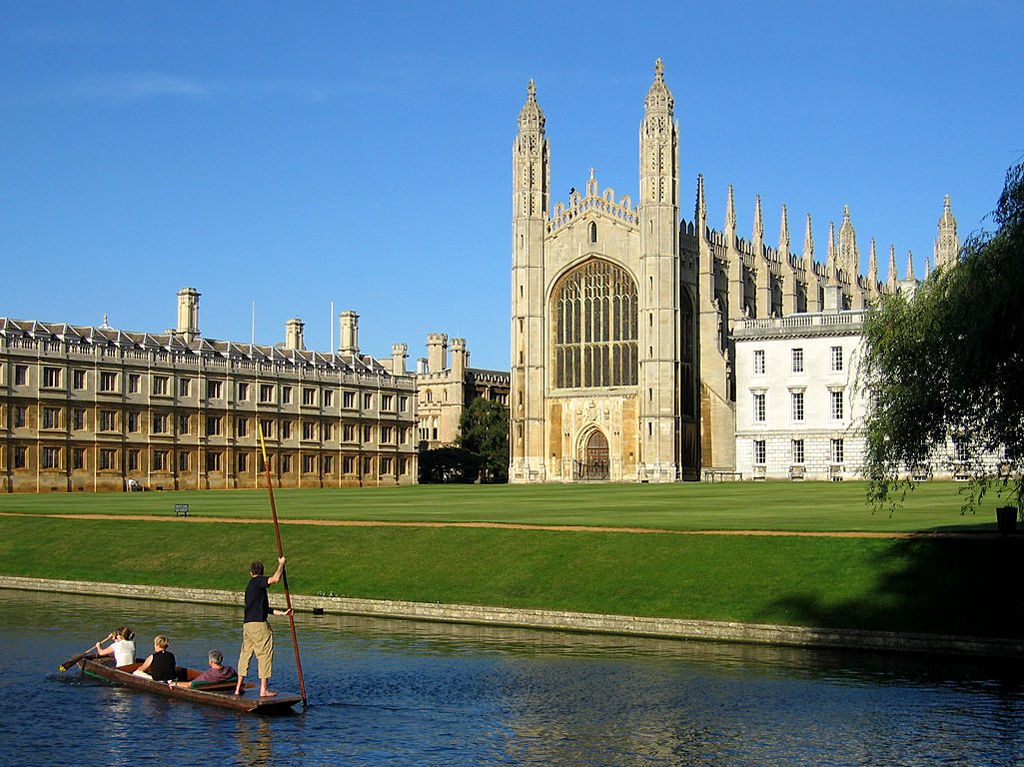
The physical setting of Cambridge adds to its character. The university’s buildings, including historic chapels, libraries, and lecture halls, are set along the River Cam, creating a landscape that blends natural beauty with architectural heritage. Landmarks such as King’s College Chapel are recognized around the world for their design and historical significance.
The impact of the University of Cambridge extends far beyond its immediate location. Its graduates have gone on to become leaders in government, science, literature, and industry. The university’s influence can be seen in the spread of ideas, the advancement of knowledge, and the shaping of institutions across the globe.
Despite its long history, Cambridge continues to adapt to changing times, welcoming students from diverse backgrounds and engaging with contemporary challenges. Its enduring reputation rests on a balance of tradition and innovation—a commitment to preserving the strengths of its past while contributing to the future.
In sum, the University of Cambridge stands as a symbol of academic excellence and intellectual curiosity. From its medieval beginnings to its modern achievements, it has remained a place where ideas are explored, knowledge is advanced, and generations are prepared to make their mark on the world.
♦ _____ ♦
At the University of Cambridge, Christ’s College graduates included Francis Johnson of the Ancient Church and John Smyth of Gainsborough. John Lathrop, second pastor of London’s J-L-J Church, was a Queens’ College graduate. Lathrop’s successor, Henry Jessey, earned his BA and MA degrees at St. John’s College. London Baptist, Hanserd Knollys, received his training at St. Catherine’s Hall. Roger Williams, founder of America’s First Baptist Church, was a Pembroke College graduate. Henry Dunster, first president of Harvard, earned his BA and MA in Magdalene College. An excellent place to begin is the Cambridge Visitor Information Centre, at The Guildhall, Peas Hill CB2 3AD.
Copyrighted and used by permission from David Beale, Baptist History in England and America: Personalities, Positions, and Practices
_____
Image Source/Credit:
• Andrew Dunn, CC BY-SA 2.0 <https://creativecommons.org/licenses/by-sa/2.0>, via Wikimedia Commons
Related
Sorry, no records were found. Please adjust your search criteria and try again.
Sorry, unable to load the Maps API.