
The Life, Legacy, and Impact of Henry Moorhouse
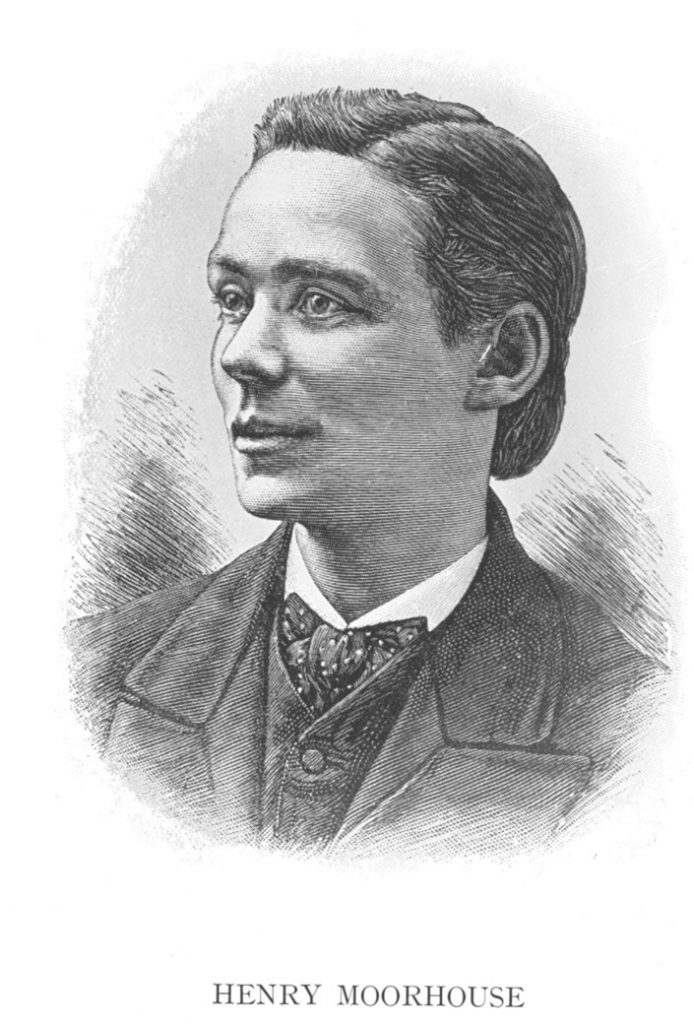
Henry Moorhouse (1840–1880) was an English evangelist whose brief life left a lasting imprint on nineteenth-century evangelical Christianity. Often remembered as a man of passionate preaching and deep spiritual conviction, Moorhouse became closely associated with revivalist ministry in both Britain and the United States. Though he never held a formal pastoral office or produced extensive theological writings, his influence spread widely through his compelling public preaching and his emphasis on the love of God as the central theme of the Christian message.
Moorhouse was born in Manchester, England, during a period of rapid industrial growth and social upheaval. Raised in a working-class environment, he did not receive advanced formal education. Like many self-taught preachers of his era, he came to faith through personal religious experience rather than academic training. His conversion led him into street preaching and open-air evangelism, where he quickly gained attention for his earnestness and ability to communicate with ordinary people.
From an early stage in his ministry, Moorhouse demonstrated an unusual focus on the theme of divine love. While many revivalist preachers of the nineteenth century emphasized judgment, repentance, and moral urgency, Moorhouse repeatedly returned to the message of God’s unconditional love for humanity. This emphasis became the defining characteristic of his preaching and distinguished him from many of his contemporaries.
Moorhouse’s reputation grew as he traveled and preached across England. His simple but direct style resonated with audiences, particularly among working-class congregations. He often preached in churches, mission halls, and open-air gatherings, drawing large crowds who were moved by his passionate delivery. His ministry reflected the broader evangelical revivalism of the time, which sought to bring Christian messages outside traditional church settings and into everyday life.
A turning point in Moorhouse’s career came during his visit to the United States in the 1860s. There, he preached in various cities, including Chicago, where his ministry reached a wide and influential audience. It was in Chicago that he met the prominent American evangelist Dwight L. Moody, who would become one of the most significant figures in modern evangelical history.
According to widely circulated accounts, Moorhouse once preached for several consecutive evenings at Moody’s church, focusing each time on John 3:16—“For God so loved the world…” His consistent emphasis on the love of God deeply impacted Moody, who later credited Moorhouse with reshaping his understanding of the gospel message. This influence is often regarded as one of Moorhouse’s most enduring contributions to evangelical thought, helping to shift the tone of Moody’s preaching toward a stronger emphasis on divine grace and love.
Despite his growing influence, Moorhouse remained a somewhat itinerant and informal figure in ministry. He did not settle into a long-term pastorate or institutional leadership role. Instead, he continued traveling and preaching wherever invited, maintaining a lifestyle characteristic of many revivalist evangelists of the period. His ministry was marked by personal warmth, enthusiasm, and a focus on direct spiritual appeal rather than doctrinal systematization.
Moorhouse’s life, however, was relatively short. He died in 1880 at the age of forty, leaving behind no extensive body of written work. His legacy therefore rests primarily on the testimonies of those who heard him preach and the influence he exerted on other leaders within the evangelical movement. In this sense, his impact was relational and inspirational rather than institutional.
The legacy of Henry Moorhouse is most clearly seen in the broader evangelical emphasis on the love of God that became increasingly prominent in late nineteenth-century preaching. His insistence that divine love should be central to Christian proclamation helped shape the tone of revivalist preaching in both Britain and North America. Through his influence on figures like Dwight L. Moody, his theological emphasis reached far beyond his own immediate ministry.
Moorhouse also represents a broader pattern in nineteenth-century religious life: the rise of lay preachers who, without formal theological education or ecclesiastical authority, nevertheless exercised significant spiritual influence. His life demonstrates how revivalist movements often depended on passionate individuals who communicated faith in accessible and emotionally compelling ways.
In historical perspective, Henry Moorhouse may not be as widely recognized as some of his contemporaries, but his contribution to evangelical Christianity remains meaningful. His life reminds us that influence is not always measured by longevity or institutional achievement, but sometimes by the depth of conviction and the ability to shape the spiritual outlook of others.
Today, Moorhouse is remembered primarily through the ripple effects of his ministry—especially his impact on Dwight L. Moody and the wider evangelical tradition. His brief but intense career stands as a testament to the power of simple, heartfelt preaching centered on a message of divine love, a message that continues to resonate within Christian thought and practice.
♦ _____ ♦
D.L. Moody tells about Henry Moorhouse:
“In 1867, when I was preaching in Dublin, at the close of the service a young man, who did not look over seventeen, though he was older, came up to me and said he would like to go back to America with me, and preach the Gospel. I thought he could not preach it, and I said I was undecided when I could go back. He asked me if I would write to him, as I did not know whether I wanted him or not. After I arrived at Chicago I got a letter saying he had just arrived in New York, and he would come and preach. I wrote him a cold letter, asking him to call on me if he came West. A few days after I got a letter stating he would be in Chicago next Thursday. I didn’t know what to do with him. I said to the officers of the Church, ‘There is a man coming from England, and he wants to preach. I am going to be absent Thursday and Friday. If you will let him preach on those days I will be back on Saturday and take him off your hands.’ They did not care about his preaching, being a stranger; but at my request they let him preach. On my return on Saturday I was anxious to hear how the people liked him, and I asked my wife how that young Englishman got along. How did they like him? She said they liked him very much. ‘He preaches a little different from what you do. He tells the people God loves them. I think you will like him.’ I said he was wrong. I thought I could not like a man who preached contrary to what I was preaching. I went down on Saturday night to hear him, but I had made up my mind not to like him, because he preached different from me.”
After graphically describing the six nights on John 3. 16, Moody concludes: “In closing up that seventh sermon, he said, ‘For seven nights I have been trying to tell you how much God loves you, but this poor stammering tongue of mine will not let me. If I could ascend Jacob’s ladder and ask Gabriel, who stands in the presence of the Almighty, to tell me how much love God the Father has for this poor lost world, all that Gabriel could say would be, that “God so loved the world, that He gave His only begotten Son, that whosoever beliveth in Him should not perish, but have everlasting life. “‘ I have never forgotten those nights. I have preached a different Gospel since, and I have had more power with God and man since then. ” Ever after he was a close, personal friend and helper of Messrs. Moody and Sankey. Fleming H. Revell, the, American Publisher, who died in 1931, was present at these services, and confirms the story as here stated.
And a note about this cemetery:
the Ardwick Cemetery in Chorlton, Manchester, Lancashire County, England. It dates back to 1836 in the heart of the city of Manchester and had over 80,000 burials until it was closed to any further burials in 1950. Sure, the cemetery plots are no longer available and all the land was used. However, then 15 years later to remove all the headstones and monuments; crushing the stone and granite to pieces and to totally cover up the burial plots seems in disregard to those buried there, their families and descendants.
That was the actual situation that occurred at the Ardwick Cemetery in 1965. The city did record the basic information off of each headstone and the names, dates are available at the Manchester Monumental Inscriptions with the Manchester Central Library, but the full headstone and whatever was originally inscribed is gone forever.
As if that was not bad enough, the cemetery land was then covered over with soil and sod, and made into a school playground. The very area where thousands of Manchester residents were laid to rest forever is where soccer games are played today. A monument plaque does stand at the entrance to the named Nicholls Field playground, stating this was once Ardwick Cemetery, but anything else relating to its existence is gone forevermore.
_____
Image Source/Credit:
• Ellis, Paul. “The Greatest Grace Preacher You’ve Never Heard Of.” Escape to Reality, 2 Jan. 2021 (escapetoreality.org/2020/06/04/the-greatest-grace-preacher-youve-never-heard-of)
Related
Sorry, no records were found. Please adjust your search criteria and try again.
Sorry, unable to load the Maps API.