

Across Scotland, several monuments honor the life and achievements of David Livingstone, the famed missionary, explorer, and opponent of the slave trade. Among these, the statues erected in his memory stand as enduring symbols of national pride and moral purpose. While the most prominent is located in Edinburgh, other memorials—particularly in his birthplace of Blantyre—reflect the widespread admiration he inspired throughout the country.
David Livingstone (1813–1873) rose from humble beginnings in Blantyre to become one of the most celebrated figures of the nineteenth century. His life’s work, carried out largely under the auspices of the London Missionary Society, combined evangelism, exploration, and humanitarian concern. Livingstone’s travels across Africa introduced vast regions of the continent to European audiences, while his outspoken opposition to the slave trade helped shape public opinion in Britain.
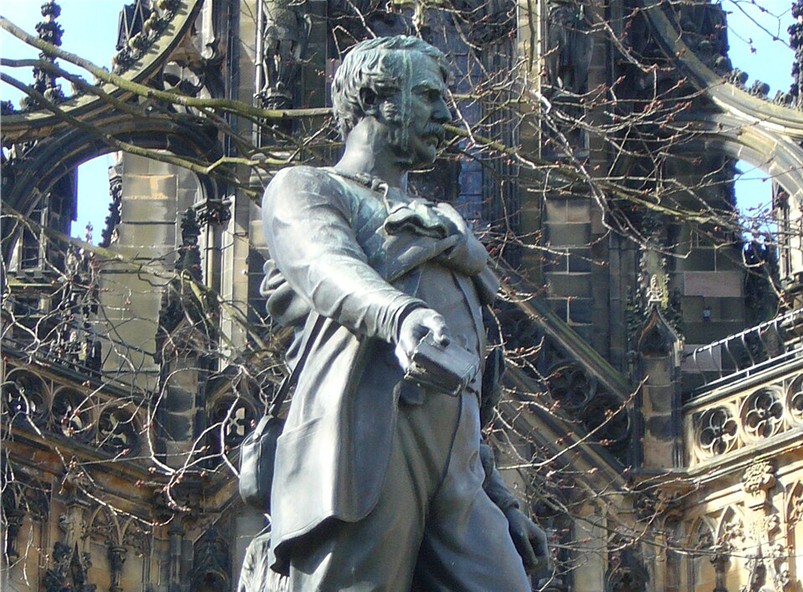
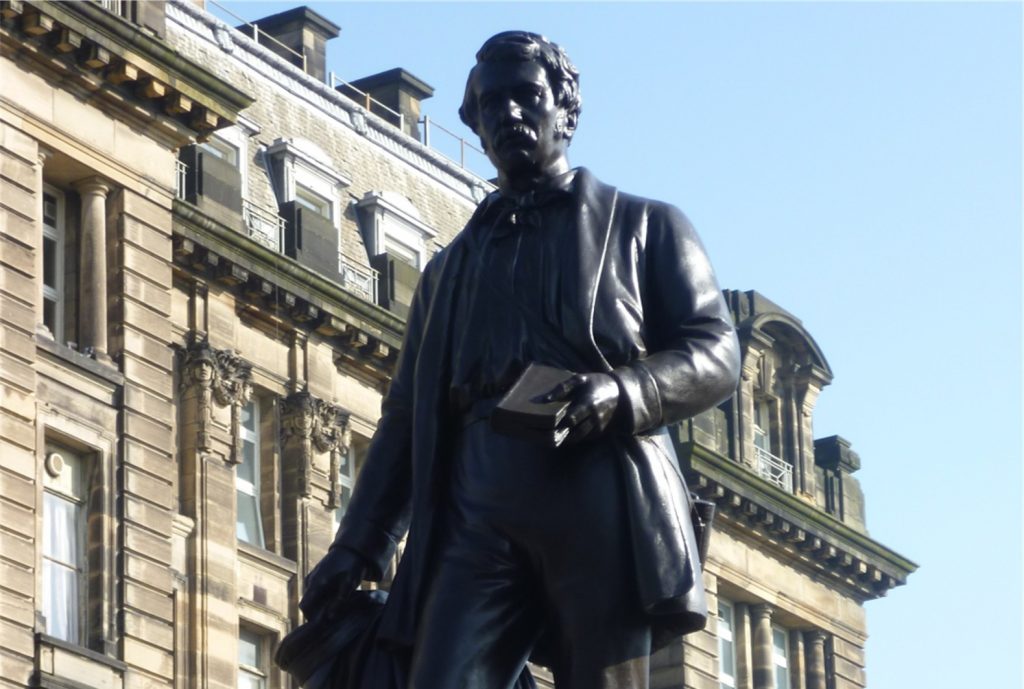
Statues of Livingstone in Scotland typically portray him in a thoughtful and dignified manner, emphasizing his character as a man of faith and perseverance. A common feature is the inclusion of a Bible in his hand, symbolizing the central role of Christianity in his life. These artistic choices reflect how Victorian society wished to remember him—not merely as an explorer, but as a moral figure guided by conviction and compassion.
The statue in Edinburgh, sculpted by Amelia Robertson Hill and unveiled in 1876, is perhaps the best known. Positioned on Princes Street, it places Livingstone within the historical and cultural heart of the nation. Relief panels at its base depict scenes from his African journeys, offering viewers a narrative of his experiences and challenges. The monument’s prominent location underscores the importance of his legacy to Scotland’s national identity.
In Blantyre, where Livingstone was born, memorials to his life take on a more personal tone. The area includes the David Livingstone Birthplace Museum, which preserves his early home and tells the story of his upbringing. Nearby statues and commemorations connect his global achievements to his modest origins, highlighting the remarkable journey from factory worker to internationally renowned figure.
These statues serve multiple purposes. They are works of public art, historical markers, and expressions of collective memory. For many, they represent the virtues of determination, faith, and service—qualities that Livingstone was believed to embody. They also remind viewers of Scotland’s contributions to global exploration and missionary work during the nineteenth century.
At the same time, modern perspectives encourage a more nuanced understanding of Livingstone’s legacy. While he is rightly honored for his opposition to slavery and his humanitarian concerns, his explorations were part of a broader context that eventually led to increased European involvement in Africa. The statues, therefore, stand not only as tributes but also as starting points for reflection on the complexities of history.
Despite these complexities, the enduring presence of Livingstone’s statues across Scotland speaks to the lasting impact of his life. They continue to draw the attention of visitors, scholars, and locals alike, offering an opportunity to consider both the man and the era he helped shape.
In the end, the statues of David Livingstone in Scotland are more than mere monuments. They are reminders of a life marked by purpose and perseverance, and they invite each generation to reflect on the values he sought to uphold and the legacy he left behind.
_____
Image Source/Credit (in order):
• Kim Traynor, CC BY-SA 3.0 <https://creativecommons.org/licenses/by-sa/3.0>, via Wikimedia Commons
• File:David Livingstone Statue, Glasgow.JPG – Wikipedia (tum.wikipedia.org/wiki/File:David_Livingstone_statue,_Glasgow.JPG)
Related
Sorry, no records were found. Please adjust your search criteria and try again.
Sorry, unable to load the Maps API.