
Gainsborough Old Hall is one of the best-preserved medieval manor houses in England and a site of considerable historical and religious importance. Located in the market town of Gainsborough, the hall dates back to the late fifteenth century and has played a notable role in both local governance and the early development of religious dissent in England.
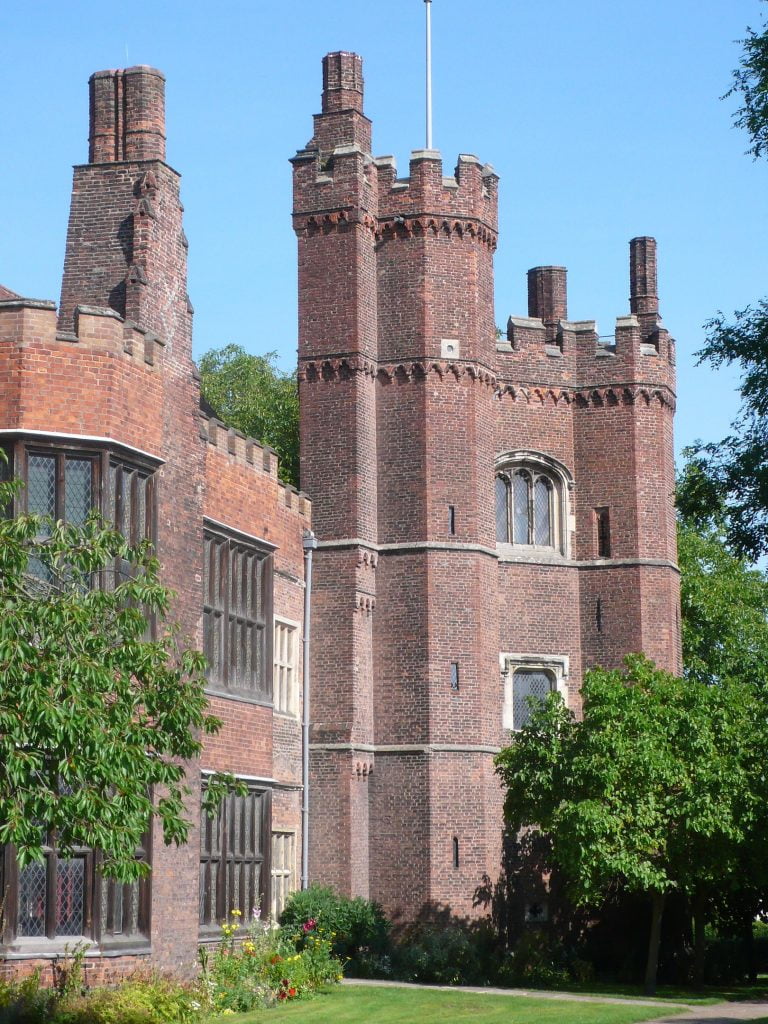
The hall was built around 1460 by Sir Thomas Burgh, a prominent figure in the court of King Edward IV. Constructed as a timber-framed manor house, Gainsborough Old Hall reflects the architectural style of the late medieval period, featuring a large central great hall, service rooms, and private chambers. Its impressive size and craftsmanship indicate the wealth and status of the Burgh family, who used the building as both a residence and a center of local administration.
In the early sixteenth century, the hall came into the possession of the Hickman family, who maintained it as a residence for many years. However, its greatest historical significance emerged in the early seventeenth century, when it became a gathering place for a group of religious dissenters seeking freedom from the constraints of the Church of England.
Around 1606, a congregation led by John Smyth began meeting at Gainsborough Old Hall. Smyth, along with his associate Thomas Helwys, was part of a movement known as the Separatists—believers who sought to break away from the established church in pursuit of a purer form of worship. These gatherings at the hall are widely regarded as among the earliest steps toward the formation of the Baptist tradition.
The group that met at Gainsborough Old Hall eventually faced increasing pressure and persecution. As a result, many members fled England for the Netherlands, where they found greater religious tolerance. It was there, particularly in Amsterdam, that Smyth and Helwys developed convictions about believer’s baptism and religious liberty that would later shape Baptist identity. Helwys would eventually return to England and help establish one of the first Baptist churches on English soil, carrying forward ideas that had been nurtured in places like Gainsborough.
Because of these events, Gainsborough Old Hall holds a special place in the history of religious freedom. It represents a moment when individuals risked social and legal consequences to worship according to conscience. The meetings held within its walls contributed to the development of principles that would later influence broader movements for religious liberty in both England and America.
Beyond its religious significance, the hall also offers insight into everyday life in medieval and early modern England. Its preserved rooms, including the great hall, kitchens, and living quarters, provide a tangible connection to the past. Visitors can see how the building functioned as a household, a place of work, and a center of local authority.
In the centuries that followed, Gainsborough Old Hall underwent periods of decline and restoration. Today, it is cared for by English Heritage, which has worked to preserve its structure and interpret its history for the public. The hall is open to visitors, offering tours and educational programs that highlight both its architectural features and its role in religious history.
The impact of Gainsborough Old Hall lies in its dual significance. As a medieval manor, it stands as a remarkable example of English architecture and social history. As a meeting place for early dissenters, it marks an important chapter in the story of religious freedom and the rise of the Baptist movement.
In this way, Gainsborough Old Hall serves as more than a historic building. It is a witness to the courage of those who sought to live according to their convictions and a reminder of the enduring importance of liberty of conscience.
_____
Image Source/Credit:
• John Spooner, CC BY 2.0 <https://creativecommons.org/licenses/by/2.0>, via Wikimedia Commons
Related
Sorry, no records were found. Please adjust your search criteria and try again.
Sorry, unable to load the Maps API.