Olney Baptist Church is one of the most historically significant Baptist congregations in England, closely associated with the evangelical revival of the eighteenth century and the lives of two influential figures, John Newton and William Cowper. Located in the market town of Olney, the church has long been a center of Nonconformist worship and spiritual influence.
The origins of the Baptist cause in Olney date to the mid-eighteenth century, a time marked by renewed religious interest across England. The influence of the evangelical revival, often associated with figures such as George Whitefield, helped awaken a deeper concern for personal faith and conversion. In this environment, Baptist congregations began to grow, particularly among those seeking a simpler and more direct expression of Christianity than that offered by the established Church of England.
Olney Baptist Church was formed in 1753, and one of its most notable early pastors was John Sutcliff, who began his ministry there in 1775. Sutcliff would become a central figure in what is often called the “Northamptonshire Association,” a group of Baptist ministers committed to prayer, revival, and missionary work. His leadership at Olney helped shape the church into a hub of evangelical activity and theological reflection.
The church’s significance is closely tied to its connections with nearby figures. John Newton, best known as the author of the hymn “Amazing Grace,” served as the Anglican curate in Olney from 1764 to 1780. Though not a Baptist, Newton maintained close relationships with local Dissenters, including members of the Baptist congregation. His friendship with William Cowper, a poet who lived in Olney, led to the publication of the Olney Hymns in 1779, a collection that has had a lasting influence on English hymnody.
Under Sutcliff’s leadership, Olney Baptist Church became closely linked with other prominent Baptist leaders, including Andrew Fuller and William Carey. These men shared a growing conviction that the Christian gospel should be taken to all nations. In 1792, they were instrumental in founding the Baptist Missionary Society, which would send Carey to India and launch the modern missionary movement.
Olney Baptist Church played an important supporting role in this development. It was part of the network of congregations that prayed for revival, encouraged missionary vision, and provided practical support for the society’s work. The church’s involvement illustrates how local congregations contributed to global movements through cooperation and shared purpose.
Throughout the nineteenth century, the church continued to serve the community of Olney, maintaining its emphasis on biblical preaching, congregational life, and outreach. Like many Baptist churches, it adapted to changing social conditions while preserving its core commitments. Its long history reflects the resilience of Nonconformist congregations in England, many of which had once faced legal restrictions before gaining greater freedom in the eighteenth and nineteenth centuries.
Today, Olney Baptist Church remains an active place of worship while also serving as a site of historical interest. Visitors are drawn not only by its connection to prominent figures but also by its role in the broader story of evangelical and missionary history.
The impact of Olney Baptist Church lies in its steady contribution to a movement that extended far beyond its town. Through its leadership, its connections, and its commitment to prayer and mission, it helped shape a vision that would influence Christianity worldwide. Its history demonstrates how a local church, grounded in faith and fellowship, can play a part in events of lasting global significance.
_____
Image Source/Credit:
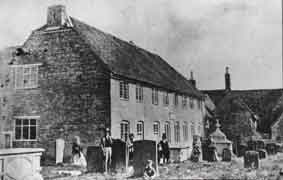
• Picture of Baptist Church at Olney, England, 1900 (baptisthistoryhomepage.com/england.olney.b.c.picture.html)
Related
Sorry, no records were found. Please adjust your search criteria and try again.
Sorry, unable to load the Maps API.