

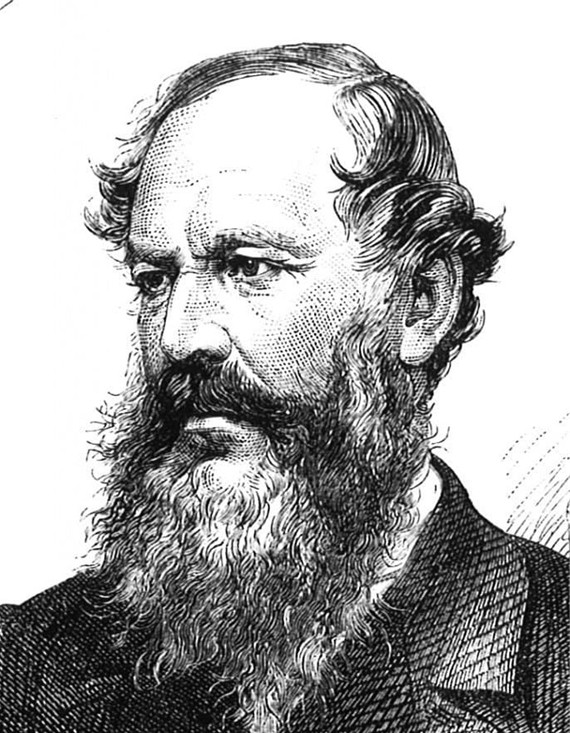
John Charles Ryle (1816–1900) was one of the most influential evangelical leaders in the Church of England during the nineteenth century. A prolific writer, faithful pastor, and the first Bishop of Liverpool, Ryle combined doctrinal clarity with practical application, leaving a lasting mark on Protestant thought and devotional life.
Ryle was born on May 10, 1816, in Macclesfield, England, into a prosperous family. His father, a banker, ensured that John received an excellent education. He attended Eton College and later Christ Church, Oxford, where he distinguished himself academically and athletically. In his early years, Ryle showed little inclination toward serious religion, focusing instead on studies, sports, and the expectations of a successful career.
A dramatic change came during his time at Oxford. While attending a church service, Ryle heard a reading from Ephesians 2 that deeply convicted him, particularly the phrase “by grace are ye saved through faith.” This moment marked the beginning of his conversion to evangelical Christianity. Shortly thereafter, a financial crisis struck his family, forcing him to abandon plans for a political career. These events together redirected his life toward the ministry.
Ryle was ordained in the Church of England in 1841. His early ministry took place in rural parishes, where he developed the pastoral instincts and preaching style that would define his career. He served in places such as Exbury and Helmingham, faithfully ministering to ordinary people. Ryle’s preaching was marked by clarity, directness, and a deep concern for the spiritual welfare of his hearers. He avoided theological abstraction, preferring instead to present the gospel in plain, understandable language.
Over time, Ryle became a leading voice within the evangelical wing of the Church of England. The nineteenth century was a period of significant theological tension within Anglicanism, particularly between evangelical Protestants and the proponents of the Oxford Movement, which emphasized ritual, tradition, and the authority of the church. Ryle firmly opposed the latter, believing it compromised the authority of Scripture and the doctrine of justification by faith alone.
His convictions were clearly expressed in his many writings. Ryle was a remarkably productive author, publishing tracts, sermons, and books that reached a wide audience. Among his most enduring works are Holiness, Practical Religion, and Old Paths. In these writings, he emphasized personal conversion, the necessity of holy living, and the centrality of Christ’s atoning work. His book Holiness, in particular, remains a classic of Christian literature, calling believers to a life of spiritual discipline and moral integrity.
Ryle also had a deep appreciation for the history of the church, especially the Protestant Reformation. He frequently pointed readers back to earlier generations of faithful Christians, urging them to hold fast to what he saw as timeless biblical truths. His historical awareness gave his ministry a sense of continuity, connecting the evangelical movement of his day with the broader heritage of Protestantism.
In 1880, Ryle was appointed the first Bishop of Liverpool, a newly created diocese in one of England’s most rapidly growing industrial cities. Liverpool was a challenging environment, marked by poverty, overcrowding, and social unrest. Ryle approached his episcopal duties with energy and determination, focusing on church planting, clergy training, and evangelistic outreach. He worked tirelessly to establish new congregations and ensure that the growing population had access to faithful preaching.
As bishop, Ryle remained consistent in his theological commitments. He continued to oppose ritualism and defended evangelical principles within the Church of England. At the same time, he demonstrated a pastoral concern for the diverse population of his diocese, seeking to address both spiritual and social needs. His leadership helped to shape the character of Anglicanism in Liverpool for generations.
Ryle’s personal life was marked by both joy and sorrow. He was married three times and experienced the loss of each of his wives. These trials deepened his faith and gave him a greater capacity for pastoral care. Those who knew him often remarked on his humility, diligence, and unwavering commitment to his calling.
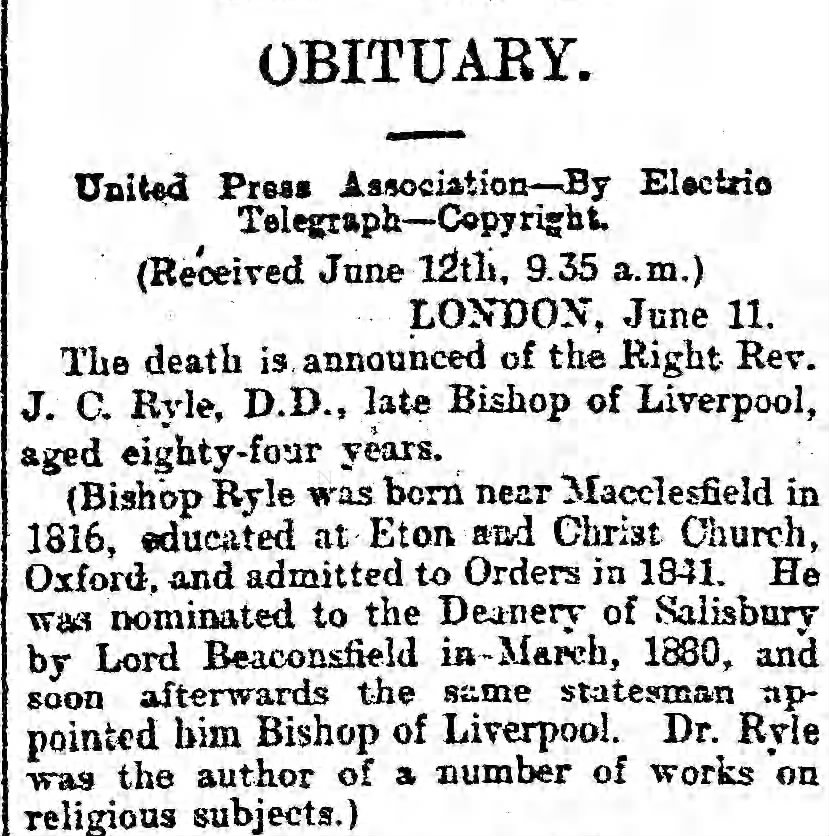
He retired as Bishop of Liverpool in 1900 and died later that same year on June 10. By the time of his death, Ryle had become widely respected as a leading evangelical voice in the Church of England. His writings continued to circulate, influencing readers far beyond his own time and place.
The legacy of John Charles Ryle is found in both his words and his example. As a preacher, he demonstrated the power of clear, biblical teaching. As a writer, he provided generations of Christians with practical guidance for living out their faith. As a bishop, he showed how evangelical conviction could be combined with faithful leadership in a national church.
Today, Ryle is remembered as a man who stood firmly for what he believed to be the essential truths of Christianity. His emphasis on Scripture, personal conversion, and holy living continues to resonate with readers around the world. In an age of change and controversy, he offered a steady voice, calling the church back to what he often described as the “old paths”—a legacy that endures to this day.
_____
Image Source/Credit:
• Banner of Truth USA. “J. C. Ryle Author Biography – Banner of Truth USA.” Banner of Truth USA, 24 July 2018 (banneroftruth.org/us/about/banner-authors/j-c-ryle)
• Newspapers.com, The Press, June 13, 1900 (www.newspapers.com/article/the-press/191596250/)
Related
Sorry, no records were found. Please adjust your search criteria and try again.
Sorry, unable to load the Maps API.