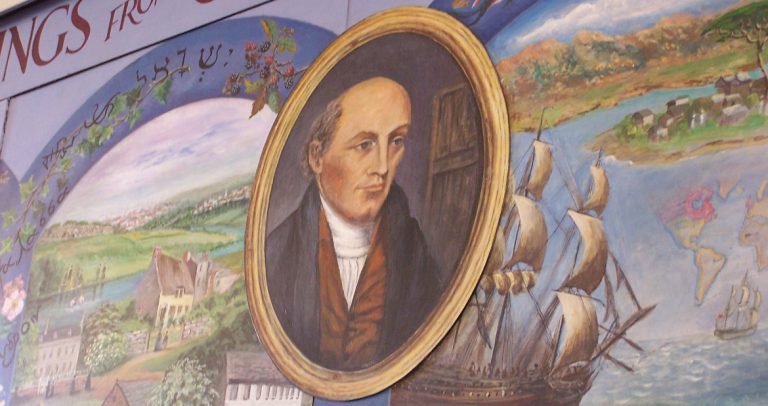
Carey Baptist Church is a historic congregation in the village of Moulton, closely associated with the life and early ministry of William Carey. Though modest in size, the church holds an important place in Baptist history as one of the formative settings in which Carey’s convictions about mission and ministry were shaped.
The origins of the congregation date back to the late eighteenth century, a period marked by growing evangelical fervor among Nonconformist groups in England. Baptists, in particular, were expanding their presence in rural areas, often forming small congregations that emphasized personal faith, believer’s baptism, and the authority of Scripture. Moulton became one such center of Baptist life, and it was here that William Carey began to exercise his gifts as a preacher.
Carey moved to Moulton in 1785, taking up work as a schoolmaster while also serving as pastor to the local Baptist congregation. At the time, the church met in relatively simple surroundings, reflecting the modest circumstances of its members. Carey himself lived a humble life, supporting his family through teaching and shoemaking while devoting himself to study and ministry. It was during these years in Moulton that he developed many of the ideas that would later define his legacy.
While at Moulton, Carey became increasingly convinced of the responsibility of Christians to carry the gospel beyond England to the wider world. He studied geography, read accounts of distant lands, and reflected deeply on biblical teachings about the spread of the faith. These studies culminated in his influential pamphlet, An Enquiry into the Obligations of Christians to Use Means for the Conversion of the Heathens, published in 1792. In this work, Carey argued that the command to make disciples of all nations remained binding and required active effort.
The church in Moulton played a significant role in nurturing these convictions. Though small, it provided Carey with a platform for preaching and a community in which to test and refine his ideas. It was also among the congregations that supported the growing missionary vision that would soon take shape. From this rural setting, Carey’s influence began to extend far beyond the village.
In 1792, Carey joined other Baptist leaders in founding the Baptist Missionary Society, an event that marked the beginning of organized Protestant missionary work on a global scale. The following year, he departed for India, where he would spend the rest of his life engaged in translation, education, and evangelism. The seeds of that work, however, had been planted during his time in Moulton.
Over time, the original meeting place of the congregation was replaced, and the church came to be known as Carey Baptist Church in recognition of its connection to its most famous pastor. Today, the building serves both as a place of worship and as a historical site, drawing visitors interested in the origins of modern missions.
The impact of Carey Baptist Church lies not in size or prominence, but in its association with a turning point in Christian history. It represents the environment in which a largely unknown village pastor developed a vision that would reshape the global church. The church’s story illustrates how local congregations can play a crucial role in fostering ideas and movements that reach far beyond their immediate context.
Today, Carey Baptist Church continues as a living congregation while also serving as a reminder of its past. Its legacy is one of faithfulness, simplicity, and quiet influence—qualities that characterized both the church itself and the man whose name it bears.
♦ _____ ♦
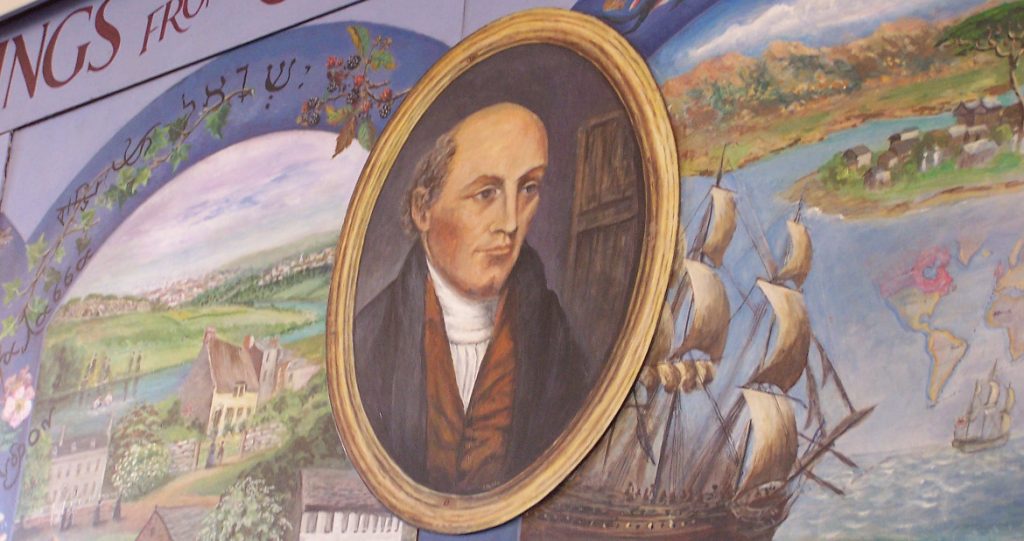
In 1787, William Carey received ordination into his first pastorate, the Moulton Baptist congregation, later named Carey Baptist Church. At Carey’s ordination, John Ryland Jr. asked the questions, John Sutcliff preached the charge, from 2 Timothy 4:5, and Andrew Fuller preached a challenge to the members. The congregation was soon compelled to reconstruct and enlarge their small brick building to thirty feet square. In 1870, the church enlarged the structure to its present size. In 1958, they added the William Carey Memorial Hall, whose renovation in the 1990s included a multi-panel mural, depicting the story of Carey’s life and work. Church rooms underwent renovation in 2002, and the year 2009 witnessed major refurbishment of the auditorium.
Next to Carey Baptist Church is the Carey Cottage, where the trough he had used to soak his shoe leather is still set in the wall. Part of the cottage is a museum that includes Carey’s pulpit. On the exterior wall, a tablet inscription reveals that Carey lived here from 1785 to 1789. It pays tribute to Carey as “shoemaker, schoolmaster, preacher, scholar, and missionary pioneer.”
Copyrighted and used by permission from David Beale, Baptist History in England and America: Personalities, Positions, and Practices
_____
Image Source/Credit:
• Our History (www.careybaptist.org.uk/Groups/304135/Our_History.aspx)
Related
Sorry, no records were found. Please adjust your search criteria and try again.
Sorry, unable to load the Maps API.