Castle Hill United Reformed Church is one of the most historically significant Nonconformist churches in England, with roots stretching back to the seventeenth century. Situated in the town of Northampton, the church reflects the long and often difficult journey toward religious freedom for those outside the established church.
The origins of the congregation can be traced to the period following the English Civil War, when religious life in England was in a state of upheaval. During the Commonwealth period, many Protestant groups that differed from the Church of England were able to worship more freely. However, this changed dramatically after the Restoration of the monarchy in 1660.
In 1662, the Great Ejection forced approximately 2,000 ministers to leave their positions in the Church of England because they would not conform to the Act of Uniformity. Among those affected were leaders in Northampton who would become associated with the beginnings of what would later be Castle Hill Church. These ministers and their congregations became known as Nonconformists or Dissenters, meeting in private homes or informal settings to avoid legal penalties.
Despite restrictions, these early congregations persevered. Over time, as laws against Nonconformists were gradually relaxed—especially following the Toleration Act of 1689—they were able to establish more permanent places of worship. The congregation that would become Castle Hill United Reformed Church developed out of this environment, maintaining a strong commitment to independent church governance and the authority of Scripture.
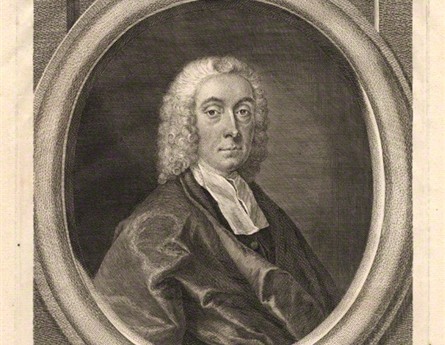
By the eighteenth century, Northampton had become an important center for Nonconformist thought and ministry. The church is particularly associated with Philip Doddridge, who served as a pastor in the town and established an academy for training ministers. Doddridge’s influence extended well beyond Northampton, shaping the theological education of many future leaders in the Dissenting tradition.
The physical building known today as Castle Hill United Reformed Church dates from a later period, reflecting the growth and stability achieved by Nonconformist congregations in the nineteenth century. Its architecture, while simpler than many Anglican churches, conveys a sense of dignity and purpose. The building became a focal point for worship, education, and community life.
In 1972, the church became part of the United Reformed Church, a union of Congregational and Presbyterian traditions in England and Wales. This merger represented a continuation of the Nonconformist emphasis on cooperation and shared mission, while preserving the historic identity of local congregations like Castle Hill.
The impact of Castle Hill United Reformed Church can be seen in several areas. First, it stands as a witness to the perseverance of those who sought to worship according to conscience, even in the face of legal and social opposition. Its origins in the era of the Great Ejection connect it directly to one of the most significant moments in the history of religious dissent in England.
Second, the church has contributed to the intellectual and spiritual life of its community, particularly through its association with figures like Philip Doddridge. The emphasis on education and thoughtful faith has been a hallmark of its tradition.
Finally, the church has played an ongoing role in the life of Northampton, serving as a place of worship and community engagement for generations. Its history reflects the broader story of Nonconformity in England—a movement that helped shape modern ideas of religious liberty and diversity.
Today, Castle Hill United Reformed Church stands not only as a historic building but as a living testimony to the enduring value of faith, conviction, and freedom of conscience.
♦ _____ ♦
At Doddridge Street (NN1 2RN) is Castle Hill United Reformed Church, once known as Castle Hill Church, where the independent Congregationalist, Phillip Doddridge (1702-51), served as pastor. While Doddridge’s compromising endorsements led many young men toward erroneous doctrines, his songs, such as “O Happy Day,” and his classic book, The Rise and Progress of Religion in the Soul (1745), are still in use. William Wilberforce’s reading of Rise and Progress became one of the instruments, in 1784, leading to his conversion. More than two hundred students passed through Doddridge’s Academy for Dissenters, during its twelve years of existence (1740-52). The building that housed the Academy still stands on Sheep Street, a ten-minute walk from the church.
Copyrighted and used by permission from David Beale, Baptist History in England and America: Personalities, Positions, and Practices
_____
Image Source/Credit:
• George Vertue, Public domain, via Wikimedia Commons
Related
Sorry, no records were found. Please adjust your search criteria and try again.
Sorry, unable to load the Maps API.