
The David Livingstone Birthplace Museum
The David Livingstone Birthplace Museum, located in Blantyre, Scotland, is a significant historical site dedicated to preserving and interpreting the life of one of the nineteenth century’s most influential missionary-explorers, David Livingstone. Set along the scenic banks of the River Clyde, the museum offers visitors a detailed and thoughtful look into Livingstone’s early life, his achievements in Africa, and the broader historical context in which he lived.
The museum is centered around the tenement building where Livingstone was born in 1813. Carefully restored to reflect its original condition, the building provides a vivid glimpse into the working-class environment of early industrial Scotland. Livingstone grew up in a single-room home shared with his family, and from a young age, he worked long hours in the nearby cotton mills. Despite these demanding conditions, he pursued education with determination, studying in the evenings and nurturing a strong sense of faith and purpose that would shape his future.
Visitors to the museum can explore rooms furnished to resemble their nineteenth-century appearance, helping to bring Livingstone’s childhood to life. These reconstructed interiors illustrate the simplicity and hardship of his upbringing while also highlighting the discipline and ambition that enabled him to rise beyond these circumstances. The museum effectively connects these early experiences to his later achievements, showing how his character was formed in this modest setting.
Beyond the birthplace itself, the museum includes a range of modern exhibits that explore Livingstone’s extensive travels in Africa. His work was closely associated with the London Missionary Society, under whose direction he journeyed into southern and central Africa as both a missionary and an explorer. Displays trace his routes, explain the challenges he faced, and examine his encounters with African communities. Artifacts, maps, and multimedia presentations help visitors understand the scope and significance of his journeys.
A key theme throughout the museum is Livingstone’s opposition to the East African slave trade. His writings and public advocacy played a role in raising awareness in Britain and encouraging efforts to end the practice. The museum presents this aspect of his legacy with care, emphasizing his humanitarian concerns while also acknowledging the complex historical context of his work.
In recent years, the David Livingstone Birthplace Museum has undergone extensive redevelopment, transforming it into a modern visitor center while preserving its historical core. Updated galleries incorporate interactive displays, digital storytelling, and educational resources designed to engage a wide audience. These improvements ensure that the museum remains accessible and relevant to contemporary visitors, including students, families, and researchers.
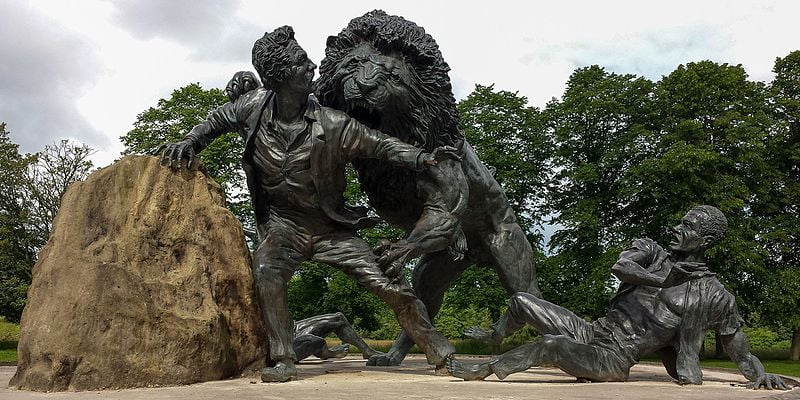
The surrounding grounds also contribute to the visitor experience. Landscaped pathways, open green spaces, and views of the River Clyde provide a peaceful setting for reflection. The outdoor environment contrasts with the demanding conditions Livingstone faced during his travels, offering a quiet space to consider the scope of his life’s work.
Importantly, the museum does not present Livingstone’s story in isolation. It encourages visitors to think critically about the broader implications of his explorations, including their connection to later European involvement in Africa. By presenting both achievements and complexities, the museum fosters a balanced and informed understanding of history.
Today, the David Livingstone Birthplace Museum stands as both a place of remembrance and a center for learning. It preserves the story of a man who rose from humble beginnings to achieve global influence, while also inviting reflection on the values, challenges, and consequences associated with his work. Through its exhibits and setting, the museum ensures that Livingstone’s life and legacy continue to be explored and understood by future generations.
_____
Image Source/Credit:
• DeFacto, CC BY-SA 4.0 <https://creativecommons.org/licenses/by-sa/4.0>, via Wikimedia Commons
Related
Sorry, no records were found. Please adjust your search criteria and try again.
Sorry, unable to load the Maps API.