


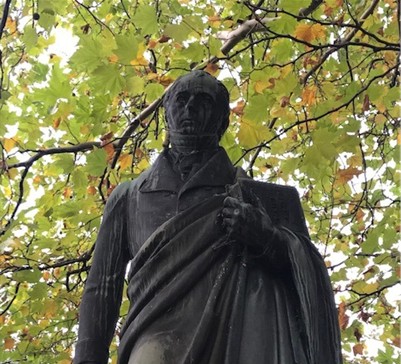
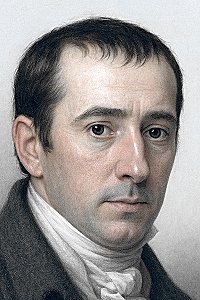
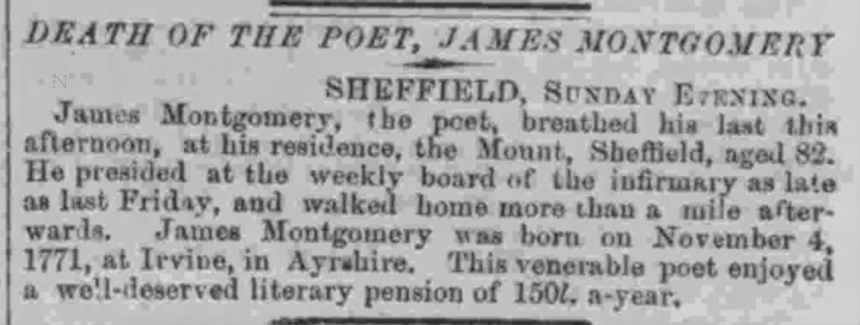
The James Montgomery Statue is a notable memorial located within the grounds of Sheffield Cathedral in Sheffield. It honors the life and legacy of James Montgomery (1771–1854), a respected poet, editor, and one of the most beloved hymn writers of the nineteenth century.
James Montgomery was born in Irvine, Scotland, the son of Moravian missionaries. His early life was marked by both religious influence and personal hardship, including the early death of his parents while they were serving abroad. Despite limited formal education, Montgomery developed a strong literary talent and eventually settled in Sheffield, where he became editor of the Sheffield Iris, a local newspaper. Through his work as an editor, he became known for his advocacy of social reform, including the abolition of slavery and the promotion of humanitarian causes.
The statue at Sheffield Cathedral reflects the high regard in which Montgomery was held by the people of the city. Sculpted in the nineteenth century, it depicts him in a dignified and contemplative pose, often shown holding a book—symbolizing both his literary contributions and his devotion to Christian thought. The placement of the statue within the cathedral precincts underscores the close connection between his poetry and his faith.
Montgomery’s greatest legacy lies in his hymns, many of which remain in use today. He wrote more than 400 hymns, several of which have become enduring favorites in Christian worship. Among his best-known works are “Angels from the Realms of Glory,” a Christmas hymn widely sung around the world, and “Hail to the Lord’s Anointed,” which reflects his deep engagement with biblical themes. His hymns are characterized by poetic clarity, doctrinal soundness, and a heartfelt expression of faith.
The statue serves not only as a tribute to Montgomery’s literary achievements but also as a reminder of his moral and spiritual convictions. Throughout his life, he used his platform as a writer and editor to speak out against injustice. His support for the abolitionist movement and his defense of civil liberties brought him into conflict with authorities on several occasions, even leading to brief imprisonments. Yet these experiences only strengthened his resolve and deepened his commitment to the principles he believed in.
Sheffield Cathedral, where the statue stands, has long been a central place of worship and community life in the city. By situating Montgomery’s memorial there, the city acknowledges his role not only as a literary figure but also as a contributor to its spiritual and cultural heritage. The statue provides a tangible link between the past and present, inviting visitors to reflect on the life of a man whose words continue to inspire.
Over time, the statue has become a point of interest for both locals and visitors. It is often included in historical tours of Sheffield and is appreciated by those interested in literature, hymnody, and the history of social reform. While it may not be as widely known as some larger monuments, its significance lies in the depth of the legacy it represents.
In a broader sense, the James Montgomery Statue stands as a testament to the enduring power of words and faith. Montgomery’s hymns continue to be sung in churches across denominations, carrying forward the message he sought to express in his lifetime. His commitment to justice, compassion, and spiritual truth remains relevant in every generation.
Today, the statue quietly fulfills its purpose—honoring a life of influence and reminding those who pass by of the lasting impact one individual can have through faith, conviction, and the written word.
Hymns by James Montgomery in Great Hymns of the Faith:
#33 – Stand Up and Bless the Lord
#99 – Angels, from the Realms of Glory
#192 – According to Thy Gracious Word
#276 – In the Hour of Trial
#533 – We Bid Thee Welcome
_____
Image Source/Credit (in order):
• James Montgomery. 27 May 2020 (sheffielder.net/2020/02/07/james-montgomery)
• James Montgomery (www.hymntime.com/tch/bio/m/o/n/t/montgomery_j.htm)
• Newspapers.com, The Standard, May 1, 1854 (www.newspapers.com/article/the-standard/191970785/)
Related
Sorry, no records were found. Please adjust your search criteria and try again.
Sorry, unable to load the Maps API.