

Richard Wurmbrand, also known in certain contexts by the name Nicolai Ionescu, stands as one of the most compelling witnesses of faith and endurance in the twentieth century. His life, marked by dramatic conversion, severe persecution, and tireless advocacy, left a lasting impact on Christians around the world and brought global attention to the suffering of believers under oppressive regimes.
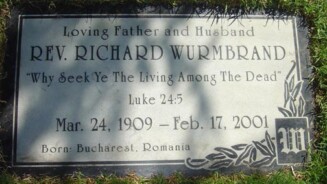
Born in 1909 in Bucharest, Wurmbrand was raised in a Jewish family. His early years were shaped by intellectual curiosity and exposure to a variety of political and philosophical ideas. As a young man, he became involved in leftist political movements, even traveling to the Soviet Union for training. Yet despite his early commitment to atheistic ideology, he found himself searching for deeper meaning in life.
That search led to a profound transformation. Through the witness of a humble Christian carpenter, Wurmbrand and his wife embraced the Christian faith. This conversion marked a turning point, redirecting his life toward ministry and service. He became a Lutheran pastor, ministering in Romania during a time of increasing political turmoil. His work was not limited to the church; he actively reached out to both Romanians and occupying soldiers during the years of the World War II, demonstrating a commitment to share his message even under difficult circumstances.
Following the war, Romania came under Communist control, and religious expression was tightly restricted. Wurmbrand refused to compromise his beliefs or align the church with state-controlled ideology. In 1948, he was arrested by the secret police and imprisoned for his faith. Over the next fourteen years—spent in various prisons, including long periods in solitary confinement—he endured harsh treatment, isolation, and torture. Despite these conditions, Wurmbrand later testified that his faith not only endured but deepened, sustained by prayer and a sense of divine presence.
After his release, Wurmbrand was briefly allowed to resume his ministry, but continued surveillance and harassment made his position precarious. In 1964, he was ransomed by international Christian organizations and permitted to leave Romania. Settling in the West, he began to share his experiences, speaking openly about the persecution faced by Christians behind the Iron Curtain. His testimony was both sobering and inspiring, offering firsthand insight into the cost of religious conviction under totalitarian rule.
Wurmbrand’s story gained widespread attention, particularly through his book Tortured for Christ, in which he recounted his imprisonment and the faith that sustained him. His vivid descriptions of suffering, combined with his message of forgiveness and steadfastness, resonated deeply with readers. Rather than expressing bitterness, he emphasized love even for those who had persecuted him, a perspective that challenged and inspired many.
In 1967, Wurmbrand founded Voice of the Martyrs, an organization dedicated to supporting persecuted Christians worldwide. Through this work, he helped bring awareness to situations that were often hidden from public view, advocating for religious freedom and providing practical assistance to those in need. The organization continues to operate globally, carrying forward the mission he began.
The name Nicolai Ionescu, associated with Wurmbrand in certain contexts, reflects the complexities of life under surveillance and persecution, where identities were sometimes adapted for protection or necessity. Yet regardless of the name used, the essence of his witness remained the same: a steadfast commitment to faith in the face of adversity.
Richard Wurmbrand died in 2001, but his legacy endures. He is remembered not only for the suffering he endured but for the spirit in which he endured it. His life serves as a powerful reminder of the resilience of faith and the importance of standing firm in one’s convictions. Through his writings, his advocacy, and the ongoing work of the organizations he inspired, his voice continues to speak—calling attention to injustice, encouraging perseverance, and pointing toward hope even in the darkest circumstances.
_____
Image Source/Credit:
• Wikipedia contributors. “Richard Wurmbrand.” Wikipedia, 25 Oct. 2024 (en.wikipedia.org/wiki/Richard_Wurmbrand)
Related

Sorry, no records were found. Please adjust your search criteria and try again.
Sorry, unable to load the Maps API.